|
|
| |
|
|
| |
Click on image to buy from Amazon.com |
|
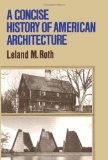
A Concise History Of American Architecture by Leland Roth 1980.
This is a wide-ranging, substantive account of architecture: its elements, history and meaning from pre-historic times to the present. Leland Roth leads us all the way from Ancient Indian mounds to Johnson & Burgee's new "Chippendale" skyscraper in New York. He provides an assessment of each period based on contemporary concerns and conditions, rather than on retrospective criticism. This book is enhanced by over 300 illustrations.
| |
|
|
| |
Click on image to buy from Amazon.com |
|
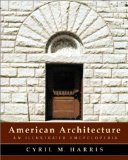
American Architecture: An Illustrated Encyclopedia by Cyril M. Harris, 2002.
Since the Spanish established their first settlement in St. Augustine, Florida, in 1565, America has been an architectural melting pot, reflecting the contributions of every immigrant group that brought its traditions across the sea and adapted them to the places where they settled. The rich diversity of this country's architecture is reflected in the nearly 200 styles, types, and modes of American architecture that are identified in these pages—more than can be found in any other book. Over 2,500 definitions and nearly 1,000 illustrations describe construction materials and techniques, landscape elements, decorative terms, and practical devices, from precolonial times to the present, and from indigenous dwellings to deconstructivist structures. Students of architecture, architectural historians, preservationists, curators, and general readers will find it pleasurable, informative, and sometimes surprising.
| |
|
|
| |
Click on image to buy from Amazon.com |
|
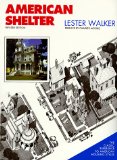
American Shelter : An Illustrated Encyclopedia of the American Homes by Lester R. Walker, 1998.
Altogether 103 styles of American housing are featured in this book, spanning the earth lodge (circa 300) to the projected space unit (circa 2000). There are full diagrams, history, and a description for each of the Native American and settler homes, including the pueblo, longhouse, and wigwam; the log cabin, garrison house, and saltbox; and on through the Georgian, Greek Revival, false front, Queen Anne, and neomodern. Whether you're a student of architecture, a dabbler in design, a house-history buff or a novice home-buyer attempting to decipher your realtor's descriptions, Lester Walker's American Shelter has a lot to offer.
| |
|
|
| |
Click on image to buy from Amazon.com |
|
Native American Architecture by Peter Nabokov, 1990. For many people, Native American architecture calls to mind the wigwam, tipi, igloo, and pueblo. Yet the richly diverse building traditions of Native Americans encompass much more, including specific structures for sleeping, working, worshipping, meditating, playing, dancing, lounging, giving birth, decision-making, cleansing, storing and preparing food, caring for animals, and honoring the dead. In effect, the architecture covers all facets of Indian life. The volume also includes a wealth of historical photographs and drawings (including sixteen pages of color illustrations), architectural renderings, and specially prepared interpretive diagrams which decode the sacred cosmology of the principal house types.
|
| |
|
|
| |
Click on image to buy from Amazon.com |
|
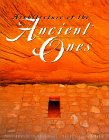
Architecture of the Ancient Ones by Val Brinkerhoff, 2000. Every once in a great while a truly magnificent photographic journal appears. It is a visual feast, each page a magical photographic account of the mystery of a lost civilization. The power and beauty of the Ancient Ones and their structures, their homes, are laid forth in these pages.The written commentary is just enough to enhance the visual images. For those who love and are fascinated by these ancient cultures, this is a must. A feast for the eyes and the heart.
| |
 |
|
| |
Click on image to buy from Amazon.com |
|
Ageless Adobe: History and Preservation in Southwestern Architecture by Jerome Iowa, 1985. This book provides practical details on methods of preservation and maintenance for old adobe buildings. The over 200 illustrations in the book along with directions on "how-to" will enable the do-it-yourself home owner as well as the professional architect or contractor to plan and carry out renovation. The author presents solutions to the problems of keeping an historic structure intact while repairing it and making it 20th century livable. The issue of energy conservation is discussed at length and the premise of the book is that historic integrity does not have to be sacrificed for energy efficiency. Rehabilitation is always preferable, usually possible and often more profitable than demolition.
|
|
| |
|
|
| |
Click on image to buy from Amazon.com |
|
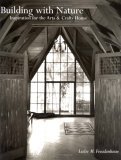
Building with Nature: Inspiration for the Arts and Crafts Home by Leslie Freudenheim, 2005. This new edition of the classic, Building with Nature: Roots of the San Francisco Bay Region Tradition, focuses on the beginnings (1865 and on) of the Bay Area shingle style and Arts & Crafts collaboration in California, and the origins of the trend toward building simple rustic homes in harmony with nature. Freudenheim explores how and why a small, influential group of Californians (including Joseph Worcester, Bernard Maybeck, Charles Keeler, William Keith, Charles Lummis, A. Page Brown, and others)--all of whom had come from the East or from England--were especially devoted to Ruskin and the Arts & Crafts style and how this combined with their dedication to California's natural beauty to create a unique architectural movement.
| |
|
|
| |
Click on image to buy from Amazon.com |
|
Cabin Fever : Rustic Style Comes Home by Rachel Carley, 1998. Featuring rustic interiors as well as North Woods architecture, Cabin Fever visits more than two dozen charming retreats old and new, large and small, in the mountains and along the water, from the wilds of New York out to the wild, wild West. Author Rachel Carley explains where our love for the rustic comes from and shows the amazingly varied guises in which it appears today.
| |
|
|
| |
Click on image to buy from Amazon.com |
|
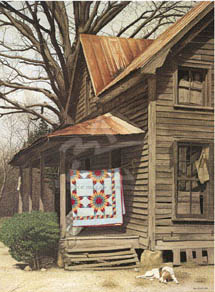
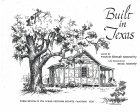
Built in Texas by Francis Edward Abernethy, 2000. A book of folk building in Texas, ranging across the state in word and photograph to explore the building of: settlers who tarried on the timbered lands of East Texas and built with the readily available pine logs in the traditions of their fathers; those in the Western Cross Timbers used oak; European migrants into Central Texas stacked rocks into houses in the fashions learned in the Old Country; West Texans of the Pecos, who had neither rocks nor logs to build with, mixed mud and grass, made adobe brick, and built in traditions borrowed from the Mexican-Indian population already settled there.
| |
|
|
| |
Click on image to buy from Amazon.com |
|
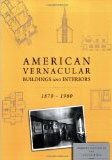
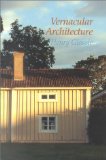
American Vernacular Buildings and Interiors: 1870-1960 by Herbert Gottfried, Jan Jennings, 2009.
A comprehensive examination of American vernacular buildings. With more than 600 illustrations, this book interprets vernacular architecture as it emerged with the industrialization of building materials. It provides an overview of building and plan types for houses, commercial buildings, and churches, explaining the development of key design elements and how they have been incorporated into American architecture.
| |
|
|
| |
Click on image to buy from Amazon.com |
|
Identifying American Architecture: A Pictorial Guide to Styles and Terms : 1600-1945 by John J. G. Blumenson, 1990.
This guide enables the reader to identify various styles and architectural terms by comparing real buildings with the book's photographs. Intended primarily for tourists and travellers, it covers a wide variety of styles including Spanish, colonial, prairie, Georgian and international. The book also explores details such as rooves, porches, windows and chimneys. In order to provide the reader with a compact handbook, the text is kept to a minimum and only the exteriors of buildings are discussed. The emphasis throughout is on domestic architecture rather than museums, monuments or commercial and public buildings.
|
| |
|
|
| |
Click on image to buy from Amazon.com |
|
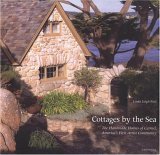
Cottages by the Sea, The Handmade Homes of Carmel, America's First Artist Community by Linda Leigh Paul, 2000. Carmel is home to many of America's most charming but rarely seen cottages. In Carmel's residential district-a very private, heavily wooded area surrounding the shops and tourist attractions of the town's often busy main street-there are no sidewalks or streetlights. The U.S. Postal Service does not offer mail delivery. Homes have no addresses; they are simply known by name. Here, it is not uncommon for tourists, so intrigued by the uniqueness of the local architecture, to climb the fences of private homes in order to get a closer look or snapshot of the house on the other side. Now, for the first time, 34 of these homes can be seen more advantageously, in more than 270 specially commissioned and archival exterior and interior photographs. |
|
| |
|
|
| |
Click on image to buy from Amazon.com |
|
America's Architectural Roots : Ethnic Groups That Built America by Upton Dell, 1995. This is the first book to explore the ethnic derivations of American buildings with such a broad scope. The contributions of 22 groups are highlighted in this fascinating overview that provides an important new way of looking at the buildings that surround us. Groups covered include Native Americans, African-Americans, Belgians, Germans, Mexicans, the Irish and Japanese, among others.
| |
|
|
| |
Click on image to buy from Amazon.com |
|
Field Guide to New England Barns and Farm Buildings by Thomas Durant Visser, 1997. A recognized authority on historic barn preservation, Visser has combed the New England area for the representative barns and outbuildings featured in this collection. Two hundred of Visser's photographs accompany the text, which includes accounts from 18th- and 19th-century observers, describes key architectural characteristics, historic uses, and special features such as timbers and frames, sheathings, doors, and cupolas.
| |
|
|
| |
Click on image to buy from Amazon.com |
|
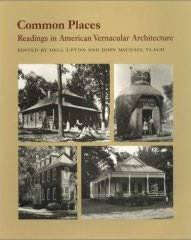
Common Places: Readings in American Vernacular Architecture by Dell Upton , John Michael Vlach, 1986. This collection of essays and articles is essential reading for anyone interested in America's architectural history. Classic articles on ways to examine architecture in relation to cultural geography are featured prominently in this volume. There are also important pieces of work that link architecture to the history of various ethnic groups, and I especially enjoyed articles that deal with contemporary forms of vernacular expression. This is an important book for anyone interested in the study of folklore, history, art history, and architecture. It could also be useful for practicing architects to read the essays for ideas to inspire their own designs.
| |
|
|
| |
Click on image to buy from Amazon.com |
|
The Visual Dictionary of American Domestic Architecture by Rachel Carley, 1997. Over 500 illustrations trace domestic architecture from indigenous dwellings of Native American groups to contemporary homes of the 1990s. Each of the 12 chapters begins with a brief narrative that summarizes a type, period, or style of architecture. Multiple interior and exterior views of representative buildings (including outbuildings) are well labeled. Features such as stairs, doors, windows, framing and wall construction, and brickwork are clearly illustrated. Insets with additional text illuminate many of the pictures. Students curious about the structures around them or seeking information for design or history classes, and apprentice carpenters will be well served, and rewarded, by this volume.
|
| |
|
|
| |
Click on image to buy from Amazon.com |
|
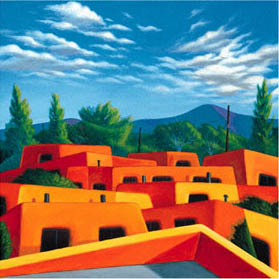
New Mexico Style : A Sourcebook of Traditional Architectural Details by Nancy Hunter Warren, 1995. Since its original publication, architects, builders, remodelers, and lovers of the distinctive architectural styles of Santa Fe and the region have depended on New Mexico Style for authoritative information and aesthetic inspiration. Now this classic has been broadened to include important elements of interior design. With its incisive text, ninety-five all-new black-and-white photographs, and the addition of forty plates in color, the expanded edition of New Mexico Style is the consummate authority on Southwest architectural details, such as fireplaces, alacenas, light fixtures, and tin and iron decorative elements, corbels, canales, doors, gates and windows. |
| |
|
|
| |
Click on image to buy from Amazon.com |
|
Contemporary Native American Architecture: Cultural Regeneration and Creativity by Carol Herselle Krinsky, 1997. At no other time since the European invasions have the Native nations been as determined to set their own agendas for building or been as successful in reaching their architectural goals. They now claim authority in planning what they need for modern life--office buildings, schools, clinics, religious and community structures, urban cultural centers, houses, and museums, even commercial buildings and casinos. Those agendas often include strategies for making sure that the buildings are culturally appropriate or focus on collective decisions that embody community values brought from the past to the present. In Contemporary Native American Architecture, Carol Herselle Krinsky examines the historical and legal background of this movement of cultural regeneration through the medium of architecture, and records responses of Native American's to ever-changing cultural situations.
| |
|
|
| |
Click on image to buy from Amazon.com |
|
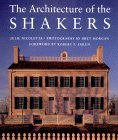
Architecture of the Shakers by Julie Nicoletta, 2000. During the nineteenth century, the Shakers conducted America's first successful experiment in utopian living. From Maine to Kentucky, they built communal villages whose unique buildings were designed to accommodate hundreds of inhabitants unified in the common purpose of work and worship. Julie Nicoletta's perceptive text and Bret Morgan's striking photographs illuminate the austere beauty, regional variations, and functional and stylistic evolution of Shaker buildings over the course of two centuries, evoking a visual and literary survey of Shaker design and its impact on our culture at large. Despite the fact that Shaker communities are almost extinct, an appreciation for their legacy continues to grow. Architects, designers, curators, collectors, and an ever-widening public have sought inspiration in Shaker art and architecture. The Architecture of the Shakers is a book for all those who wish to learn more about these remarkable buildings and how the rich cultural legacy of the Shakers continues to resonate within them. |
|
|
|
|
|
|
|
|
|
|
|
|
|
|
|
|
|
|
|
|
|
|
|