Owner/
Builder

Education and Events

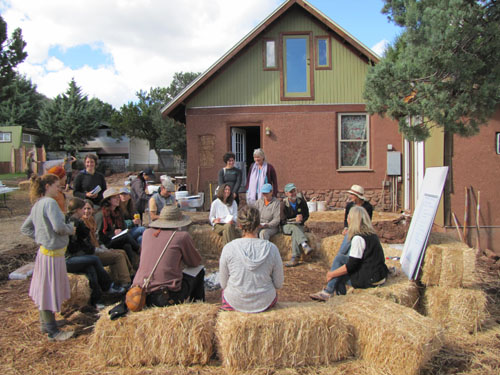
It is crucial for the greater acceptance and implementation of concepts related to sustainable architecture that educational opportunities be provided. Both traditional formal schooling as well as informal, hands-on training are important. Finding these educational resources can be a daunting task, with few institutions offering curricula that is focused on truly sustainable values, although this is changing. Students and the general population are demanding that architects and other professionals be trained in the principles of sustainable architecture, and some institutions are responding to this.

On this page you will find access to many programs and events where you can learn about this all-important field. Specific workshops and events are listed on their own page, whereas on-going workshop opportunities and links to institutions of higher learning can be found here. Some of these are even available as on-line courses. These listings are incomplete, so if you know of something that could be listed but isn't, please let us know. There is a bulletin board of announcements that relate to sustainable architecture. Some books related to teaching or learning various aspects of sustainable architecture are also listed.
 

RESOURCES

SEARCH THIS SITE

SPECIFIC WORKSHOPS & EVENTS

ON-GOING WORKSHOP LINKS

LINKS TO INSTITUTIONS OF HIGHER LEARNING

LINKS FOR TRAINING AND CERTIFICATION

INTENTIONAL COMMUNITIES WITH WORKSHOPS

BULLETIN BOARD

MEDIA

ARTICLES:
NATURAL BUILDING COLLOQUIUM, 2000
NATURAL BUILDING COLLOQUIUM, 2003

EXPERT ADVICE

with Jenny Pickerill (PHD)


LINKS TO INSTITUTIONS OF HIGHER LEARNING

ecosainstitute.org ECOSA Institute offers a 3 month immersion program in Ecological Design/Architecture that may be worth up to 15 credit hours with an articulation agreement between schools.
ecoversity.org Eco Versity a highly qualified faculty teaches courses on a wide range of topics related to sustainable architecture.
nnmc.edu Northern New Mexico Community College at their El Rito Campus has a program of education about adobe constuction.
unex.berkeley.edu UC Berkeley Extension offers a year-long program in Sustainable Design for professionals.
grisb.org The Geiger Research Institue of Sustainable Building features workshops and a strawbale certification program.
yc.edu Yavapai College Residential Building Technology Program in Arizona is focused on green and high performance residential construction with both classroom and jobsite courses.
ces.sdsu.edu
San Diego State University offers an on-line course for a professional certificate in Green Building Construction.
bsu.edu/architecture
Ball State Universtiy in Muncie, Indiana, offers architectural degrees with some studies in environmental systems.
architecture.arizona.edu
The Universtiy of Arizona has a five year program leading to a Bachelor of Architecture, with a strong emphasis on energy conservation.
design.asu.edu School of Architecture, Arizona State University
caed.calpoly.edu
California Polytechnic State University College of Architecture and Environmental Design, San Luis Opispo
csupomona.edu
California Polytechnic State University College of Environmental Design, Pomona
sonoma.edu
Sonoma State University Department of Environmental Studies and Planning
sfia.net San Francisco Institute of Architecture: A new kind of school for Architecture and Ecological Design
ced.berkeley.eduUniversity of California, Berkeley, College of Environmental Design
newcollege.ed New College of California for a just, sacred and sustainable world
arch.usf.edu University of South Florida School of Architecture and Community Design
capd.ksu.edu Kansas State University College of Architecture Planning and Design
the-bac.edu Boston Architectural Center College of Architecture
mit.edu MIT School of Architecture
wit.edu Wentworth Institute of Technology
cala.umn.edu University of Minnesota Department of Architecture
arch.wustl.edu Washington Univertsity in St. Louis, School of Architecture
arch.montana.edu Montana State University School of Architecture
unlv.edu University of Nevada Los Vegas School of Architecture
sipa.columbia.edu Columbia University SIPA Ph.D. in Sustainable Development
arch.rpi.edu Architecture Rensselaer
ncsudesign.org North Carolina State University Scool of Architecture
coa.uncc.edu University of North Carolina College of Architecture
uoregon.edu University of Oregon Department of Architecture
tamu.edu Texas A&M University College of Architecture
soa.utexas.edu University of Texas School of Architecture
arch.vt.edu Virginia Tech College of Architecture & Urban Studies

virginia.edu University of Virginia School of Architecture
sunyulster.edu Ulster County Community College is a two-year college that offers a Sustainable Building Advisor Certificate Program
eng.newcastle.edu.au University of Newcastle in Australia, Environmentally Sustainable Design
flemingc.on.ca Fleming is the first college in Canada to offer an intensive program in sustainable building.
greenbuildinguniversity.com features classes about green building that mainly relate to the real estate profession.
gradschool.cat.org.uk Centre for Alternative Technology offers a MSc AEES (a degree of the University of East London)
ecotechinstitute.com offers associate’s degrees in Solar Energy, Wind Energy, Energy Efficiency, Environmental Paralegal, etc.
newschool.edu/parsons offers a BFA in Architectural Design, a four-year pre-professional degree in various architectural studies.

TRAINING AND CERTIFICATION LINKS

cascadiagbc.org the Cascadia Sustainability Academy offers training and certification to building professionals interested in advancing their knowledge and technical mastery of a wide-range of sustainability topics. Each of the programs in the academy provide expert instruction, high quality examinations and ultimately, certification.

grisb.org The Geiger Research Institue of Sustainable Building features workshops and a strawbale certification program.

bootsontheroof.com offers certification for various aspects of renewable energy technology.

greenrealestateeducation.com a "green education" company in the United States focused on the real estate industry.

cleanedison.com offers training for taking the LEED exams for becoming a certified LEED professional evaluator.

greenadvantage.org Green Advantage Certification helps builders get jobs, contractors win bids, and allows building occupants to enjoy healthier, more efficient homes and buildings.

buildagreenbusiness.com offers training and certification in the fields of green building, alternative energy, geothermal and ground source heat, and green business management and marketing.

nahbgreen.org trains people to become verifyers for their National Association of Home Builders Green Building Certification program.

becominggreeninc.com provides training to become a certified green specialist, designer or consultant. They also offer the background and resources needed to help others to evaluate green products and energy systems.

greenlearninginstitute.com specializes in online courses related to green building.

ibe.colostate.edu The Green Building Certificate Program provides comprehensive and practical knowledge for sustainable building design within the context of LEED at Colorado State University.

concise-courses.com blends online study with field training in courses on Green Advantage, BPI Building Analyst, and RESNET HERS Energy Rater.

solarliving.org in Northern California offers many training courses and workshops related to renewable energy and sustainable living, both hands-on and on-line.

everblue.edu an accredited institution that features Renewable Energy Training, Weatherization Training, RESNET HERS Rater, LEED Accredited Professional, NABCEP Solar Certification, Corporate Sustainability, and Carbon Accounting.

sunyulster.edu Ulster County Community College is a two-year college that offers a Sustainable Building Advisor Certificate Program

endeavourcentre.org Our full-time New Construction and Renovation programs will offer students an in-depth, hands-on experience in a real-life building project from start to finish. We will be adding a full-time Sustainable Design program to that roster of in-depth, intensive, hands-on learning opportunities.

solarschoolpa.com offers courses in photovoltaic systems and solar thermal systems for professional solar installers.

ecotechinstitute.com offers associate’s degrees in Solar Energy, Wind Energy, Energy Efficiency, Environmental Paralegal, etc.

ON-GOING WORKSHOP LINKS

SUSTAINABLE ARCHITECTURE

evergreeninstitute.org workshops in solar electricity, passive solar heating, solar hot water, wind energy, home energy efficiency, green building, and natural building in Missouri, Colorado, and New York.

greenbuilder.com is an updated list of workshops related to sustainable architecture where people can post their upcoming workshops.

builderswithoutborders.org non-profit devoted to sustainable archtecture around the world.

architectureforhumanity.org a nonprofit promoting sustainable solutions through competitions, workshops, educational forums, and partnerships with aid organizations.

sbicouncil.org Sustainable Building Industries Council has design software, books, conducts workshops...a membership organization.

usgbc.org U. S. Green Building Council provides a green building rating system with training to implement it.

housealive.org specializes in workshops on Natural Building, Design and Appropriate Technology.

naturalhomes.org lists workshops conducted around the world relating to all aspects of natural building.

naturalbuildingschool.org Ancient Earth School of Natural Building in Washington State offers many workshops as well as an Apprenticeship Program.

ecosainstitute.org The ECOSA Institute offers summer workshops of one month each. The first workshop teaches methods and materials used in sustainable construction, and provides academic and hands on experience in sustainable design and construction.

melc.us The Medocino Ecological Learning Center sponsors workshops on many aspect of living sustainably.

yestermorrow.org Since 1980, Yestermorrow has been one of the only design/build schools in the country, teaching both design and construction skills.

earthhandsandhouses.org  offers a number of workshop each summer in Poland on such topics as earthbags, straw bale, earthen finishes, sculpting, overview of natural building..etc. The summer workshop dates are always posted in February and are 3 days long and cost 100 Euros.

homegrownhideaways.org features workshops on earthbags, cob, strawbale, tember-frame, natrual plasters, etc.

tibarose.com features a variety of workshops on Bio-architecture in Brazil and abroad.

greenlearninginstitute.com specializes in online courses related to green building.

dancingrabbit.org offers both training and jobs in the field of green building and sustainable living.

econesthomes.com offers a variety of workshops about sustainable and natural building techniques.

livingartsinstitute.net offers workshops on natural building, permaculture and food preservation.

crestonesolarschool.com offers workshops and classes on solar energy applications as well as natural and alternative building technologies.

endeavourcentre.org Our full-time New Construction and Renovation programs will offer students an in-depth, hands-on experience in a real-life building project from start to finish. We will be adding a full-time Sustainable Design program to that roster of in-depth, intensive, hands-on learning opportunities.

EARTHEN MATERIALS

naturalbuildingschool.org has offered workshops on earthbag building, cob, and other techniques.

kleiwerks.com workshops on cob, slipstraw, earthen plasters, bamboo, etc.

naturalbuilder.com focuses on cob, adobe and natural plasters, with books and workshops on these topics.

Seven Generations Natural Builders this group promotes natural building (especially cob and straw bale) through workshops and other assistance.

cobcottage site for The Cob Cottage Company features information and resources about building with cob.

earthenhand.com conducts workshops that involve earthbag building, mostly in the Northwestern US.

karacadirearthbuilding.com  offers workshops and training for building with earthbags and sustainable living practices.

cobworkshops.org lists many workshops featuring cob in North America.

naturalhomes.org lists workshops from around the world related to cob.

guidingstarcreations.blogspot.com offers earthbag workshops around the world.

naturalhomes.org lists workshops from around the world related to adobe building.

earthedworld.co.uk a fine, informative site about cob, listing workshops, forums, and an extensive photo gallery.

cobworks.com information, photos, workshops related to cob.

housealive.org This site is mostly focused on cob, and offers information and workshops that "empowers people to build affordable homes that are responsible and beautiful through the use of natural design and building techniques."

barefootbuilder.com has information about cob and sponsors cob workshops in Tennessee

mudgirls.ca A women's cobbing cooperative in Canada that offers workshops, etc.

adobealliance.org Simone Swan's Adobe Alliance promotes earthen architecture, especially that inspired by the work of Hassan Fathy, through information and workshops.

naturalbuilder.com books and workshops about earthen building.

eartharchitecture.org features information and sponsors workshops on all types of earth building.

sirewall.com and terrafirmabuilders specialize in insulated rammed earth, and offer workshops and information about this innovative approach to building.

nnmc.edu Northern New Mexico Community College at their El Rito Campus has a program of education about adobe constuction.

cobtogether.com specializes in cob, light straw-clay, strawbale, and natural plasters

adobebuilding.com describes a unique system for molding stabilized adobe bricks...they also occasionally sponsor workshops.

proyectosanisidro.com conduct workshops on cob and strawbale in Tlaxco, Mexico, east of Mexico City.

losguayabos.org conducts adobe workshops near Guadalajara, Mexico.

brokenearth.org offers a program whereby those who have already taken a course and have helped others build a Beehive Home will get priority status in getting help to build their own Beehive Home.

earthenhand.com offers workshops in a variety of earthen media, both in the U.S. and abroad.

www.phanganearthworks.com has occaisional workshops on earthbag construction.

casamandala.weebly.com offers opportunities for learning about earthen architecture and natural building in Spain.

permastructure.com.au conducts earthbag workshops ion Australia.

AuwaEarth.com offers a variety of earthbag and earth construction workshops in Australia and Brazil.

unitedearthbuilders.com provides educational and charitable services in regard to environmentally sustainable, affordable, and structurally sound earthbag homes.


STRAWBALE

caneloproject.com Bill and Athena Steen's lovely site devoted to their work with strawbale building and the use of natural plasters; books, videos, articles and workshops are available.

grisb.org The Geiger Research Institue of Sustainable Building features workshops and a strawbale certification program.

imagegypsy sponsors workshops and provides information about women building with strawbales.

earthnstraw.com features news, workshop listings, and a forum on strawbale building.

naturalhomes.org lists workshops from around the world related to strawbale building.

cobtogether.com specializes in cob, light straw-clay, strawbale, and natural plasters

proyectosanisidro.com conduct workshops on cob and strawbale in Tlaxco, Mexico, east of Mexico City.

evergreeninstitute.org workshops in solar electricity, passive solar heating, solar hot water, wind energy, home energy efficiency, green building, and natural building in Missouri, Colorado, and New York.


CORDWOOD

cordwoodmasonry.com Rob Roy's Earthwood Building School site, focuses on cordwood masonry and earth sheltering.

naturalhomes.org lists workshops from around the world that relate to cordwood construction.

EARTHBAGS

earthenhand.com conducts workshops that involve earthbag building, mostly in the Northwestern US.

karacadir A couple conduct regular workshops in sustainable building with earthbags in San Migel de Allende, Mexico.

earthhandsandhouses.org does at least one earthbag workshop each summer in Poland. The summer workshop dates are always posted in February and are 3 days long and cost 100 Euros.

calearth.org Nader Khalili's earthbag works.

naturalhomes.org lists workshops from around the world that relate to earthbags.

recycledrice.org offers internship programs that incorporate both earthbag building with rice hulls and their forgiveness ministry.

www.phanganearthworks.com has occaisional workshops on earthbag construction.


STONEWORK

naturalstonesite.com is an unusual site offering a book, training courses in stonework, and various types of stones from Canada.


WOOD

heartwoodschool.com the Heartwood Building School teaches classes in traditional timber framing.

foxmaple.com Fox Maple School of Traditional Building's Joiners' Quarterly

naturalhomes.org list workshops from around the world related to wood construction.

cordwoodmasonry.com Earthwood Building School teaches a Timber Framing for the Rest of Us workshop once a year in the Spring.

RENEWABLE ENERGY

solarenergy.org Solar Energy International on-line courses.

ownerbuilderbook.com information about the book, forums, workshops, etc.

naturalhomes.org lists workshops from around the world related to renewable energy.

bootsontheroof.com offers several short courses on PV and water heating applications.

evergreeninstitute.org workshops in solar electricity, passive solar heating, solar hot water, wind energy, home energy efficiency, green building, and natural building in Missouri, Colorado, and New York.

escueladeenergiasolar.org shows the building of a solar energy school in Mexico using earthbags.

solaracademy.com offers training for the installation of solar electric panels in Canada.


PERMACULTURE

Learn more or register for EarthFlow's permaculture classes .

ecowaters.org promotes workshops, sells plans, and provides information about graywater reuse, rainwater havesting, and compost toilets.

permaculturenow.com The Wilder Institute was created to promote and support permaculture education and design around the world.

Permaculture Institute of Northern California discusses of what permaculture is all about and presents lots of workshops.

naturalhomes.org list workshops from around the world related to water conservation and permaculture.

ecosainstitute.org The ECOSA Institute offers summer workshops of one month each. One of these teaches Permaculture and water management, and provides academic and hands on experience in sustainable design and construction.

INTENTIONAL COMMUNITIES WITH WORKSHOP LINKS

Dancing Rabbit Ecovillage, Missouri

Earthaven, North Carolina

Emerald Earth, California

The Farm, Tennessee

Huehuecoyotl, Tepoztlan, Mexico

The Lama Foundation, New Mexico

Tierramor: Permaculture and Deep Ecology, Michoacan, Mexico

Lost Valley, Oregon

O.U.R. Ecovillage, British Columbia

Proyecto San Isidro, Tlascala, Mexico

Sirius Community, Massachusettes

White Oak Farm and Educational Center, Oregon

Red Earth Farms, Missouri

The Bosque Village, Michoacan, Mexico
Lotan Center for Creative Ecology, Israel

MEDIA
   
 
Click on image to buy from Amazon.com
 
Building Green: A Complete How-To Guide to Alternative Building Methods Earth Plaster, Straw Bale, Cordwood, Cob, Living Roofs, Mike Montoya, 2010. This book helps readers understand the fundamental concepts of sustainable design and green building practices, which will soon become common practice on every project. It is also intended as a practical study guide for the LEED Green Associate exam, with a step-by-step study guide and an assessment (a practice exam with 80 questions and a focused discussion for each example). This book includes a discussion on why this topic is important to understand, practice, and teach along with practical examples of methods that are being used to increase a project's environmental performance and additional study resources/references.


Click on image to buy from Amazon.com
 

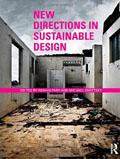
New Directions in Sustainable Design edited by Adrian Parr and Michael Zaretsky, 2010. Combining a series of well know authors in contemporary philosophy with established practitioners of sustainable design, this book develops a coherent theoretical framework for how theories of sustainability might engage with the growing practice of design. This book brings together new and emerging perspectives on sustainability, provides cohesive and jargon-free reading, and articulates the specificity of both theory and practice, to develop a symbiotic relationship which allows the reader to understand what thinking sustainably entails. This volume describes a variety of new ways to approach sustainable design and it equips the next generation of designers with necessary conceptual tools for thinking sustainably.


Click on image to buy from Amazon.com
 

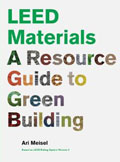
LEED Materials: A Resource Guide to Green Building, by Ari Meisel, 2010. Since its launch in 1993 by the nonprofit U.S. Green Building Council, the Leadership in Energy and Environmental Design (LEED) program has become the standard measure of sustainability for buildings worldwide. Successfully reaching one of four LEED certification levels-Certified, Silver, Gold, or Platinum-requires specific point totals, which differ among building types. Getting certified, in addition to altruistic benefits, allows building owners to take advantage of a growing number of state and local government incentives. The menu of potential points available for various practices ranges from installing bike racks on-site to documenting the source of the iron ore used in any construction steel. LEED Materials is packed with critical information on nearly two hundred materials, products, and services. Organized in the Construction Specifications Institute (CSI) MasterFormat-industry standard in building contracts-this highly visual guide makes sure your material choices and uses will maximize your LEED credits.


Click on image to buy from Amazon.com
 

Fundamentals of Integrated Design for Sustainable Building by Marian Keeler and Bill Burke, 2009. A rich sourcebook covering the breadth of environmental building, Fundamentals of Integrated Design for Sustainable Building introduces the student and practitioner to the history, theory and technology of green building. Using an active learning approach, the concepts of sustainble architecture are explained and reinforced through design problems, research exercises, study questions, team projects, and discussion topics. Chapters by specialists in the green movement round out this survey of all the important issues and developments that students and professionals need to know. From history and philosophy to design technologies and practice, this sweeping resource is sure to be referenced until worn out.


Click on image to buy from Amazon.com
 

Sustainable Design: Ecology, Architecture, and Planning by Daniel E. Williams, 2007. In this book, Daniel Williams challenges professionals to rethink architecture and to see their projects not as objects but as critical, connected pieces of the whole, essential to human health as well as to regional economy and ecology. Comprehensive in scope, Sustainable Design answers key questions such as:  How do I begin thinking and designing ecologically? What is the difference between "green design" and "sustainable design"? What are some examples of effective change I can make that will have the most impact for the least cost?  Written for architects, planners, landscape architects, engineers, public officials, and change agent professionals, this important resource defines the issues of sustainable design, illustrates conceptual and case studies, and provides support for continued learning in this increasingly central focus of architects' and urban planners' work.


Click on image to buy from Amazon.com
 

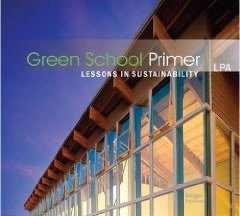
I was given a pre-release review copy of Green School Primer: Lessons in Sustainability published by the Images Publishing Group in 2009. At GreenHomeBuilding.com I am mainly concerned with residential architecture, but what better way to learn about the effectiveness of sustainable architectural principles than within a school building that was designed with this in mind? I loaned my copy of the book to a friend, Vince Palermo, who is advising a small charter school in Colorado. It just so happens that they are in the process of coming up with a proposal for a new school building. Vince, a retired physician and renewable energy consultant, is well versed in what makes for good sustainable design. Here are his comments:

"This is an excellent book, and very timely -- both in content and production. First, the book quality is very good, well laid out and organized, with lots of very good representative pictures
illustrating various principles, and is has a quality binding. Though LPA Architects are one of the largest planning firms in California, the book was printed in Australia. The forward and jacket are written by the current president of the American Institute of Architecture and Dean of
North Carolina State College of Design, so it is strongly supported by an important professional in the business. The content looks to my appraisal to be very good and embraces the spectrum of Green, from energy to holistic planning, including the environment and approach to proper utilization and selection of materials. The book is focused on ten principles and presents them succinctly and clearly with supporting illustrations. It is not focused on the details of execution -- leaving that to the architects. In all, an impressive book! This is a template for progressive thinking in school design."


Click on image to buy from Amazon.com
 

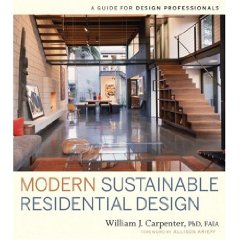
Modern Sustainable Residential Design: A Guide for Design Professionals by William J. Carpenter, 2009. "The world of residential building is poised to do great things. The guidance, information, materials and technology, while ever-evolving, are in place. Now it's the hearts and minds that must follow. Modern Sustainable Residential Design is a comprehensive, user-friendly guide that can help. So let's get started." (From the Foreword by Allison Arieff, The New York Times "By Design" columnist.) This guide offers lessons for architects, interior designers, and builders who want to conceptualize and implement sustainable design strategies in modern residential design. It outlines solutions for incorporating sustainable aspects into a home design from conceptualization to implementation. Detailed design analyses range from groundbreaking contemporary buildings such as Pugh + Scarpa's Solar Umbrella House to Ray Kappe's LivingHome, illuminating some of the most innovative sustainable strategies in the United States and abroad.


Click on image to buy from Amazon.com
 

Understanding Sustainable Architecture by T. J. Williamson, Helen Bennets, Antony Radford, 2002. This is a is a concise review of the assumptions, beliefs, goals and bodies of knowledge that underlie the endeavor to design environmentally sustainable buildings and other built environments. The authors set out a coherent framework within which they discuss the important ethical, cultural, and conceptual issues of sustainable architecture. Through a series of self-reflective questions, the importance of ecological, social, and built contexts is argued, and problem framing is linked to succesful practice.


Click on image to buy from Amazon.com
 

Sustainable Leadership by Andy Hargreaves and Dean Fink, 2005. In Sustainable Leadership, the authors address one of the most important and often neglected aspects of leadership: sustainability. The authors set out a compelling and original framework of seven principles for sustainable leadership characterized by Depth of learning and real achievement rather than superficially tested performance; Length of impact over the long haul, beyond individual leaders, through effectively managed succession; Breadth of influence, where leadership becomes a distributed responsibility; Justice in ensuring that leadership actions do no harm to and actively benefit students in other schools; Diversity that replaces standardization and alignment with diversity and cohesion; Resourcefulness that conserves and renews leaders' energy and doesn't burn them out; and Conservation that builds on the best of the past to create an even better future. This book is a volume in the Jossey-Bass Leadership Library in Education a series designed to meet the demand for new ideas and insights about leadership in schools. "What a pleasure it is to read a book that discusses education and schooling within the context of the natural and human environment that shapes them. In straightforward language, the authors teach us how to sustain educational renewal without sidestepping a powerful truth: things left ill- or unattended deteriorate." John I. Goodlad, president, Institute for Educational Inquiry, Seattle, Washington "This book makes a deep impression because it is both timely and powerful. Andy Hargreaves and Dean Fink write with clarity and passion about the need not only to develop leadership but to make it sustainable. This is leadership for the long term not just the immediate, for all schools not just for some." Steve Munby, executive director, UK National College for School Leadership.


Click on image to buy from Amazon.com
 

Ecological Literacy : Educating our Children for a Sustainable World by Michael K. Stone and Zenobia Barlow, 2005. Reorienting the way human beings live on the Earth and educating children to their highest capacities have much in common, say the thinkers and educators behind this groundbreaking book. Both endeavors must be viewed and pursued in the context of systems: familial, geographic, ecological, political. And our efforts to build sustainable communities cannot succeed unless future generations learn how to partner with natural systems to their mutual benefit. In other words, they must become "ecologically literate." With contributions from distinguished writers and educators, such as Fritjof Capra, Wendell Berry, and Michael Ableman, Ecological Literacy marries theory and practice based on the best thinking about how the world actually works and how learning occurs. Parents and educators everywhere who are engaged in creative efforts to develop new curricula and improve children's ecological understanding will find this book to be an invaluable resource.


Click on image to buy from Amazon.com
 

Learning by Building: Design and Construction in Architectural Education by William J. Carpenter, 1997. Learning by Building challenges today's architects and students to experience the energy and creativity of construction. Based on the example of famous architects such as Frank Lloyd Wright and Le Corbusier, who considered construction an integral part of the design process, "design-build" is standard practice in growing numbers of today's architecture firms. Architect and professor William J. Carpenter explores ways to integrate construction into architectural education, bridging the gap between theory and practice-between designing and building. Mr. Carpenter traces the history of construction in architectural education, from medieval times, to Jefferson's Monticello, to the German Bauhaus. He cites twentieth-century artists such as Richard Serra and Donald Judd, whose work is generated by the process of making; like the artist, "the architect should be immersed in the potential of construction." Ten in-depth case studies of schools that have incorporated design-build into their curriculum illustrate how construction studios help future architects learn real-life pragmatics and collaboration. Through text and photographs, Mr. Carpenter recounts the diverse experiences of high-profile schools such as Cranbrook and Yale University, providing models for other schools that wish to include design-build in their curriculums. Mr. Carpenter also gives a helpful outline of the practical details involved in design-build, such as team issues, legal issues, and built applications of the process. Learning by Building is a wake-up call to architects and students alike to immerse themselves in the process of architecture-to rediscover, or witness for the first time, the excitement of building.


Click on image to buy from Amazon.com
 

Changing Architectural Education; Towards a New Professionalism by Simon Pilling, 2000. Examines and discusses contemporary architectural education, illustrating, through the use of case studies, how educators have responded to the need for changes. Also discusses design-studio teaching, a method thought to enhance attitudes and skills in communication and teamworking.


Click on image to buy from Customflix.com
 

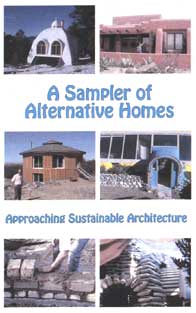
A Sampler of Alternative Homes: Approaching Sustainable Architecture . This two-hour DVD, produced by Kelly Hart, provides an overview of sustainable building concepts. You can enjoy a look at a fascinating variety of homes and the creative people who built them! Discover how passive solar design and environmentally low-impact materials can be used to create comfortable and economical homes. See the use of both traditional materials, such as adobe, and innovative materials, such as papercrete and earthbags.

This program offers a wealth of information about construction details and other considerations. It covers adobe block construction, piled adobe (similar to cob), rammed earth, both load-bearing and post and beam strawbale, earthships, earth-sheltering, cordwood, thin-shelled concrete domes, papercrete, earthbags, hybrid structures, and recycling various containers for housing. To watch a streaming video introduction to this program, click here.
$29.95

BuyDVD

For a VHS videotape of this program go to the STORE.


Click on image to buy from Amazon.com
 

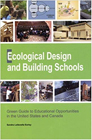
Ecological Design And Building Schools: Green Guide to Educational Opportunities in the United States And Canada by Sandra Leibowitz Earley, 2005. This comprehensive guide features an annotated listing of schools and educational centers offering programs in ecological architecture and construction. Included also are a 10-year overview of sustainable design education, tables comparing school programs, and listings of instructors, green building organizations, selected textbooks, and publicly available curricula.


Click on image to buy from Amazon.com
 

The Green House : New Directions in Sustainable Architecture by Alanna Stang and Christopher Hawthorne, 2005. The design goals of a green house are: 1. Harmonize with the site. 2. Build as small as possible. 3. Use natural heating and cooling 4. Be beautiful as well as ecological. 5. Located close to there the dwellers have to go (work, school, shopping). 6. Refurbish older buildings where possible. The thirty or so houses described in this book fit these criteria as best as possible. Some of these are in remote locations so fail in that criteria (unless you work at home and do not have children in school). But a surprising number of these dwellings are in cities: New York, Vienna, Stuttgart, Melbourne, San Antonio, Phoenix. The houses are striking in appearance, inexpensive to build, totally functional. As with other books of home plans, these houses serve as idea books for architects and potential owners to use in their new designs. (reviewed by John Matlock)


Click on image to buy from Amazon.com
 
Ten Shades of Green: Architecture and the Natural World by Peter Buchanan, 2005. A compelling manifesto using ten buildings to illustrate how environmental responsibility promises to reinvigorate contemporary architecture. Contemporary buildings, like contemporary forms of urban development, are major contributors to the environmental crisis. In this book documenting a major traveling exhibition organized by the Architectural League, curator and critic Peter Buchanan uses ten buildings that combine environmental responsibility and design excellence to argue that sustainability is not just good for the planet, but offers architects new opportunities for creativity and innovation. He shows that there is no single route to sustainability and no such thing as a green aesthetic. Rather, through a range of building types, he demonstrates that increased awareness of a building's setting combined with advances in technology create unlimited opportunities for responsive design. Generously illustrated with four-color photographs and plans, the book includes work by an international roster of architects, including Norman Foster, Neutelings Riedijk Architecten, Herzog + Partner, and Renzo Piano. 164 color photos and line drawings. An architect, writer, critic, and consultant in environmental design and planning, Peter Buchanan lives in London.


Click on image to buy from Amazon.com
 

Building the Future Today by John Clem, 2000. In this book you will find information regarding: building a healthier home, safer home; placement of the home upon the building site; alternative building materials and construction methods; effective insulation methods; the environmental aspects of building materials; the basics of passive solar heating, and much more.


Click on image to buy from Amazon.com
 

Green Building: Project Planning & Cost Estimating by RS Means, 2002. Green Building involves energy- and resource-saving strategies, such as low-E windows, reflective roofing, solar technologies and efficient HVAC, plumbing and electrical systems. Green building also means using healthy, recycled and renewable materials like certified lumber, low-VOC finishes and natural fibers - along with practices such as xeriscaping and daylighting. This book gives you the whole picture, with the information you need to:*Identify, compare, and specify green materials and systems. *Learn about LEED, Energy Star and other recognized rating systems. *Take advantage of financial incentives and funding resources. *Determine the cost of green products, and calculate energy savings and payback periods. The book also features a Green Building Cost Data section, with over 120 pages of cost data on sustainable materials and systems, which includes many new products and materials, their primary green attributes, and installed cost. Plus 8 Case Studies that demonstrate the challenges, costs, and rewards of notable green building projects.


Click on image to buy from Amazon.com
 

Solar Power: The Evolution of Sustainable Architecture, by Sophia Behring, et al, 2000. This is a dramatic, fast-moving voyage from the dawn of civilization to the 21st century, celebrating and reminding us of the importance of the sun. The sun is part of sustainable ecosystems, wind patterns, ocean currents, fossil fuels and the life cycles of animals. The way our ancestors adapted themselves to the influence of the sun is well illustrated with separate chapters dedicated to
neolithic times and the ancient civilizations of Europe, Africa, Asia, and the Americas. The book finally examines more recent historical developments and sets out exciting ways in which solar-oriented architecture can lead to energy-conscious buildings.


Click on image to buy from Amazon.com
 

The New Ecological Home: A Complete Guide to Green Building Options, by Dan Chiras, 2004. As homeowners become more environmentally savvy and demand ecological choices, a new generation of architects and builders is emerging, intent on creating warm and inviting homes that cause only a fraction of the environmental impact of conventional building methods. The New Ecological Home provides an overview of green building techniques, materials, products and technologies that are either currently available or promise to be in the near future. There are chapters on green building materials, earth-sheltered architecture, passive solar heating and cooling, sustainable approaches to water and waste, energy efficiency, and environmental landscaping. Chiras sets the record straight on the vast potential for passive heating and cooling and provides a resource guide, recommendations, and a green-building checklist. He provides a wealth of up-to-date, practical information for homebuyers, owner-builders, and anyone interested in building for a sustainable future. Dan Chiras is a leading authority on green building and renewable energy options, and is the author of The Solar House and The Natural House, which Earthship inventor Michael Reynolds has called "a much needed, unbiased encyclopedia of sustainability that will put wind in the sails of our future."


Click on image to buy from Amazon.com
 

Sustainable Homes : 26 Designs that Respect the Earth by James Grayson Trulove, 2004. Each of these "eco" houses is unique. Some tread lightly on the site by nestling into the land. Others are designed to be extremely well suited to the climactic zones in which they are built. Many use materials that do no harm to the environment—materials that are recycled, salvaged, or harvested. The houses featured in Sustainable Homes are designed by today's top architects such as Obie Bowman, Fernau and Hartman, Hanrahan and Meyers, and Lake/Flato. They reveal how much the parameters of ecological design have expanded in just a few short years. Over two dozen individual houses are featured -- from locations as diverse as a Canadian cove to the Arizona desert, from Kansas plains to the Norwegian coast, from California bluffs to South Carolina wetlands -- each described through descriptions, photographs, plans, drawings, and schematics.


Click on image to buy from Amazon.com
 

Living Homes: Sustainable Architecture and Design by Nora Burba Trulsson, Suzi Moore McGregor, 2001. For those who want a beautiful home that also reflects an environmentally conscious lifestyle, the 22 residences featured in Living Homes prove that it's possible to have the best of both worlds. In this lushly photo-graphed book, the authors take readers on a visual tour of stunning earthen homes. They explore a rammed earth neighborhood, a two-story Victorian-style straw bale house, and a recycled concrete coastal retreat, among other alternative living spaces. Meet the architects and owners, read their stories, learn what inspired them, and explore their beautiful gardens and décor. Terrence Moore's striking photographs capture the exquisite interiors and exteriors and showcase the picturesque landscapes that create such magnificent backdrops. With profiles of adobe, rammed earth, straw bale, and reinvented materials in both their historical and contemporary applications, Living Homes is a visual inspiration and vital guide to sustainable architecture and alternative materials.


Click on image to buy from Amazon.com
 

Ecohouse, Second Edition by Sue Roaf, 2003. Ecohouse 2 tells you how to design low energy, environmentally friendly buildings. It provides the foundations for building design in a warming world, and shows how to take the first step towards the zero-carbon emission buildings of tomorrow. Sue Roaf is famed for her approach to design and her awareness of energy efficiency. Here she reveals the concepts, structures and techniques that lie behind the realization of her ideals. By using her own house as a case-study Roaf guides the reader through the ideas for energy efficient design or 'eco design'. This second edition, a follow up to the best selling original, introduces new sections including earth sheltering and reed beds. It also explores 24 case-studies of ecohouses from around the world. It is an ideal comprehensive reference for architects, designers and their clients, as well as self builders, who wish to help make sustainable design a reality.


Click on image to buy from Amazon.com
 

Sustainable Architecture White Papers, published by the Earth Pledge Foundation, 2001. This book brings together leading voices of architects, designers, planners, educators, manufacturers, and journalists who are each a part of the sustainable design movement. One contributor, Samuel Mockbee, writes, "The smart architect thinks rationally about a combination of issues including sustainability, durability, longevity, appropriate materials, and sense of place. The challenge is finding the balance between environmental considerations and economic constraints." Sustainability is being addressed, increasingly, as something that involves not just the physical but also the social, institutional, and spiritual aspects of life on earth. This volume is a valuable guide, from the practical to the visionary.


Click on image to buy from Amazon.com
 

Green Architecture by James Wines, 2000. This book gives an excellent historical and philosophical account of the shifts of human settlements and explains the necessity of a change in attitude towards our built environment and its intrinsic relationship with its natural context. Many examples and a variety of projects, attitudes, perspectives, and approaches to the environmental problems back Mr. Wines view that there is no alternative, that a green architecture must become a basic constant and not remain a mere superficial trend. We already possess the knowledge and the technology to rebuild paradise on earth. We now need a growing, global conciousness and the wisdom necessary to move forward. James Wines puts up the various - and often irreconcilable - concepts of environmentally-friendly architecture for discussion, making a case for an architecture that not only focuses on technological solutions, but also tries to reconcile man and nature in its formal idiom.


Click on image to buy from Amazon.com
 

Good Green Homes: Creating Better Homes for a Healthier Planet by Jennifer Roberts, 2003. Creating a good green home isn't just about conservation, about using less or saving more-although that's certainly part of it. It's about creating better homes that are easier on the environment, less expensive over the long term, and more delightful to come home to. That's the message Jennifer Roberts wants to share in Good Green Homes, the ultimate new guide for people who want to live in comfortable, healthy, environmentally conscious homes.
With some simple steps outlined in this book, you can save money, and do your part to help save the environment. If you associate green-built housing with the unconventional or the quirky-tree houses, geodesic domes, dwellings constructed of tires or soda bottles-think again. This book lays out seven fundamental principles of green building, illustrated with more than 150 color and 20 black and white photographs of more than twenty-five homes.


Click on image to buy from Amazon.com
 
Green by Design: Creating a Home for Sustainable Living by Angela Dean. There is no “one-size-fits-all” plan for so-called “green” homes; rather, there are universal principles of design that can be applied to individual tastes and needs. Architect Angela Dean offers a variety of ways to incorporate green building into your home, including using healthy building materials such as straw bales and natural flooring, taking advantage of local materials and resources, reusing gray water for landscaping, and incorporating passive solar design. Her goal is to teach people how to think about building sustainable homes.
   
 
Click on image to buy from Amazon.com
 

The Ecological Design Handbook by Fred Stitt (Editor), 1999. This one-of-a-kind collection of "green" writings--from seminal figures such as Paolo Soleri and Buckminster Fuller, to unsung pioneers of alternative materials and experimental methods, to experts around the world--makes possible for the first time a grand overview of ecological design in architecure and planning. It's also an unparalleled source of much-needed inspiration, job-simplyfying details, and how-to's for the real-world structures and plans that are an everyday part of your work. Covers everything from alternative energy source hardware to design...aesthetics...permaculture...energy-saving retrofitting...interior air quality...hybrid construction materials...cohousing... bioremediation... and infrastructure.


Click on image to buy from Amazon.com
 

Strawbale Construction Curriculum (Facilitator Guide) by Chris McClellan, Owen Geiger, 2006. This book was created by the crew at "Builders without Borders" as a guide for facilitators of workshops on strawbale construction. There is a lot of good information imbedded within the text, but the focus is really on the techniques and processes of instruction in this particular field.


Click on image to buy from Amazon.com
 

Green Development: Integrating Ecology and Real Estate by Rocky Mountain Institute, Alex Wilson, Jenifer L. Uncapher, Lisa McManigal, L. Hunter Lovins, Maureen Cureton, William D. Browning, 1998. "Green building"--the trend toward more environmentally responsible construction--has become a popular movement among architects, but it is less well understood by the developers and owners who control funding. This book is the first to demonstrate the advantages of green development, using case studies of developers and owners who built environmentally responsible projects that have delivered superior financial rewards. If you're a developer, architect, planner, contractor, lender, or city official, this book speaks your language. Every stage of the development process is examined in detail: market research, site planning, design, approvals, financing, construction, marketing, and occupancy. Also included are lists of project statistics and contacts, books and other information sources, and development strategies. Based on 80 case studies drawn from Rocky Mountain Institute's extensive worldwide research and consulting work, Green Development distills proven procedures and practical lessons that work in the real world.


Click on image to buy from Amazon.com
 
Design with Nature by Ian L. McHarg, 1995. In the twenty-five years since it first took the academic world by storm, Design With Nature has done much to redefine the fields of landscape architecture, urban and regional planning, and ecological design. It has also left a permanent mark on the ongoing discussion of mankind's place in nature and nature's place in mankind within the physical sciences and humanities. Described by one enthusiastic reviewer as a "user's manual for our world," Design With Nature offers a practical blueprint for a new, healthier relationship between the built environment and nature. In so doing, it provides nothing less than the scientific, technical, and philosophical foundations for a mature civilization that will, as Lewis Mumford ecstatically put it in his Introduction to the 1969 edition, "replace the polluted, bulldozed, machine-dominated, dehumanized, explosion-threatened world that is even now disintegrating and disappearing before our eyes."
   
 
Click on image to buy from Amazon.com
 

Green Architecture: An International Comparison by Brian Edwards, 2001. Green is the major architectural movement of our time. Throughout the world architects are producing sustainable buildings, united solely by their desire to preserve the environment and precious natural resources. Rather than a universal style, conforming to a common language, green architecture is open to local and individual interpretation. Moulded by a whole range of forces - climatic, cultural, professional and social, it is ultimately an architecture of great richness and complexity. This title cuts across cultures and building typologies, and includes architecture from diverse geographical regions. There are special features on South Africa, Austalia, Singapore, Hong Kong, The Netherlands and North America, as well as essential introductory essays. Work is brought together, with little-known buildings being published alongside those of world-famous architects. The volume is interspersed by 'Green Questionnaires', which, offer a unique insight into the view of premier international architects on this subject.


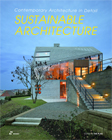
Sustainable Architecture: Low Tech Houses
by Arian Mostaedi, Carles Broto, Josep Ma Minguet, 2002


Click on image to buy from Amazon.com


Construction Ecology: Nature as a Basis for Green Buildings
by Jan Sendzimir, G. Bradley Guy, Charles J. Kibert, 2001


Click on image to buy from Amazon.com


The Sustainability Curriculum: The Challenge for Higher Education by John Blewitt and Cedric Cullingford, 2004


Click on image to buy from Amazon.com


European Directory of Sustainable and Energy Efficient Building 1999: Compnents, Services, Materials
by Owen Lewis, John Goulding, 1999


Click on image to buy from Amazon.com


Energy Efficient Buildings: Architecture, Engineering, and Environment
by Dean Hawkes, Wayne Forster, 2002


Click on image to buy from Amazon.com


Green Building Materials: A Guide to Product Selection and Specification
by Ross Spiegel, Dru Meadows, 1999


Click on image to buy from Amazon.com


Sustainability at the Cutting Edge: Emerging Technologies for Low Energy Buildings
by Peter Smith, 2002


Click on image to buy from Amazon.com


The Green Imperative: Natural Design for the Real World
by: Victor Papanek, 1995


Click on image to buy from Amazon.com


Whole House Book
by Pat Borer, Cindy Harris
2001


Click on image to buy from Amazon.com
 

Green Building Guidelines: Meeting the Demand for Low-Energy, Resource-Efficient Homes
by Sustainable Buildings Industry Council, 2004


Click on image to buy from Amazon.com


Planet Earth Home: The Ultimate Self-Sufficient Home for any Location in the World
by Mel Moench, 2003


Click on image to buy from Amazon.com


Traditional Islamic Principles of Built Environment

by Hisham Mortada, 2003


Click on image to buy from Amazon.com
 

Smart and Sustainable Built Environments
by Jay Yang, Peter S. Brandon, Anthony C. Sidwell, 2005


Click on image to buy from Amazon.com


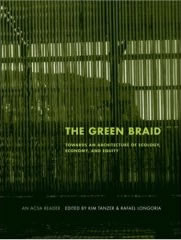
The Green Braid
(ACSA Architectural Education)

by Kim Tanzer, Rafael Longoria, 2007


Click on image to buy from Amazon.com


Tropical Sustainable Architecture: Social and Environmental Dimensions
by Joo Hwa Bay, Boon Lay Ong, 2006


Click on image to buy from Amazon.com


The Integrative Design Guide to Green Building: Redefining the Practice of Sustainability
by 7group and Bill Reed, 2009

 
Click on image to buy
from Amazon.com


Disclaimer Of Liability And Warranty
I specifically disclaim any warranty, either expressed or implied, concerning the information on these pages. Neither I nor any of the advisor/consultants associated with this site will have liability for loss, damage, or injury, resulting from the use of any information found on this, or any other page at this site. Kelly Hart, Hartworks, Inc.


Home       Site Map        STORE

For Email contact go to About Us
Established in 2001, GreenHomeBuilding.com is primarily a labor of love. Kelly, and the GreenHomeBuilding team of experts, have answered thousands of questions for readers over the years, and we continue to publish up-to-date information about increasingly important sustainable architecture. If you feel moved to assist us in this work, your kind donation would be much appreciated; this can be easily done through our PayPal account:
Custom Search

VISIT OUR OTHER WEBSITES:

  [Solar Car]      [Earthbag Building]     [Dream Green Homes]