Owner/
Builder


Sustainable Architecture

Think Small

Heat with the Sun

Keep your Cool

Use Renewable Energy

Conserve Water

Use Local Materials

Use Natural Materials

Save our Forests

Recycle Materials

Build to Last

Grow your Food

Store your Food

Share Facilities

Store Your Food


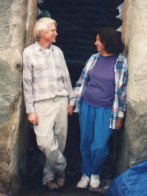
This door next to our refrigerator leads into our pantry.
 

Let nature keep your food cool. In the old days people relied on pantries and root cellars to help keep produce and other provisions fresh. Ice boxes made way for refrigerators, which are obviously much more convenient, but somehow the use of cool pantries and root cellars also fell by the wayside. This is too bad because these spaces havefunctions that a refrigerator simply can't


The temperature in the pantry ranges between about 40 and 60 degrees F. year round.
 

replace. Root cellars can store large quantities of produce from the time of harvest until the next summer. Cool pantries can store some produce, but also all manner of other foodstuffs and kitchen supplies can be kept there. Cool, dry storage is the best way to preserve most food. The cool of the earth can keep a totally bermed pantry or root cellar cool; the night air can also be used to cool a storage room. The convenience and security of having ample provisions at your fingertips can not be beat.


From the outside, the pantry just looks like a mound of earth. Notice the air vents to the right and at the top.


RESOURCES

SEARCH THIS SITE

BOOKS & VIDEOS

ARTICLES:

The Lost Art of Root Cellars
and Pantries

Karl's Root Cellar

Hybrid Pantry Concept

EXPERT ADVICE

with Kelly Hart


Root Cellars
Cool Pantries
Miscellaneous

INFORMATIVE LINKS


BOOKS & VIDEOS
   
 
Click on image to buy from Amazon.com
 
The Beginner's Guide to Preserving Food at Home: Easy Techniques for the Freshest Flavors in Jams, Jellies, Pickles, Relishes, Salsas, Sauces, and Frozen and Dried Fruits and Vegetables by Janet Chadwick, 2009. People are rediscovering the joys of locally produced foods and reducing the amount of the grocery budget that's spent on packaged items, out-of-season produce, and heavily processed foods. For all the vegetable gardeners facing baskets overflowing with bright tomatoes, and for all the dedicated farmers' market fans and CSA members, The Beginner's Guide to Preserving Food at Home has the simple solutions that turn overwhelming bounty into neatly canned tomatoes, jars of jams and jellies, and crispy-tart relishes and pickles. Organized in a friendly, food-by-food format, readers will find freezing, drying, canning, and storing instructions for each vegetable, fruit, and herb. In many cases, several ways to freeze or can a food are described, and there are often other preserving suggestions as well, such as making juice or fruit leather.
   
 
Click on image to buy from Amazon.com
 

Independence Days: A Guide to Sustainable Food Storage & Preservation by Sharon Astyk, 2009. Hard times aren't just coming, they are here already. The recent economic collapse has seen millions of North Americans move from the middle class to being poor, and from poor to hungry. At the same time, the idea of eating locally is shifting from being a fringe activity for those who can afford it to an essential element of getting by. But aside from the locavores and slow foodies, who really knows how to eat outside of the supermarket and out of season? And who knows how to eat a diet based on easily stored and home preserved foods? Independence Days tackles both the nuts and bolts of food preservation, as well as the host of broader issues tied to the creation of local diets. It includes: How to buy in bulk and store food on the cheap; Techniques, from canning to dehydrating; Tools-what you need and what you don't. In addition, it focuses on how to live on a pantry diet year-round, how to preserve food on a community scale, and how to reduce reliance on industrial agriculture by creating vibrant local economies.


Click on image to buy from Amazon.com
 

The Pantry by Catherine Seiberling Pond, 2007. The Pantry ponders the history, return and rebirth of the kitchen pantry. With a nod toward the philosophy "a place for everything and everything in its place," author and historian Catherine Seiberling Pond delves into the past, present, and future possibilities of this important room, and finds ways to incorporate a pantry into any home. Topics include: Food storage solutions; What to put in your pantry; How to choose the right materials; Design and layout of the pantry; Display and decor tips; How to display dishes and collections. Pantries are one of the most requested features being built into today's homes.


Click on image to buy from Amazon.com
 

All About Wine Cellars by Howard G. Goldberg, 2004. As more people come to appreciate the wisdom of buying wine by the case, they're contemplating the installation of a home wine cellar to store and protect their vinous investments, whether they live in a one-bedroom apartment or a house with room to spare. This concise, helpful book by respected New York Times wine writer Howard G. Goldberg offers basic guidance on planning, organizing, and maintaining a wine collection, with tips on how to choose the right storage system, create the proper climatic environment, and keep track of what's there and when it's ready to drink. Goldberg also presents a fascinating history of wine collecting, with wonderfully entertaining stories of some famous cellars.


Click on image to buy from Amazon.com
 

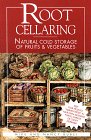
Root Cellaring: Natural Cold Storage of Fruits and Vegetables by Mike and Nancy Bubel, 1991. Root cellaring is a way of using the earth's naturally cool, stable temperature to store perishable fruits and vegetables. Root Cellaring will tell you: how to choose vegetable and fruit varieties that will store best, specific individual storage requirements for nearly 100 home garden crops, and how to use root cellars in the country, in the city, and in any environment, how to build root cellars, indoors and out, big and small, plain and fancy. There are reports on the root cellaring techniques and experiences of many households all over North America. Though it's often thought of as an adjunct to a large garden, a root cellar can in fact considerably stretch the resources of a small garden, making it easy to grow late succession crops for storage instead of many rows for canning and freezing. Best of all, root cellars can easily fit anywhere. Not everyone can live in the country, but everyone can benefit from natural cold storage.


Click on image to buy from Amazon.com
 

Cold Storage for Fruits & Vegetables: Storey Country Wisdom Bulletin A-87 by John Storey, Martha Storey, 1997. Since the 1973 publication of Storey's first Country Wisdom Bulletin, our commitment to preserving the arts, crafts, and skills of country life has never wavered. We now have more than 200 titles in this series of 32-page publications, and their remarkable popularity reflects the common desire of country and city dwellers alike to cultivate personal independence in everyday life. Storey's Country Wisdom Bulletins contain practical, hands-on instructions designed to help you master dozens of country living skills quickly and easily. From traditional skills to the newest techniques, Storey's Bulletins provide a foundation of earth-friendly information for the way you want to live today.


Click on image to buy from Amazon.com
 

Build Your Own Underground Root Cellar Describes the right location, tools, and materials needed. Includes detailed drawings on building the cellar, adapting the cellar to your needs, root cellar maintenance and getting the most from your root cellar. Gives storage requirements of individual fruits and vegetables.


Click on image to buy from Amazon.com
 

Home Food Dehydrating: Economical "Do-It-Yourself" Methods for Preserving, Storing & Cooking by Jay Bills, Shirley Bills, 1999. This valuable book presents the basic principles of the dehydrating art with clarity, and provides many useful tips and dozens of delicious recipes for all types of meals. After explaining the nutritional aspects of dehydrating foods, dehydration methods and basic techniques are examined in detail by the authors. The use of preservatives is considered in simple terms. Explanations are then given about how to dehydrate various types of foods. Chapters are devoted to dehydrating fruit and making fruit leather. Other chapters tell how to dehydrate vegetables, herbs, and meats. Methods for storing the food after it has been dehydrated are also given.


Click on image to buy from Amazon.com
 

Keeping the Harvest: Home Storage of Vegetables and Fruits
by Nancy Thurber.


Click on image to buy from Amazon.com
 
How and Why to Build a Wine Cellar by Richard M. Gold Ph.D., 1996. A construction guide for home wine cellars based on the science of deep soil temperatures. Invokes modern readily available materials and standard construction techniques. Ideal for the do-it-yourselfer or hired carpenter. Also reviews wine purchasing and consuming strategies, bin design and construction, how to organize a wine tasting group, and more. An underground classic, first published in 1983. Revised third edition. Over 24,000 copies in circulation. The only serious treatment of the subject.


Putting Food By
by Janet Greene, 1992


Click on image to buy from Amazon.com


Keeping Food Fresh: Old World Techniques & Recipes by Claude Aubert, 1999


Click on image to buy from Amazon.com


Emergency Food Storage & Survival Handbook: Everything You Need to Know to Keep Your Family Safe in a Crisis
by Peggy Layton, 2002


Click on image to buy from Amazon.com


The Busy Person's Guide to Preserving Food: Easy Step-by-Step Instructions for Freezing, Drying, and Canning
by Janet Chadwick, 1995


Click on image to buy from Amazon.com


Where's the Wheat?: Food Storage Your Family Will Eat
by Juli Brown, 2003


Click on image to buy from Amazon.com


Your Guide to Emergency Home Storage
by Alan K. Briscoe, 1999


Click on image to buy from Amazon.com


Food Storage for the Clueless
by Clark L. Kidd, Kathryn H. Kidd, 1999


Click on image to buy from Amazon.com


The Food Storage Bible
by Jayne Benkendorf, 1999


Click on image to buy from Amazon.com


How to Dry Foods
by Deanna Delong, 1992


Click on image to buy from Amazon.com


Food Storage Stability
by Irwin A. Taub, R. Paul Singh, 1997


Click on image to buy from Amazon.com


David Knapp's Hybrid Pantry Concept
Drawn by Leonard Jones, P.E.

The wall on the left is a tire wall for our 10,000 gallon cistern (round, insulated on outside pantry wall side). The bags on the right are filled with local sandy soil. The bags above are filled with scoria. The pantry will be covered in 3 layers of 4 - 6 mill plastic before backfilling with local soil. Not shown in the berm 12 inches from the surface is a 12 inch layer of scoria and another vapor barrier. That should keep the berm a bit warmer for us in winter and the pantry should stay closer to that 45F-55F ideal (in theory).

LINKS

waltonfeed.com several links to root cellar sites.

organicgardening.com how to build a root cellar.

tribwatch.com extensive article about root cellars

howtogardenadvice.com has detailed infoprmation about how to dehydrate vegetables.

Disclaimer Of Liability And Warranty
I specifically disclaim any warranty, either expressed or implied, concerning the information on these pages. Neither I nor any of the advisor/consultants associated with this site will have liability for loss, damage, or injury, resulting from the use of any information found on this, or any other page at this site. Kelly Hart, Hartworks, Inc.


Home       Site Map        STORE

For Email contact go to About Us
Established in 2001, GreenHomeBuilding.com is primarily a labor of love. Kelly, and the GreenHomeBuilding team of experts, have answered thousands of questions for readers over the years, and we continue to publish up-to-date information about increasingly important sustainable architecture. If you feel moved to assist us in this work, your kind donation would be much appreciated; this can be easily done through our PayPal account:
Google
 
Web www.greenhomebuilding.com
VISIT OUR OTHER WEBSITES:

  [Solar Car]      [Earthbag Building]     [Dream Green Homes]