Owner/
Builder

Rammed Earth

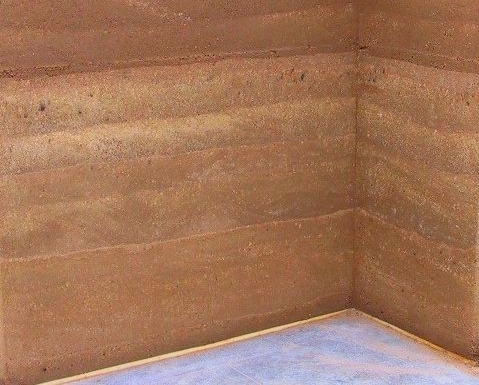
Ramming earth to create walls is at least as old as the Great Wall of China. It is really quite similar to adobe and cob techniques, in that the soil is mostly clay and sand. The difference is that the material is compressed or tamped into place, usually with forms that create very flat vertical surfaces. Modern rammed earth typically utilizes heavy mechanized equipment to move and compress the material . The walls are normally at least a foot thick to give enough bulk to be stable and provide the thermal mass for comfort. It is best to apply insulating material to the outside of the building to keep the interior temperature constant. The interior surface can be finished in a variety of ways, from natural oil to more standard surfaces. Rammed earth houses tend to have a very solid, quiet feeling inside.
RESOURCES

SEARCH THIS SITE

BOOKS

WATCH VIDEOS

ARTICLES:

Tulou Chinese Architecture

Rammed Earth: Developing
New Guidelines for an Old Material

RAMMED EARTH POSTERS

PLANS

EXPERT ADVICE

with Clifton Schooley


Where rammed earth works
Uses for rammed earth
Steps in ramming earth
Structural concerns
Thermal characteristics
Rammed earth and humidity
Codes for rammed earth
Miscellaneous

INFORMATIVE LINKS

RAMMED EARTH POSTERS AND ART PRINTS

There is a distinctive mood and flavor to Southwest American art that reflects bright sunshine on cool rammed earth walls, with a peacefulness and relaxation that is hard to come by these days. These lovely artistic posters can bring this peaceful relaxation into your home.


BOOKS AND VIDEOS
   
 
Click on image to buy from Amazon.com
 

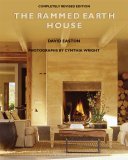
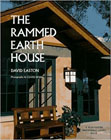
The Rammed Earth House: Revised Edition by David Easton, 2007. The Rammed Earth House is an eye-opening example of how the most dramatic innovations in home design and construction frequently have their origins in the distant past. By rediscovering the most ancient of all building materials-earth-forward-thinking homebuilders can now create structures that set new standards for beauty, durability, and efficient use of natural resources. Rammed earth construction is a step forward into a sustainable future, when homes will combine pleasing aesthetics and intense practicality with a powerful sense of place. Rammed earth homes are built entirely on-site, using basic elements-earth, water, and a little cement. The solid masonry walls permit design flexibility while providing year-round comfort and minimal use of energy. The builder and resident of a rammed earth house will experience the deep satisfaction of creating permanence in a world dominated by the disposable.


Click on image to buy from Amazon.com
 

Earth Architecture by Ronald Rael, 2008. Currently it is estimated that one half of the world's population, approximately three billion people on six continents, lives or works in buildings constructed of earth. Author Ronald Rael, founder of Eartharchitecture.org, provides a history of building with earth in the modern era focusing particularly on projects constructed in the last few decades that use rammed earth mud brick compressed earth cob and several other interesting techniques. Earth Architecture presents a selection of more than 40 projects that exemplify new creative uses of the oldest building material on the planet. Rael's engaging narrative addresses the misconceptions associated with earth architecture. Rael also touches on many topics that pervade both architecture and popular media today such as the ecological benefits and the politics of building with earth particularly in developing nations where earth buildings are often thought of as pre-modern or backward. With engaging discussion and more than 300 images Earth Architecture showcases the beauty and simplicity of one of humankind's most evolved and sophisticated building technologies.


Click on image to buy from Amazon.com
 
Martin Rauch: Rammed Earth / Lehm und Architektur / Terra cruda by Otto Kapfinger, 2001. The use of rammed earth in architecture is a fascinating fusion of modern technology, ancient knowledge, and innovative construction techniques, and is increasingly attracting attention. Today, rammed earth is not only of interest for alternative or ecological applications, but established architects are also discovering the creative possibilities of this versatile material with its advantageous properties for temperature control. In Europe, Martin Rauch is regarded as one of the pioneers of modern technical and creative applications for traditional rammed earth construction. His work encompasses residential, hotel, ecclesiastical and industrial buildings, interior design and landscape design in Germany, Britain, Italy, Austria and Switzerland, including projects with Herzog & de Meuron and Schneider + Schumacher. His "Church of Reconciliation" in Berlin was the first load-bearing structure to be built with rammed earth in Germany in the last ninety years. This volume is the definitive introduction to contemporary building with rammed earth. Text: English, German, Italian.


Click on image to buy from Amazon.com
 
The Rammed Earth House by David C. Easton, 1996. The beauty and grace of rammed earth construction is described in fascinating detail by David Easton. The photographs of different structures, both modern and ancient, by Cynthia Wright, create a breathtaking glimpse into a building technique that is as old as human history, but exactly suitable for today's resource-conscious and environmentally friendly building needs. Trees may be getting a bit scarce these days, but there's no current shortage of dirt, the main component of rammed earth homes. From such a prosaic material, gold has been spun in these timeless, graceful, and nearly indestructible homes and buildings.


Click on image to buy from Amazon.com
 
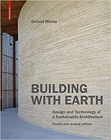
Building with Earth: Design and Technology of a Sustainable Architecture by Gernot Minke, 2006. For a number of years, the healthy and environment-friendly building material clay, in common use for thousands of years, has been enjoying increasing popularity, including in industrialized nations. In hot dry and temperate climate zones, clay offers numerous advantages over other materials. Its particular texture and composition also holds great aesthetic appeal. This handbook offers a practical systematic overview of the many uses of clay and techniques for processing it. Its properties and physical characteristics are described in informed and knowledgeable detail. The authors presentation reflects the rich and varied experiences gained over thirty years of building earth structures in Germany and abroad. Numerous photographs of construction sites and drawings show the concrete execution of clay architecture.
   
 
Click on image to buy from Amazon.com
 

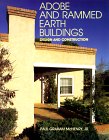
Adobe and Rammed Earth Buildings: Design and Construction by Paul Graham McHenry, 1997. This book was written to provide technical information to the professional community of architects, engineers, and building officials. It answers most technical questions and provides alternative design details to meet all situations and climates. This provides a technical manual to access this low cost, environmentally oriented basic building material.


Click on image to buy from Amazon.com
 
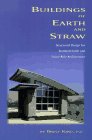
Buildings of Earth and Straw: Structural Design for Rammed Earth and Straw Bale Architecture by Bruce King, 1997. This book fills in the gaps for professional builders, contractors, engineers, inspectors, lenders, and architectural students. It includes special construction requirements of earth and straw, design capabilities and limitations of these materials, and documentation of testing data for use in addressing the concerns of officials. This book offers the nuts and bolts of rammed earth and straw bale building techniques, and why they are so spectacular, durable, and earth-friendly.


Click on image to buy from Amazon.com
 

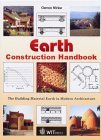
Earth Construction Handbook: The Building Material Earth in Modern Architecture by Gernot Minke, 2000. Which building material 1 - Absorbs and desorbs humidity faster, and to a higher extent, than any other? 2 - Produces hardly any environmental pollution and can be recycled any number of times? 3 - Balances indoor climate and moisture thus creating an extremely healthy environment in which to live? The answer is EARTH. In nearly all hot-dry and moderate climates of the world earth has been the predominant building material. Earth construction techniques have been known for more than nine thousand years and, even today, one-third of mankind lives in earth houses. The Earth Construction Handbook provides a survey of applications and construction techniques, including physical data, and explains the materials specific qualities together with the possibilities of optimising these. The information given can be practically applied by engineers, architects, builders, planners, craftsmen and laymen who wish to construct cost-effective buildings which provide a healthy, balanced indoor climate.


Click on image to buy from Amazon.com
 
Earth Building by Laurence Keefe, 2005. Buildings with load bearing earth walls were once wide spread throughout Britain and many thousands, including some dating from the fourteenth and fifteenth centuries, still survive. Earth is ultimate form of "green" building construction, creating no environmental pollution and consuming virtually no energy. Subsoil can be dug from on or near the site to construct building that will meet contemporary needs and comply with current building regulations. This book explains, in fairly simple terms, the engineering properties of earth as a construction material. It describes, evaluates and compares the various methods earth construction and explains the failure mechanisms of mass earth walls and how to identify building defects. It also discusses, in some detail, how mass earth construction can achieve compliance with current building regulations and illustrates appropriate repair methods based upon case studies of actual building failures and major structural repairs.


Click on image to buy from Amazon.com
 

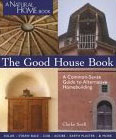
The Good House Book : A Common-Sense Guide to Alternative Homebuilding by Clarke Snell, 2004. With this exquisitely illustrated guide, packed with 400 photos and illustrations, anyone can put environmentally friendly ideas into beautiful practice. Here’s an intelligent look at how a home is supposed to function and a variety of different building approaches. What’s important is finding the right solution to fit your individual needs, local climate, and natural resources. The broad range of topics covered include choosing a site; selecting materials; building with straw bale, cob, adobe, or rammed earth; and plugging into alternative home power systems. Interviews with six homeowners, and photos of the dream homes they built, provide invaluable insight. Clarke Snell is a builder with experience using a wide variety of materials and techniques, both conventional and alternative. The construction project closest to his heart is his own partially bermed, passive solar house, which he built in the mountains of western North Carolina.


Click on image to buy from Amazon.com
 

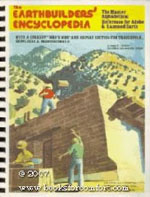
Earthbuilders Encyclopedia: The Master Alphabetical Reference for Adobe and Rammed Earth by Joe Tibbets, 1989.

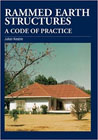
Rammed Earth Structures: A Code of Practice by Julian Keable, 1996. Ramming earth has been a method of construction for centuries in various parts of the world. This technique can produce buildings that are strong, durable safe and desirable, and because earth is an abundant and cheap resources, rammed earth buildings are often very economical. To achieve the best results the right techniques for selection and testing of soils must be used to protect walls from water damage and shrinkage. This book aims to show how high standards can be achieved and the criteria on which rammed earth structures and building techniques can be judged.

PLANS

Santa Fe III
Sven Alstrom, Designer

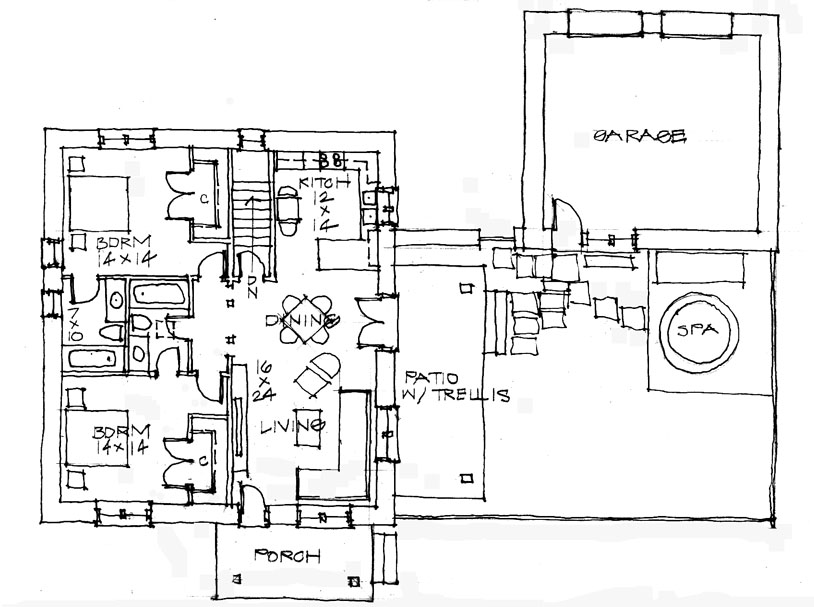
This one story Santa Fe Style bungalow home is based upon 24-inch wide straw bale construction (or rammed edarth) on concrete block foundation & concrete spread footings with crawl spaces and a partial basement. Natural interior plaster and natural exterior stucco are recommended. A ten foot beamed ceiling in the living dining room overlooks an east facing courtyard patio. The house is 1,716 sq. ft. as shown (outside dimensions). The 2 foot thick exterior perimeter wall totals 158 square feet, therefore the net useable interior total is 1,558 square feet. The detached garage is an additional 728 square feet. This plan is shown with south facing entry and east facing courtyard. Overall site plan dimensions including the garage and porches shown are 66 feet deep x 82 feet wide. This plan is optimized for a hot climate.
For more information about this plan, and many others, visit our sister site www.dreamgreenhomes.com, where you will find a wide range of plans for sustainable homes, greenhouses, small buildings, garages, and food storage space for sale. Dream Green Homes is a consortium of outstanding architects and designers, who have pooled their talent and expertise for your benefit.

LINKS

greenhouse.gov.au Australia is in the forefront of rammed earth building, and this describes how they go about it.

The Earth Building Foundation is devoted to helping people learn how to utilize earth building for better, safer, shelter.

rammedearthworks.com informative site on rammed earth.

Handbook for Building Homes of Earth, published by the Peace Corps, 1981. This PDF reprint covers a variety of earthen building techniques, including adobe blocks, compressed earth blocks, and rammed earth. It also discusses appropriate roofs, foundations and surface coatings.

eartharchitecture.org features information and sponsors workshops on all typs of earth building.

adobebuilder.com Adobe Builder Magazine offers media, classes and information about adobe and rammed earth.

rammedearthhomes.com Contractor Quentin Branch has assembled an excellent selection of slides of rammed earth.

hahaha.com.au photos of rammed earth projects in Australia and related links.

youtube.com There are several short videos of rammed earth construction posted here.

wallsofearth.com this construction company in Lousiana has posted lots of images of building with rammed earth.

aseg.net stabilized rammed earth works in Australia.

earth-auroville.com Auroville in India has been working with various aspects of earthen architecture and has much to share.

sirewall.com and terrafirmabuilders specialize in insulated rammed earth, and offer workshops and information about this innovative approach to building.

rammedearth.blogspot very informative blog about rammed earth.

rammedearth.info a fine picture gallery of rammed earth projects and designs by a Canadian rammer.

nzdl.sadl.uleth.ca Handbook for building homes of earth from the Peace Corps

Disclaimer Of Liability And Warranty
I specifically disclaim any warranty, either expressed or implied, concerning the information on these pages. Neither I nor any of the advisor/consultants associated with this site will have liability for loss, damage, or injury, resulting from the use of any information found on this, or any other page at this site. Kelly Hart, Hartworks, Inc.


Home       Site Map        STORE

For Email contact go to About Us
Established in 2001, GreenHomeBuilding.com is primarily a labor of love. Kelly, and the GreenHomeBuilding team of experts, have answered thousands of questions for readers over the years, and we continue to publish up-to-date information about increasingly important sustainable architecture. If you feel moved to assist us in this work, your kind donation would be much appreciated; this can be easily done through our PayPal account:
Google
 
Web www.greenhomebuilding.com
VISIT OUR OTHER WEBSITES:

  [Solar Car]      [Earthbag Building]     [Dream Green Homes]