| |
|
|
| |
Click on image to buy from Amazon.com |
|
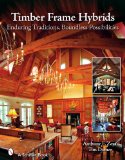
Timber Frame Hybrids: Enduring Traditions, Boundless Possibilities by Anthony F. Zaya, Tim Diener, 2008.
Of all the materials on this planet, wood is the most beloved. Heavy wooden timbers artfully crafted into a sturdy house frame held together with mortise and tenon joinery delight the eye and warm the spirit. Over 200 striking color photos and more than 100 line drawings introduce the reader to the advantages of merging traditional timber frame construction with modern, conventional building materials to create stunning hybrid homes for the twenty-first century. These homes blend the beauty of wood and the comfort of conventional building materials. The engaging text provides a detailed history of timber frame construction, details the range of choices available in timber frame hybrid construction, and provides a sweeping photographic essay of fifty building projects representing a wide range of approaches to configurations, styles, surfaces, finishes, and budgets.
| |
|
|
| |
Click on image to buy from Amazon.com |
|
Timber Framing for the Rest of Us : A Guide to Contemporary Post and Beam Construction by Rob Roy, 2004. Many natural building methods rely upon the use of post and beam frame structures that are then in-filled with straw, cob, cordwood, or more conventional wall materials. But traditional timber framing employs the use of finely crafted jointing and wooden pegs, requiring a high degree of craftsmanship and training, as well as much time and expense. However, there is another way . . Timber Framing for the Rest of Us describes the timber framing methods used by most contractors, farmers and owner-builders-methods that use modern metal fasteners, special screws and common sense building principles to accomplish the same goal in much less time. And while there are many good books on traditional timber framing, this is the first to describe in depth these more common fastening methods. The book includes everything an owner-builder needs to know about building strong and beautiful structural frames from heavy timbers, including: the historical background of timber framing crucial design and structural considerations procuring timbers-including different woods and recycled materials foundations, roofs and in-filling considerations. A detailed case study of a timber frame project from start to finish completes this practical and comprehensive guide, along with a useful appendix of span tables and a bibliography. Highly illustrated, this book enables "the rest of us" to build like the professionals and will appeal to owner-builders, contractors and architects alike.
| |
|
|
| |
Click on image to buy from Amazon.com |
|
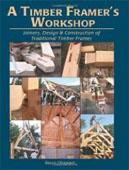
A Timber Framer's Workshop: Joinery, Design & Construction of Traditional Timber Frames by Steve K. Chappell, 1998. Thank you for A Timber Framer's Workshop. I have been wanting to add a book like this to Earthwood's Book Catalog for years. Other books in the field are either glossy coffee table fare (pretty to look at, but lacking in hard-core info) or they are not particularly user-friendly. It's great to see a timber framing book which is logically organized for easy extraction of the essential information. We are pleased to add your crisply written textbook to our list. (Rob Roy)
| |
|
|
| |
Click on image to buy from Amazon.com |
|
The Timber Framing Book, by Stewart Elliott, Eugenie Wallas, 2007. This is a thorough and profusely illustrated guide to building a timber-frame house. Grounded in ancient tradition, timber-frame construction is admirably suited to fulfill today's need for durable, energy-efficient housing and other building needs.
| |
|
|
| |
Click on image to buy from Amazon.com |
|
Historic American Timber Joinery: A Graphic Guide by Jack Sobon, 2001. This illustrated catalog discusses the joinery in American traditional timberframed buildings of the past, showing common examples with variations as well as interesting regional deviations. It was written and drawn by architect and timber framer Jack Sobon under a grant from the National Park Service and the National Center for Preservation Technology, and appeared previously in a series of six articles in the Guild's quarterly journal, Timber Framing.
| |
|
|
| |
Click on image to buy from Amazon.com |
|
Historic American Roof Trusses by Jan Lewandoski, 2006.The Timber Framers Guild has published one of its finest books and another invaluable reference for timber framers, designers, preservationist, architets and engineers. Primarily the principles of building various trusses using historic examples. The research for this book was partially funded by a grant from the National Park Service and the National Center for Preservation Technology and Training.
| |
|
|
| |
Click on image to buy from Amazon.com |
|
Timber Frames: Designing Your Custom Home by Jeremy Bonin, Rebecca Sandiford, 2007. This large format, full color book features stunning photography to inspire you, and expert advice to fully support you in developing the design of your dream home. It will guide you through the entire process of design refinement, including a few exercises that you can complete before you even talk to a builder or architect. You'll learn the terminology for different types of frames and materials, the different stages of the design process, and even about the types of architectural and construction drawings that are involved. You'll also find valuable information about the latest innovations that are important to consider, including the ones that can make your timber frame home one of the most "green" and energy-efficient available today. Architect and author Jeremy Bonin has included a wealth of helpful tips, suggestions and tricks that will help you make decisions and prevent unnecessary headaches down the road.
| |
|
|
| |
Click on image to buy from Amazon.com |
|
Timber Frame Construction: All About Post and Beam Building by Jack A. Sobon, Roger Schroeder, 1984. Here is practical how-to for both beginners and experienced carpenters who want to try this method. It offers: The basics of timber framing. How to design for strength and beauty. How to combine modern tools and time-tested methods. A starter project: How to build a 12 x 16 garden toolshed. Dozens of illustrations and photos that make it all easy to understand. "A sprightly manual on post-and-beam building techniques, well-illustrated with sketches and photos." (Popular Science)
| |
|
|
| |
Click on image to buy from Amazon.com |
|
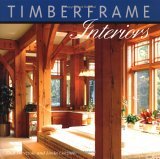
Timberframe Interiors by Dick Pirozzolo, Linda Corzine. Timberframe homes offer an aesthetic appeal that can be achieved with no other building style. Their grace, lightness, and ability to span big interior spaces are much like a canopy of trees over a country lane. Timberframe construction provides a wonderful beginning to create a warm, friendly atmosphere while responding to a unique set of interior designs and challenges. When the decor and the construction join together to establish a fully integrated look, the result is breathtaking.
| |
|
|
| |
Click on image to buy from Amazon.com |
|
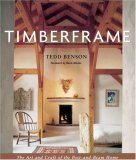
Timberframe: The Art and Craft of the Post-and-Beam Home by Tedd Benson, Norm Abram, 2002. Unlike conventional framing, which is destined to be hidden by other building materials, timberframe homes leave massive beams and smaller supports exposed to be seen and admired as a finished and an architectural element. Tedd Benson divides Timberframe: The Art and Craft of the Post-and-Beam Home into four sections--"In the Country," "On the Water," "In the Mountains," and "In Addition"--to reveal how the proud owners of timberframe dwellings strive to make those architectural elements fit their surroundings. This is not a how-to book--though there are plenty of sketches and even a few simplified plans sprinkled among 400 color photos--as much as an effort to foster appreciation and inspiration of this unique home style. With case-by-case overviews of 29 American homes from coast to coast, Benson explores a craftsmanship that was largely replaced by stud framing in the late 1800s with the development of the wire nail, the circular saw mill, and the need to build houses more quickly. But Benson also calls attention to a renewed interest in timberframe dwellings. Norm Abram, of This Old House fame, not only wrote the foreword to this book but also serves as a case study of someone incorporating this old framing technique into his new house.
| |
|
|
| |
Click on image to buy from Amazon.com |
|
Building With Awareness: The Construction of a Hybrid Home, DVD, 2005. This beautifully photographed how-to DVD will show you how to build straw bale walls for insulation, adobe walls for interior thermal mass (which greatly increases the efficiency of a straw bale home), earth plasters for a beautiful finish, 100% electrical generation by sunlight, and passive solar heating and cooling. This video could save you thousands of dollars in design and construction costs. Beautiful aesthetics and energy-efficiency can both come from the same materials. It is how the structure is designed as a whole that makes the difference. Follow the design and construction of one house - from start to finish - and see how aesthetics, comfort, and energy efficiency can all come from the same materials and design parameters. This video is jam-packed with green design and construction techniques from professionals working in the cutting edge of home building and design. Although the video emphasizes the idea of building small, the concepts can be scaled to any size structure. You will learn about rubble-trench foundations, post-and-beam framing for straw bale walls, step-by-step straw bale building techniques, adobe wall construction, roof framing, roof insulation, acid-stained concrete floors, rainwater cisterns, graywater plumbing, photovoltaic electrical systems, wiring for straw bale and adobe, radiant floor heat, window placement & installation, green materials, earth plaster mixes and techniques, and much more. Includes a full-color, 8 page quick-reference booklet with a floor plan of the home, plus a 16 minute narrated slide show of construction details. A second audio track, that doubles the design and construction information to over 5 hours, covers the pros and cons of various materials, construction costs, and discusses the experience of building your own home.
| |
|
|
| |
Click on image to buy from Amazon.com |
|
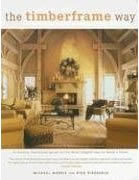
The Timberframe Way: A Lavishly Illustrated Guide to the Most Elegant Way to Build a Home by D. Pirozzolo, M. Morris, 2006. Here, in one book, is a careful study of all the elements that make a timberframe home both a lifestyle and a work of art. Every construction method is covered, from prefabricated, manufactured kits to “one-off” frames hand-hewn by independent craftsmen using traditional methods. Topics include everything from checking out kits to choosing materials for the roof to transforming old barns into homes.
Attention is also given to interior elements of construction and design, as well as to products and decor that are especially suited to the rugged beauty of the timberframe home. There are chapters on outfitting the kitchen, managing traffic patterns between rooms, selecting furniture to complement the wide-open spaces of the timberframe home, and even choosing lighting fixtures.
| |
 |
|
| |
Click on image to buy from Amazon.com |
|
Natural Timber Frame Homes by Wayne Bingham, Jerod Pfeffer, 2007. Natural Timber Frame Homes lays the philosophical groundwork for how locally available materials result in more durable and beautiful homes. It asks us to consider the source of our wood, stone, clay, and straw and suggests that this awareness contributes to our perception of character in a finished house. Building naturally also gives us the feedback necessary to be conscientious environmental and economic stewards and allows us to play a meaningful role in the creation of our dwelling. This book puts the theory of natural building into practice by providing the tools to evaluate your area for potential building materials. Photographs and drawings pull the theory together into workable timber frame construction details with floor plans that are adaptable to your specific needs, including your climate and landscape. Beauty and character of traditional timber frame homes are a result of natural materials being crafted by the hands of the builder. By injecting ourselves into the process of home construction, we have the potential to live more connected to the natural world and influence the future of the Earth for the better.
| |
|
|
| |
Click on image to buy from Amazon.com |
|
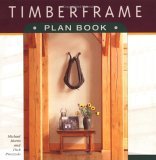
Timberframe Plan Book by Michael Morris, Dick Pirozzolo, 2000. Thirty floor plans along with tips from some of the field's premier builders and designers will enable you to incorporate the art of a centuries-old building craft into your home. Elegant in its simplicity and immensely strong for its fewer parts, a timberframe home is a thing of beauty, designed as much for its pleasing symmetry as for its strength and longevity.
| |
|
|
| |
Click on image to buy from Amazon.com |
|
Low Cost Pole Building Construction: The Complete How-To Book by Ralph Wolfe, Evelyn Loveday 1975. This one-of-a-kind book will save you money, labor, time, and materials in building a small home, barn, or other structure. Involves limited grading, no excavation for a foundation, use of sites unsuited for other types of buildings, good wind resistance, and fewer materials. You can build it yourself with this book, illustrated with plans, drawings, and photographs. Construction techniques are carefully explained.
| |
|
|
| |
Click on image to buy from Amazon.com |
|
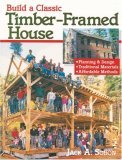
Build a Classic Timber-Framed House: Planning & Design/Traditional Materials/Affordable Methods by Jack A. Sobon, 1994. With the step-by-step instructions in this book you can build your own classic timber-framed house -- one that's enduring, and features a level of craftsmanship rare in modern construction. Following the traditional "hall-and-parlor" home design, architect and builder Jack Sobon carefully and clearly explains finding the ideal building site; creating the master plan; selecting the best tree species; hewing and milling timbers; assembling the frame; installing wall sheathing, windows, and doors; designing and finishing the interior; expanding on the plan. The basic house design of this book is easily adapted to meet different needs. Sobon's practical advice incorporates the latest knowledge on building a healthy house, integrating natural systems, and finding effective home heating solutions.
| |
|
|
| |
Click on image to buy from Amazon.com |
|
Basics Timber Construction by Ludwig Steiger, 2007.
Together with masonry construction, timber construction is usually one of the first building exercises encountered by the student in his or her training. This volume begins by presenting the building material timber in all of its facets and explaining the fundamental principles of timber construction. It then goes on to describe the most important building components and their constructive possibilities, specifically as they pertain to building with timber. Subjects: Timber as building material, Timber preservation, Systems for building with timber, Building components from foundation to roof.
| |
|
|
| |
Click on image to buy from Amazon.com |
|
Developments in Timber Engineering: The Swiss Contribution by Anton Steurer, 2006.
The early twentieth century witnessed a transition from wood to timber construction, from log houses to dimensioned post and beams dressed for frame building. The subsequent development of laminated timber and new joinery techniques made wood a viable alternative to steel and concrete, and led to anumber of awe-inspiring structures that captured, and continue to capture, the public imagination. One center of imaginative and daring timber construction has been Switzerland, whose engineers, architects, and carpenters have provided fundamental knowledge and inspiration for builders in wood around the world. Developments in Timber Construction focuses not only on the best timber structures in Switzerland, but also on numerous international projects built by Swiss architects and engineers.