![]() |
|
![]() |
|
Rock Building with rock dates back to the beginning of human history. Many cultures have left durable evidence of their fine craftsmanship with stone masonry. It should not be surprising that such an abundant, indigenous, long-lasting and useful material would be utilized by our forebears. What is surprising is that it is not used more now. I suppose that this is because it isn't delivered to the construction site in perfectly rectangular blocks that can be quickly stacked into straight walls. I have always been fascinated by rocks. One of my earliest memories is of making a miniature rock building, attempting to copy what my father was building with large, heavy stones. Rocks are infinitely variable in shape, color, texture, hardness, etc. To me, laying rocks, either with mortar or dry stacking, is a wonderful puzzle, one that is best approached with a Zen state of mind. Nothing could be more satisfying than seeing the pattern of a particular wall emerge! There is definitely an art to laying stones, one that can be learned by studying, watching or doing. One basic tenet is to overlap the rocks as much as possible, as one would do with laying bricks. This creates a strong wall that resists cracking along weak seam lines. Another good practice is to keep the very largest rocks toward the bottom of the structure. Every rock mason has his individual style, almost a signature. Rocks are particularly suitable in areas where thermal mass is desired, since they can hold their temperature very well. This means that rock walls in the interior of a building, especially where they will be struck by sunlight, can serve to store heat or moderate temperature fluctuations. If used as an exterior wall, rocks should be insulated from the inside to keep them from bleeding heat or cold in either direction. |

RESOURCES ARTICLE: EXPERT
ADVICE |
|
|||||||||||||||||||||||||||
|
|||||||||||||||||||||||||||
Stonework: Techniques and Projects by Charles McRaven, 1997. A guide to the basics of stonework that concentrates on the most common projects: retaining walls, stone fences, foundations and steps, and then adds a bit more for the adventuresome: a fireplace, an arched bridge and a moon gate. A good book for the do-it-yourselfer or to learn what to look for in working with a professional stone mason. |
|||||||||||||||||||||||||||
|
The Stonebuilder's Primer: A Step-By-Step Guide for Owner-Builders by Charles K. Long, 1998. More than 20 years ago, the author and his wife fled city life and conventional employment for the country, and have flourished there ever since. This book is a highly readable account of the couple's successful effort to build "a house that will outlast anything made of wood." Developing a compromise method of stone construction that is both simpler and truer to the stonemason's art than the popular slipform method, the Longs built an aesthetically satisfying home of stone on a limited budget and no previous construction experience. In this classic how-to book, the author describes the complete building process in clear, easy-to-follow steps and, in so doing, dispels the myth of difficulty that surrounds stone construction.
|
|||||||||||||||||||||||||||
Stone House: A Guide to Self-Building With Slipforms by Tomm Stanley, 2004. You won't need to be an expert stone mason, or even have much construction experience, to build your own house with one of the world's most traditional building materials-- stone. Stone House contains all the information you'll need to successfully build a stone home for yourself, from clearing the building site to topping the stone walls for roof framing. While providing a wealth of information on a range of relevant subjects, Tomm Stanley uses an instructional narrative to lead readers through the process of building with stone and slipforms. This is the first book dedicated to slipform stone masonry in many years. Topics include: *Traditional Stonemasonry and slipforming *Basic geology and where to source suitable homes *Passive solar principles *Concrete making and techniques for molding and casting concrete *Methods for restoring wooden windows and doors. |
|||||||||||||||||||||||||||
|
The Granite Kiss: Traditions and Techniques of Building New England Stone Walls by Kevin Gardner, 2001. In this elegant, literate primer, a master stonemason imparts the fundamentals of building traditional New England dry stone walls, along with thoughts on the history, aesthetics, and philosophy of the craft of placing stone. Author Kevin Gardner defines "the granite kiss" as "that instantly discouraging, and inevitable, experience in stone work when a fingertip or two fails to escape the contact point between two large stones on the occasion of their first meeting." In this eminently readable primer on the fundamentals of placing stone, Gardner distills 25 years of experience in building and repairing New England-style dry stone walls into clear, step-by-step instructions. Along the way, Gardner considers the history, aesthetics, and philosophy of placing stone in a book that will bring as much pleasure to armchair craftsmen as it does valuable instruction to the beginning wall builder. |
|||||||||||||||||||||||||||
Stone rising: the Work of Dan Snow, DVD or VHS, by Camilla Rockwell, 1 hr. Enter into Dans creative process and learn about the aesthetic and practical aspects of walling with dry stone. Through humorous and insightful interviews with Dan, his patrons and associates, discover the dramatic possibilities of gardening and landscaping with natural stone. Grottos and waterfalls, a stone boat, a beehive tomb, ancient-looking fortifications, even a Moorish style stone tent! Offering intimate explorations of Dans constructions, STONE RISING presents one mans devotion to the work, mystery and endless surprise of his craft.
Stone Circles: A Modern Builders Guide to the Megalithic Revival by Robert L. Roy, 1999. Ever had an irresistible urge to stand a dozen seven-ton stones upright in a circle? If so, this fascinating how-to book could make your dream come true. Robert Roy is a man obsessed with megaliths--structures and monuments constructed of large, often unhewn stones. From the gorgeous cover photo of a stone circle in New South Wales, Australia, to the extensive closing glossary of terms, he's packed Stone Circles with all you'll ever need to gain the inspiration to create a megalithic structure. You'll also find the instructions and know-how to carry your plans to fruition. In journal format, he takes you through dozens of construction experiences step by step, well-documented with photos and diagrams. Even if you have no intention of circling up, his tour of famous stones circles and their histories is well worth the read. |
|||||||||||||||||||||||||||
Basic Masonry Techniques This excellent guide shows how to build walls, fountations, walkways, patios, steps, and retaining walls with brick, stone (such as flagstone) cement blocks, and fieldstones. Shows how to build forms for footings, foundations, sidewalks, a basketball court, plus estimating cement amounts needed and how to mix cement mortars for the job, curing concrete properly. Shows how to lay bricks in patterns, a rubblestone wall; tools and materials needed, offers tips and suggestions. Color photos throughout.
Stone Designs for the Home by John Morris, 2008. Featuring stunning color photography, Stone Designs for the Home explores the work of one of the finest stonemasons practicing today, John T. Morris, who employs the traditional art form of hand-chiseled masonry. Journey through eight properties where Morris's exceptional work abounds while exploring his approach, thought processes, and philosophy behind the stunning art he creates in stone. Filled with a variety of native stones in exterior and interior projects, Stone Artistry for the Home Focuses on utilizing raw stone, masonry, and environmental elements. |
|||||||||||||||||||||||||||
|
Building
Stone Walls : Storey Country Wisdom Bulletin
|
|||||||||||||||||||||||||||
|
Irish
Stone Walls: History Building Conservation
|
Stone
Buildings: Conservation, Repair, Building
|
Conservation
of Building and Decorative Stone
|
Sermons
in Stone: The Stone Walls of New England and New York
|
||||||||||||||||||||||||
|
Build Your Own Stone House : Using the Easy Slipform Method
|
The
Stone Skeleton : Structural Engineering of Masonry Architecture
|
The
Construction of Gothic Cathedrals : A Study of Medieval Vault Erection
|
|||||||||||||||||||||||||
Stone upon Stone: The Use of Stone in Irish Building
|
Building a Beautiful Inexpensive Stone House
|
||||||||||||||||||||||||||
Dressed Stone: Types of Stone, Details, Examples
|
|||||||||||||||||||||||||||
The enduring and contemplative quality of stonework brings a sense eternal patience and craftsmanship to any scene. These qualities can emanate from your walls with these fine art prints and posters. |
|||||||||||||||||||||||||||
|
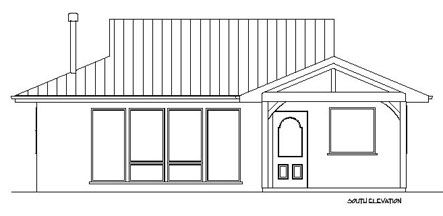
Stone Retreat
Here is an 896 sf plan made for a couple's weekend retreat...or even full time residence. It won't take much to heat this place in the winter or keep it cool in summer. It will be easy to go off grid with this one! It was originally designed for strawbales, but with the wide walls, it could be adapted for stones, with a double wall to allow for insulation.
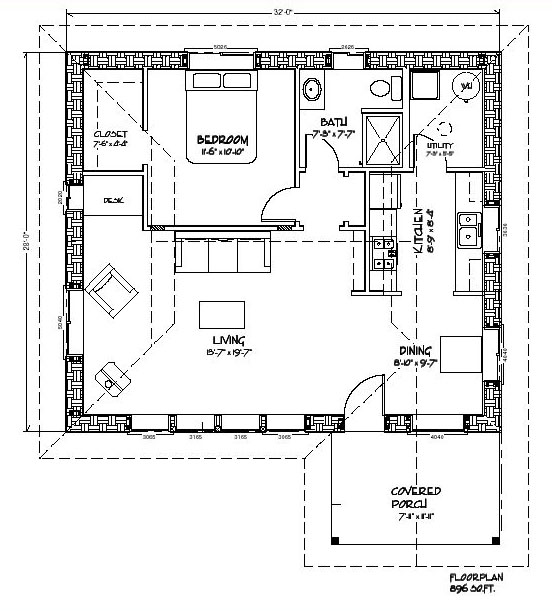
For more information about this plan, and many others, visit our sister site www.dreamgreenhomes.com, where you will find a wide range of plans for sustainable homes, greenhouses, small buildings, garages, and food storage space for sale. Dream Green Homes is a consortium of outstanding architects and designers, who have pooled their talent and expertise for your benefit. |
|
bigstones.com Rob Roy's site dedicated to his work with megalithic stone circles. stone-mason.com Michael Carrington's site shows some nice examples of various styles of stone work. slipform masonry is featured here with pictures of several projects. naturalstonesite.com is an unusual site offering a book, training courses in stonework, and various types of stones from Canada. Moving the old Academy the story of moving a century-old stone building several blocks. |
|
Disclaimer
Of Liability And Warranty
For Email contact go to About UsWe
are interested in exchanging links with other
|