Issues with Magnesium Oxide Cement
 Artist and Designer Michael Collins is a freeform visionary who inhabits the creative space between materials science, ecodesign and sustainable landscaping. He has taught many courses in permaculture and green building and has built his own laboratory for sustainable idea creation in Mexico. He seeks inspiration from nature and indigenous cultures to shatter the envelope of the possible, creating delightful and mind-expanding works of functional art. Over the past 25 years his designs have found homes in a variety of settings, ranging from organic vineyards and hotel landscapes to premier residences throughout the west coast and Mexico. His present work is with using materials that go beyond concrete-geopolymers, natures way of binding rocks, and most important to him is putting the art back into living. Michael is available for personal consulting at a fee. BiotectATsonicnet
Questions and Answers
Comment: ( Mike Collins Biotectures ) Thin shell fabric structure with ceramicrete-paper insulation and the final another layer of the marble like ceramicrete think very long term-very organic shapes.... beyond latex cement.... the ceramic edge - wont burn or expand and contract... I can see a dome with ceramic fabric tech cured in 30 minutes and finishing touches in two more hours and sealed and ready for living....a pneumatic form is needed that can be used 30-40 times ...
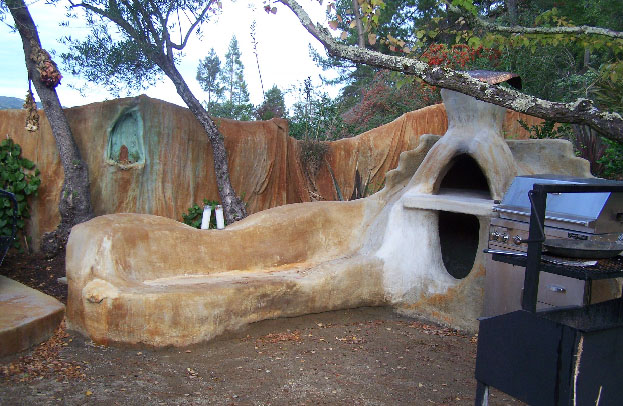
My building system has a footprint not involving the horrors of getting cut by metal lath ... we use burlap and fishing net fine half inch the sardine type and use pipe or rebar... the small amount of metal this keeps costs way down... now I am achieving square foot costs of pneumatic buildings that take hours to erect and require half the cost and half the human time that earthbag dome with the ferrocement roof could have come off with probably half as much time in cost. ... My thinking is that if the system is flexible, quick, strong, material efficient and can be built in the event of a disaster and people in the third world can afford it then it makes sense. Now I am focusing on cisterns in the 225 dollar range to store 6500 gallons.... Domes can reach massive sizes with composite technology where pretension is assessed before applying materials... Tension and Compression are equal and the structure has the compression inside each of the plywood effect squares or diamonds of the fishing net and the fabric.. remember nylon cement.com and old Billy Birdsail.... I would say they want the paper doesn't mold because it is completely encased in a material that is 100 percent sealed in 10 micron size and doesn't even allow water or vapor to pass by more interestingly the paper is bathed in a ceramic it was as if you fired the paper into ceramic but didn't burn it out.. it creates and exothermic rxn. at 150 degrees bonding it all together and unlike paper bonded with cement the binder is not hydrophobic rather it likes the binder and flows it throughout unlike papercrete... thickness I am still working out the r-values but a sensible number is 4 inches thick ..shell plus insulation and final interior coat to run on the thick side at 4.5 inches... So you have the tirolessa type spraying ability and can pull some kind of pulp to mix quickly in a five gallon bucket...simple something folks can do at home... the paperceramic looks more amenable to hand application also.. something worthy of working... If you can find large advertising balloons we can work and also some half inch fishing net with knot only.... type weave more later....
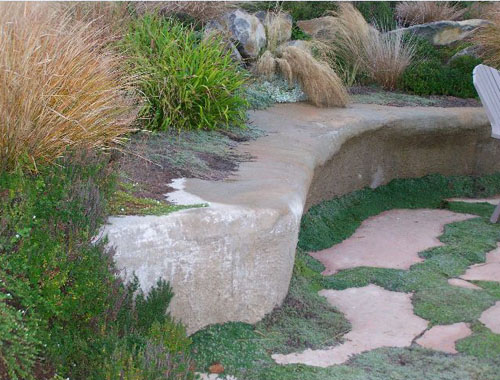
I have a new technique that involves creating the shell first with the fabrics and the ceramicrete and cure and do an insulative layer on top and proceed to a secondary roof fabric layer to protect the insulation and to finalize the shear factors.... Honestly the technology developed by my friend Abelardo Escabar Medina the curvilinear architect and inventor of the twin wall hollow wall house that is ideal for the tropics.. developed in Ecuador .... My method is to create a double dome with the pneumatic tech by creating two shells one foot separated from the other and vent two ways the shell and ventilate the dome through the two..... in this way he had a cool and beautiful house that included double walls and the heat of the tropics never penetrated the house... Remember this material was invented by the Egyptians along with many other formulas that we have not yet worked with remember the geopolymer is very different from cement and it looks like at one time it was worldwide and was lost... the recently discovered Jade Cats along the Nile tell of the true durability that can be found using these technologies... as far as the formula it can be probably made as long as you can get Magnesium Oxide and potassium phosphate.... chicken shit can substitute for the potassium phosphate....Lets note that this product sucks in Co2 and makes it a traded carbon credit of 35 dollars per ton .... lets note an interesting factoid that when eps foam was mixed with ceramicrete and a torch was applied the result was no burning after one hour....
...the cisterns are fishing net screwed into a whole and topped with a blow up balloon dome.... usually about 350 for a 6500 for the in ground.. above ground expensive to build .. look for the correct ground .... seal with lime water lightly first before putting on the fishing net I use quite large for cisterns can use 2 inch but half inch easy to use for 3000 gallon units... ceramic paper spray with tirolessa sprayer....that is the beauty of ceramicrete as it is non toxic I hate cement this stuff is great but must work small and fast..... domes spray the material on...a paint brush is all we need to get the roof built... look for Burlap and half inch fishing net in country and of course the ceramicrete ....
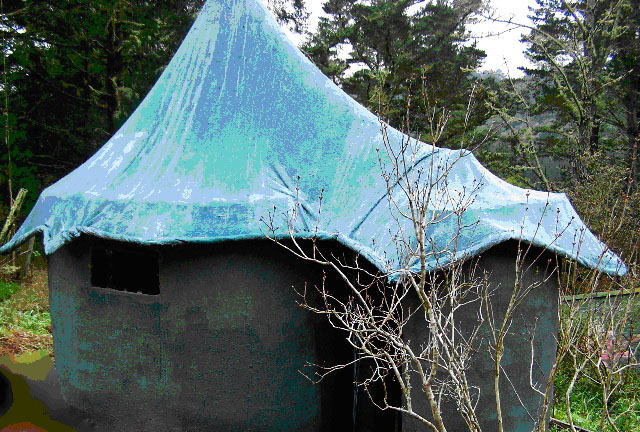
...please note this is latex fibercement burlap roof and it cost 90 dollars to build this chicken house and it is very durable... and hurricane proof....
ceramic roof is a solid ..... could be a perfect egg......remember try to smash.... an egg from the two ends.... wow strong........ that of course is our strength to weight ratio goal .... lets come at least in a par with nature ....in resource efficiency .... the time is now.... save those forests...build our esthetic around other edges... the perfection in the form....
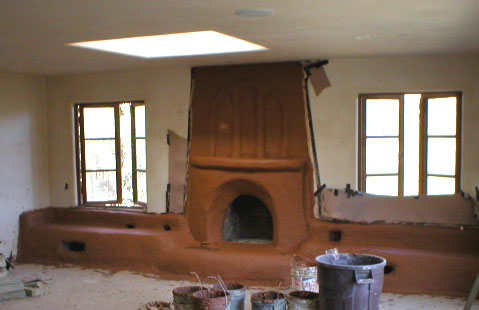
Here is a fireplace surround....very rustic
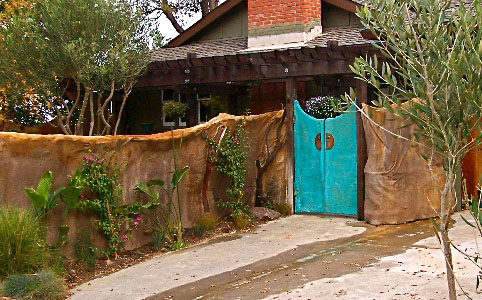
Ceramicrete doors have been very successful and are now very light and strong
....fabric doors look like the answer for the wood free future...
Q: I have been very busy lately helping to design both temporary and more permanent shelter for the folks in Haiti, using mostly earthbags. The quickest and easiest to assemble employ tarped roofs. I've been wondering about the possibility of making these same roofs more permanent with ceramicrete. Can a tarp be used as the basis for forming something more permanent and waterproof, earthquake-resistant, or hurricane-resistant roofs?
A: To make a small building, take conmesh and wrap it into a cylinder; cut a door and leave at least one grid at top on top of door (otherwise tie back for continuous cylinder) and tension the burlap on the points of the conmesh not too tight. Paint the wall up to close to the top of the wall with the ceramicrete and stop. Next push up the cone roof with a plastic nursery can the burlap and sew it into one continuous square. You don't need to cut it on the perimeters yet. Push up with a central pole in middle the witches cone; dump the mix onto the top of the tip of the cone and go around slowly, equalizing the forces until you reach the roof edge. Note you already tied off the cone ahead to the wall perimeter with tie wire and tensioned the extra out with cheap rope later to be cut. Paint from wall edge to as high as ladder worker can reach and final the pole dump method until the two meet. Now paint the tensioned outside the wall area and begin to roll back in between the ropes and achieve tension in between to access a tough roof structure. Adjust the tension units until roof looks good.
Now go inside and paint the walls and then work up into cone painting or throwing the material. The waste is ok for solidifying the floor.
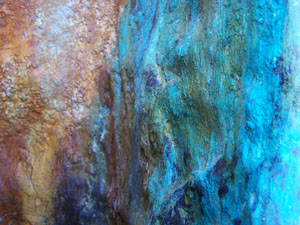 This can be hurricane proof if they put in another sack of cement to drop it into a ditch to secure the conmesh wall, that is dig a ditch for the cylinder and cement and fill it after you finish the walls dumping the concrete inside and out. Keep the eaves not to big and create the curled burlap into gutters so there is roof water catchment. This is a great building and cheaper than a tent and way stronger. One roll of conmesh results in quite a few of these buildings, and that usually runs about $120-$150 per roll. I put this up on a UN sponsored site and they were put off by the shape but didn't understand the elegance and simplicity of being able to finish in one day if the heat is on. Cooking against the wall not a worry. Buy some paint brushes and make the people wash frequently or lose them to hardening.
Q: It seems to me that ceramicrete may be an excellent final plaster/waterproofing material to cover earthbag domes. Ordinary cement stuccos are not always up to the task. Could you use an earthen plaster initially to fill in the cavities and make the shape smooth, and then do a thin final coat of ceramicrete, perhaps with a fishnet embedded?
A: Excellent for domes. We are covering moldy canvas geodesics here and to great, permanent results. So the deal is the composite layering of burlap, then fishingnet, and then burlap with ceramicrete into each layer. If your thing is mass then that goes under this shell for strength. Forget about those earthbag cavities. Cover with burlap that has been soaked in ceramicrete and tension, then on and on with your composition layers.
My attitude is you dont really have time for the earthbag until later. First the thinshell building, and then you put the earthbag building around later when the family has time and there are more resources. Then punch a hole for another pole in the existing thinshell roof of ceramicrete or latex cement and then pole another dipped ceramicrete roof onto the building atop this pole....now with a bucket also atop.......and do the tension out over the new ceramicrete walls and you have a double tropical insulated roof like the inventor Abelardo Escabar Medina, inventor of the double tropical wall thinshell house, and used by Mike Reynolds in his disaster building in East Timor? Note the burlap cone roof I have engineered took a 6 ton snow load so along with hurricane you can move this scenario to the next disaster area. Get some PVA fiber down there as one sack can build I figure 120 of these buildings.
Q: I am looking at creating a few small 3' or 4' retaining walls in a lakeside community in Ontario, Canada. The wall for the most part will not have a large load on them - gardening, for sitting and occasional a car parked adjacent to the wall (but not on it). I wanted to interlace plants into small pockets within the retaining wall. I have been looking at the cement bag retaining walls, cement soil mixtures and then found the magnesium cement. But I have been concerned about leaching from the cement and permeability. How well would a magnesium earth blend work using the paper bag approach? Is there any toxic leaching problems? Where would I find magnesium cement?
A: Interestingly the ceramicrete acts like a fertilizer and wow plants loved it....it doesn't grow mold or bacteria and so acts like good organic rock dust....."Grancrete" .... Rick Brown Homes in Idaho sells it....Paper bag? Earth bag yes. Work as overcoat and also better to make the wall out of it with an organic fabric and paint it on hold it up onto a wire frame and fold the fabric over both sides and paint away.......or spray with a hopper gun and don't forget to throw fine dry sand on it before it dries....don't premix into it... pure ceramicrete only....and then throw the sand, evenly over it and finish when dry with another pure ceramicrete coat. We have made many walls with pockets for growing plants quite successfully and best supported with chicken wire as you know it will be dry in 20 minutes.
Q: In regards to your article about ceramicrete/magnesium oxide cement: "magnesium oxide powder and soluble phosphate powder (common, low-cost materials)" OK I have done some internet searching and cannot figure out what "common, low-cost materials" are magnesium oxide powder and soluble phosphate powder. Could you please tell me in plain vernacular what would be examples of materials I could use to do this with? I am an artist/designer and would like to experiment with this material but don't quite get it yet.
A: (Kelly) While these materials are said to be common, finding them in the consumer market may not be so easy. I suggest that you buy a commercially formulated product, such as those that are described in the website links that are provided in that article to do you experimentation.
Q: Here is my plan: Use the cattle panels like Steve Kornher does just for reusable formwork to build arches. Cover the panels with a layer of billboard vinyl to catch the material and keep the panels loose. Layer over the top of the vinyl with burlap or preferably a loose basalt fiber weave. Spray a thin layer of something like the Magnesium cement over the formwork. My hopes for this project are: To detail an inexpensive low tech structure that can provide shelter or storage in very short time.
A: (Kelly) Your plan sounds feasible to me, assuming that the mag cement will release from the vinyl. Mike has done simple structures in a similar fashion, and claims that he could build a livable emergency structure in one day and have it ready for occupancy that eventing...all with about two bags of cement.
Q: I want to make bricks using fly ash as the main raw material with magnesium oxide, potassium phosphate and sand. Can I achieve compressive strength of 200 kg/cm2 and what should be the composition?
A: Check out magnesium carbonate, a new material. You should easily run into that compressive strength potential, but always use a hydraulic pressure test before moving to building.
Q: I was wondering about the vibrational strength/integrity of ceramicrete. I am interested in building a tiny house on a 8x16' trailer and think it would be a great material to work with for a variety of reasons but am unsure as to if it would be able to handle the vibrations/bumps in the road (pun intended).
A: Better to use a material with more flex; it doesn't flex too much. Tie a sample to a bicycle and or faring before going further.
Q: I am currently in Thailand, helping a friend build an orphanage. I have been researching about magnesium oxide cements, and trying to get a formula. I was hoping you may know or can direct me in the right location. There is a lot of mgo available in asia, just in many different grades of quality. Hoping you can help to know the purity needed and the best mix.
A: Try mixing chicken shit with the locally available in various quantities till you hit the right mix. Dry this mix out in powder form and rehydrate and try it.
Comment: I have found a local (almost) supplier finally for the magnesium cement and an article about a beautiful Gekko Sculpture, but the artist used a combination of Portland cement and sand with only 15% magnesium oxide plus flyash and an additive called Clinoptilolite...hmmm. What I really wonder is, if Portland repels cellulose, then why does my concrete work so well with sawdust, cloth, and paper in the mix? I now add acrylic (bondcrete) and Lime Putty to my mix but not at the beginning and it still worked! The link to the beautiful Gekko (and the company, Tec Eco) is www.tececo.com.
Q: I received some pure magnesium oxide from a mining company in PA. I was going to make some blocks out of them at my college and have them sent out to test Compressive strength and later R and U values. The spokesman I spoke to told me that I will need to add phosphate to the mix. I was wondering if you had any idea of how much phosphate I should add. I was thinking about a soft rock soluble phosphate because my formula is volume based with solids, I wanted to go with a powder.
My formula will be using 5 gallon buckets as measurements.
50 Percent rice hulls
25 percent fine sand
25 percent Mgo : phosphate
I was going to do a 50/50 mix of phosphate and MgO and wanted to know if it should produce acceptable results
I am also doing a formula with NHl 5 lime
50 percent rice hulls
25 percent fine sand
15 percent NHL5
10 percent MgO /phosphate cement
I would like to put them in an 8 x 8 x 16 block mold lined with plastic ( I have heard MgO removes easily from plastic.
I am interested in mortarless block building and find that it is some of the cheapest ways to build a home besides earthbag building. I was hoping this could give me a better idea of strengths, costs, R and U values. Any advice would help before I begin the mixing.
A: You need to check out mag carbonate cements. You definitely need to add potassium phosphate to the mix; soft rock phosphate should work, but it must be pretty fine. Honestly in the long run any product that competes with agriculture is not o.k. in my book; those are valuable soil fertility nutrients and in the long run we should check out the mag carbonates. No oxidative reduction reaction needed as a result. I have yet to use this product but it appears to be the way to go. Ceramicrete was used by the Egyptians and its compressive strengths are impressive. Note that the inclusion of chrysacola flower adds tremendous strength and check out oxidative reduction reactions like using oxalic acid. The Egyptians made over 17 types of cements...all with excellent strength and wear factors.
Q: I am wanting to build a thin fire ring with as natural materials as possible. I am not interested in paying high dollar for refractory cement. I was wondering if you could direct me in finding the proper materials and where to purchase raw materials to make a high temperature cement. This is a simple campfire pit for a backyard fire. We want to make the fire chamber out of a high temp concrete mix of our own design to withstand the heat and temperature change.
Currently in my research I am at Basic Cement (fused magnesium oxide 5% Magnesium Phosphate 10% Boric Acid as a retardant 1/2%) I am looking into additives and high temp aggregates such as Fumed Silica, Pulverized Fly Ash, Kaolin, possible quarts sand or furnace slag and I am trying to obtain optimum ratios for desired results. Any Ideas? also wondering of any negative effects if I add quick lime.
A: Try Grancrete. It goes to 4000 degrees. Get the kind that is not grey....its refracory. It is just like your mix, except no boric that I know; works great on pizza ovens. Use pumice as the aggregate...not much sand if any.....only for topical throw on the final exterior surface.
Q: I'm interested in knowing how one can obtain a ready made dry powder mix of Magnesium Phosphate cement, one formulated with the right blend of Magnesium Oxide and Ammonium Phosphate that, when combined with a measured quantity of water, will yield concrete of high strength (8000 psi). Furthermore, to make the concrete, I'd like to know if one adds sandy soil or clayey soil to this mix ? Does the mix also require the addition of ash? If so, could one purchase a mix with ash already blended in at the right ratio ? Also, I want to add some form of cellulosic material such as wood chips, shredded straw, saw dust, paper pulp, ect. What are your thoughts on adding cellulosic materials ? Should they be added in addition to or in place of inorganic aggregates such as sand/clay/gravel? What I intend to use this for is a roof and an exterior wall. I need a lightweight thin shell structure that's waterproof, insulating, sound dampening, mold proof, long lasting, can withstand occasional hail and foot traffic, and be able to breathe out water vapor and moisture, and never rot. I also need it to be completely non toxic since I'm going to harvest the rain water collected from the roof for domestic water use.
A: It is great for thinshell construction and paperceramicrete. Lime wash and concrete-fiber cement/fishing net cement cisterns with thin shell tops a 6500 gallon unit can come in at 250 dollars including cement mixer rental and such, as long as you provide labor. We use 6 ton fishing net, usually recycled fishing net......no issues with rust and such. You could use Grancrete for one of these. My kids loved to use it as a pool.
(Kelly): I have added quite a bit of sand to grancrete, and ended up with a very dense, hard material. Cellulose is easily mixed with this and becomes integral with it. You can blend this with mineral material. It is completely waterproof and not breathable. It is stable once it sets up and would not leach toxins.
Q: I plan to drape sand bags with approximately 6 mil vinyl and then lime plaster both the inside and outside. I thought I may the use the outside plaster as "scratch coat" and apply a thin (1/8") Ceramicrete to make the outside waterproof. Maybe I should apply the Ceramicrete directly to the vinyl?
A: Concept issues: lime and ceramicrete have yet to find good partners; better put a burlap over the lime and make sure it is good and dry and then seal with ceramicrete...and throw some sand for aggregate, dry of course, onto the wet ceramicrete. Test patches first.
Q: I am building a masonry passive-solar earth-bermed house. I'd planned to use a traditional stucco mix on my masonry walls. After reading the green-home building website, I'm wondering if a more breathable material would be better, such as ceramic-crete mixed with either paper or sawdust mix sprayed on the walls and then painted with a tinted lime wash finish would be a better alternative to stucco?
A: Ceramicrete is definitely not very breathable in its pure form but paper ceramicrete is more so......where is it?...as climatics make a difference if you have hurricanes.
Q: We just did our first test patch with ceramicrete on burlap using Black Beauty fine sand (it is drying quite black). Is there any natural coloring agent I could add to the mix to make it look more terra cotta in color?
A: Yes, terra cotta colored clay that you find yourself.
Comment (Kelly): When I did some experiments with magnesium cement I found that you could add at least equal portions of sand and it was actually stronger and would cover twice as much, making it more economical.
Q: I have been interested in magnesium cement for some time but still haven't gotten my hands on any of it. I'm a sculptor and, having recently moved to South Texas, want to build a courtyard privacy wall that will look like an old adobe wall. Can Magnesium cement be troweled over just about anything or does it need to be dipped onto fabric and hung? I'm also considering sculpting a bathtub and I see one in the earth house pics. Is that tub made out of MgO and if so, can you tell me a bit about how to go about it? People laugh at me when I mention sculpting a tub. ;) Being a sculptor I think I can figure it out if I just know the steps that have been successful. Also, can it be used for shower pans / waterproofing a floor/walls with a drain?
A: Better galvanized stucco cloth or fine galvanized mesh.... Or sudaglas....or heavy duty nylon mesh or fishing net heavy duty 6 ton... Always use shower rubber though for Potential under your armature add more pva fiber lower layers leave tooth or pour plaster one go... Acid wash color or acrylic color when hard. Practice first. I would say tub is advanced workers project; do a bench outside first and color or fountain.... Also we did countertops. You need to practice for glass texture...
Q: I am wondering if you would be able to help me learn more about Magnesium Cement?
A: (Kelly) I am far from an expert on the topic. I have experimented some with the Grancrete formulation that they sell in buckets. Judging by the lack of specific information about how to go about mixing your own from readily available materials, I assume that it is not all that easy to do.
I can tell you that it is rather tricky to use, in that it sets up into a very hard material within about half an hour, so you are constantly under pressure to apply what is mixed and ready to use, as well as clean up any brushes or other tools before they become unusable. That problem, coupled with the rather high expense of the commercial product has made me less optimistic about its general use and application.
We will be needing some kind of cement to create roof tiles for our design. Maybe if we made a mold or 2 for the tile shape that we would like to have, it wouldn't be so much of an issue that the Mag cement hardens quickly. On the contrary, it may make the process easier.
I can see that for making roof tiles Mag cement might be ideal, as it is supposed to be waterproof and does set up quickly, so that production could proceed quite rapidly.
Can you possibly advise me on what type of material may be good for making the MOLD of the roof tiles out of since you do have experience with this material? I am assuming that it must be a specific type of material that will not bind to the cement itself. Is that correct?
A smooth, hard material, like most plastics would work. You could possibly make molds out of large diameter plastic pipe. I caste a sample inside a plastic yogurt container that just fell out when I turned it upside down. Or, take an existing tile that you want to replicate and coat it with several applications of urethane and see if that works.
What about the cement's ability to withstand water exposure or moisture? Since we would like it to be what the roof tiles will be made of.
They say it is waterproof naturally, but I have not tested this. You can mix perhaps as much as 50% sand with the Grancrete mix and it actually gets harder than without.
By the way, the Grancrete mix also includes some tiny fibers (I'm not sure what material this is); I'm sure that these help make the product stronger after it sets up. Mag cement is supposed to combine easily with most any cellulose fiber, so this could lead you to experiment with a variety of natural fiber sourced locally to add to the mix. It would have to be chopped up rather finely to work I expect.
Also, could you tell me a bit about the mixing process despite its tendency to harden quickly? From what I saw on youtube, is it really as easy as mixing reactive magnesium with the correct ratio of water?
Yes, it is as simple as that...just add enough water to make the consistency that you want and mix.
Q: How did you like it?
A: (Kelly) My experience with it was mixed. I had planned to spray it on some burlap to make a fence, but my sprayer setup wasn't good enough to do this, so I had to paint it on manually. With only about half hour of time before it sets up, you have to work really fast and clean your tools right away. It does form a a very solid material though.
Q: I am interested in using ceramicrete (magnesium-based cement) as a roofing material on top of an earthbag dome. My interest in this is two-fold, firstly to waterproof the dome, and secondly to create a roof surface suitable for the collection of rainwater. The flexibility of shapes that can be made with ceramicrete seem to lend themselves nicely to forming guttering to direct the water to a tank. I'd be interested in your opinion as to whether this would work better than the more common ferrocement approach with earthbag structures. I'd also be curious if you have information on whether using this type of surface would result in clean water, or if small deposits of magnesium would accumulate in the tank water over time.
A: Better, because ceramicrete doesn't expand and contract like cements of Portland type. I recommend curling up the gutters before they set on a burlap fishing net matrix. The product sets in 15 minutes so plan ahead. There was a day when I would use pva latex fiber cement but after much experience with ceramicrete would never go back. Also, as far as clean water, we find the finish is equivalent to ceramic as long as one uses non gray type ceramicrete which contains fly ash. We use non fly ash type for pizza ovens and water cisterns.
We recommend using Kuralon fiber to add strength, as psi strength can approach 21000 psi... hybridizing fiber types and additional pre-tension technique I use adds more strength. Presently we are using Sudaglas for high end projects that are looking for a 1500 year finish.
Essentially your teeth are the same material (apatite); the central molecule of photosynthesis is magnesium. It doesn't dissociate into solution once the ceramic vitrification reaction occurs and from experience shows no wear or signs of deterioration after years and years. We build cisterns of ceramicrete versus plastic or cement or lime because this material is environmentally superior to aforementioned; it is used to repair teeth as it is apatite.
Q: Interested in building a small dome and looking for green ways of surfacing the exterior. Are there any formulas for the mixing of magnesium oxide cement using goat or sheep manure?
A: The active phosphorus is too low... Honestly, there is no phosphorus; use chicken manure.
Q: I recently read "Water Storage" by Art Ludwig and would like to build some ferrocement structures only I do not want to use Portland cement. Having also learned about magnesium based cement I thought that would be a greener alternative. Unfortunately I have not been able to find a source for magnesium based cement. Are you aware of any?
A: (Kelly) I'm pretty sure that magnesium oxide cement has successfully been used to make cisterns, and you might contact Michael Collins to find out more about this. I have bought premixed cement from the Grancrete company, and I have also been given this contact as a source for mag cement components: www.hillbrothers.com Sorel cement components:
- bagged calcium chloride hexahydrate
- bagged magnesium oxide powder
Q: Do you know anything about using magnesium cement instead of Portland cement to build a home? I want to built a cheaper passive home out of concrete.
A: (Kelly) This is not necessarily a cheaper way to go. The commercial forms of this cement that are available cost considerably more than ordinary Portland cement, but it is also possible to create a shell of a house with rather thin walls this way.
Q: Is Ceramicrete waterproof? I am going to be building a geodesic home dome and really want to utilize the magnesium concrete, but it needs to be waterproof.
A: (Kelly) Yes, ceramicrete is quite waterproof and can be used to create roofs.