Owner/
Builder

Strawbale

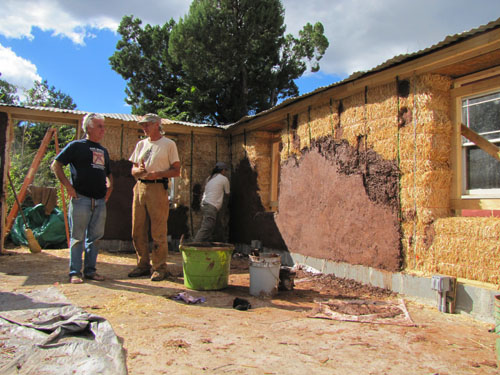
Building with bales of straw has become almost mainstream in some parts of the country, especially in the Southwestern United States. Many localities have specific codes for strawbale construction, and some banks are willing to lend on this technique. Straw is a renewable resource that acts as excellent insulation and is fairly easy to build with. Care must be taken to assure that the straw is kept dry, or it will eventually rot. For this reason it is generally best to allow a strawbale wall to remain breathable; any moisture barrier will invite condensation to collect and undermine the structure. Other possible concerns with strawbale walls are infestation of rodents or insects, so the skin on the straw should resist these critters.

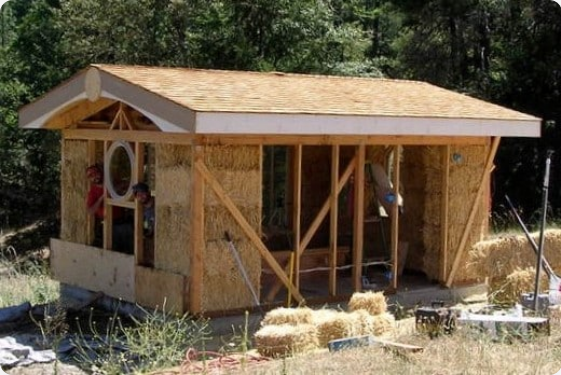
There are two major categories of building with strawbales: load-bearing and non-load bearing. A post and beam framework that supports the basic structure of the building, with the bales of straw used as infill, is the most common non-load bearing approach. This is also the only way that many building authorities will allow. While there are many load- bearing strawbale buildings that are standing just fine, care must be taken to consider the possible settling of the strawbales as the weight of the roof, etc. compresses them.

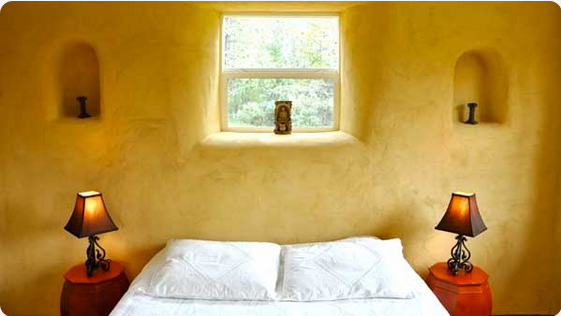
Erecting bale walls can go amazingly quickly, and does not take a lot of skill, but then the rest of the creation of the building is similar to any other wood framed house. In fact strawbale houses typically only save about 15% of the wood used in a conventionally framed house. The cost of finishing a strawbale house can often exceed that of standard construction, because of the specialized work that goes into plastering both sides of the walls. The result is often worth it though, because of the superior insulation and wall depth that is achieved.
Here is a 3 minute radio interview with Kelly Hart talking about strawbale building:

RESOURCES

SEARCH THIS SITE

BOOKS & DVD's

WATCH VIDEOS

ARTICLE:
Strawbale Construction
by Bruce King, P.E.

PLANS

EXPERT ADVICE

with Dr. Owen Geiger


Where does strawbale work?
Foundations
Walls
Breathability
Roofs
Varmints
Miscellaneous

STRAW BALE TRAINING &
CERTIFICATION PROGRAMS

INFORMATIVE LINKS


BOOKS & VIDEOS
   
 
Click on image to buy directly from the producer
 

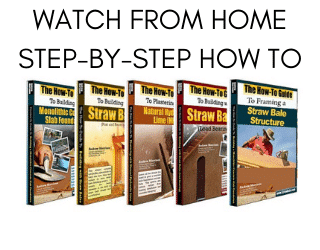
The Comprehensive Guide to Building with Straw Bales- Post and Beam Infill (2 hours 58minutes on 2 DVDs) This comprehensive DVD set contains invaluable information to help you save time and money on your straw bale building projects. The latest research in the field of straw bale design and construction is presented. The DVD includes:
*A complete list of recommended tools for each stage of the baling project.
*All of the necessary safety features for building with straw bales
*Tips for preparing for the local building codes before you begin construction
*Foundation Details and Tips
*Tips and Techniques for Framing Your Straw Bale StructureTips and Techniques for Preparing to Build Your *Straw Bale Walls- How to Build Your Toe-Ups
*A Primer for Working with Straw Bales
*All You Need to Know About Box Beam Construction
*Electrical Details
*Cleaning Up the Straw Bale Walls Prior to Putting Up Your Wire Mesh
*How to Put Windows Into A Straw Bale Building
*All the Tips and Techniques for Applying Wire Mesh to Your Straw Bale Walls
*The Interior: Windows, Corners, and Rounded Details to Your Straw Bale Walls
*Plumbing, Cabinet Hanging, Interior Wall Partitions, High Rain Environments, and Other Considerations
*Introduction to Lime Plaster
*The Scratch Coat- Your Initial Coat of Plaster

*The Brown Coat Application- Your Second Coat of Plaster
*We Will Demonstrate All the Techniques to Use to Get a Smooth Finish on Different Aspects of Your Structure:
*The Finish Coat- Your Final Plaster Application

This Comprehensive Guide ($59.99) is also available as two separate DVDs:

How-To Guide to Building With Straw Bales ($39.99)

How-To Plaster With Natural Hydraulic Lime Plaster ($34.99)


Click on image to buy directly from the producer
 

The latest addtion to this series of informative How-To DVDs is The How-To Guide to Building With Straw Bales -- Load Bearing ($39.99)

Each chapter of the DVD represents a day of work so you can properly allocate the time you will need to build the exact structure, which is a perfect practice structure to hone your skills prior to tackling a large project.

Day 1 is all about getting the foundation or decking in place.

Day 2 is getting ready for the bale raising.

Day 3 is all about raising the bales. This can be a lot of fun, especially when you see the fruits of your labor appearing so quickly before your eyes!

Day 4 is cleaning up the bale walls and getting the roof in place.

Day 5 is finishing up the roof, adding the final fascia boards and attaching the roofing felt.

Day 6 is the final day before you begin plastering. Install your doors and windows and get the welded wire mesh and the plastering lath in place.


Click on image to buy directly from the producer
 

In addition, these folks have produced The How-To Guide to Building a Monolithic Concrete Slab Foundation (39.99)


Strawbale Building: Debunking the Myths, by StrawBale.com


Click on image to buy from Amazon.com
 
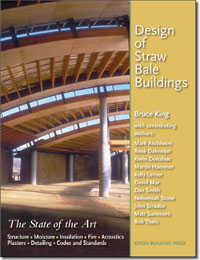
Design of Straw Bale Buildings; The State of the Art, by Bruce King, 2006. Anyone who is considering the design and construction of a straw bale building would be wise to read this book first. I especially found the information on codes and standards very informative. Code officials who are approached to accept this type of design in their jurisdictions would be well-advised to obtain a copy of this publication. - Richard Okawa, P.E. Vice President of International Services, International Code Council, (ICC), Whittier, California.

Design of Straw Bale Buildings provides comprehensive, state-of-the-art guidance, including structural performance, moisture control, fire resistance and durability. It is a must-read book for anyone considering designing, building, assessing, or simply living in a straw bale building. Yet another excellent publication from Bruce King and Green Building Press.
-Prof. Peter Walker, Director BRE Centre in Innovative Construction Materials, University of Bath, UK.


Click on image to buy from Amazon.com
 

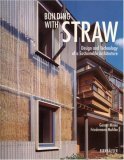
Building with Straw: Design and Technology of a Sustainable Architecture by Professor Gernot Minke, Friedemann Mahlke, 2005. Building with straw bales is a technique pioneered a century ago in the state of Nebraska. In recent years there has been a renaissance in the use of straw as a building material largely in the American Southwest, but also in Canada, France, Holland, Germany, Austria and China. Straw is a renewable source with excellent insu lating properties. It is a cheap and easy-to use option for self-builders, and even large-scale structures can be erected using timber framework filled with straw. This book is a practical, hands-on guide to building with straw. Fire safety, protection against moisture, damp, pests and parasites are treated in detail. Numerous on-site photos document the process of assembly and construction step by step. 30 exemplary international projects illustrate the wide spectrum of design possibilities with straw.


Click on image to buy from Amazon.com
 
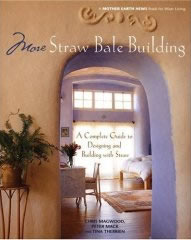
More Straw Bale Building : A Complete Guide to Designing and Building with Straw by Chris Magwood , Peter Mack, 2005. Straw bale houses are easy to build, affordable, super energy efficient, environmentally friendly, attractive, and can be designed to match the builder's personal space needs, esthetics and budget. Despite mushrooming interest in the technique, however, most straw bale books focus on "selling" the dream of straw bale building, but don't adequately address the most critical issues faced by bale house builders. Moreover, since many developments in this field are recent, few books are completely up to date with the latest techniques. More Straw Bale Building is designed to fill this gap. A completely rewritten edition of the 20,000-copy best--selling original, it leads the potential builder through the entire process of building a bale structure, tackling all the practical issues: finding and choosing bales; developing sound building plans; roofing; electrical, plumbing, and heating systems; building code compliance; and special concerns for builders in northern climates. New material includes:
* more extensive sections on electric wiring and plumbing
*updated sections on bale finishes and finishing
*a section on prefabricated straw bale walls
*a wider selection of case studies, photographs and illustrations
*a section on common mistakes
*budgeting for low-, medium- and high-cost projects, and new testing data that is in no other straw bale book.
   
 
Click on image to buy from Amazon.com
 

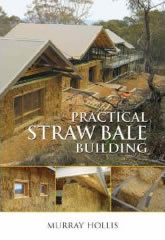
Practical Straw Bale Building by Murray Hollis, 2005. Building with straw bales is being embraced by amateurs and professionals for its versatility, comfort, environmental friendliness and high insulation. New methods should expand its growing worldwide popularity. Practical Straw Bale Building describes the best of current practices and introduces new ideas in a practical step-by-step approach, supported by technical data and analysis. Starting from how straw bales are made, it describes the building of both in-fill and load-bearing walls, discusses the properties of materials used to plaster the walls, and details how particular features are incorporated, such as windows, doors, arches, plumbing and electrical. It especially describes new methods that enable the construction of straighter, thinner and easier-to-plaster walls. The book provides a wealth of information and ideas for immediate practical application and as a basis for further development of straw bale building methods.


Click on image to buy from Amazon.com
 

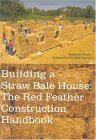
Building a Straw Bale House : The Red Feather Construction Handbook by Nathaniel Corum, 2005. "This book is a timely and important tool for the empowerment of communities facing housing deficits. The Red Feather project is extremely important; it is truly making a difference."-Jane Goodall For more than a decade the Red Feather Development Group, a volunteer-based organization, has built and repaired straw bale houses for Native Americans. Somewhere along the way-and this was certainly not the plan-they created an architectural phenomenon: This inexpensive, environmentally sound, easily constructed, and downright beautiful form of building has, for good reason, caught the public's imagination. Here, Red Feather provides a step-by-step, easy-to-follow manual for would-be strawbale builders-indeed, they supply everything you'll need but time, energy, and lots and lots of straw. Informative sections on safety, design, tools, and materials, and case studies picked from over thirty-five Red Feather projects give a comprehensive overview to straw-bale building. But this book is much more than a construction manual. It is also the inspiring story of Red Feather itself, a tale of community action and cooperation that suggests a can-do solution to the growing housing crisis on America's Native American reservations.


Click on image to buy from Amazon.com
 

How To Do Straw Bale: Straw Bale Energy Revealed Version 2.0 with Videos [CD-ROM] by Rusty Cline, 2002. In this Multitorial you will learn what you need to know to build with straw bale for a home or a wall. It covers three different designs: Hybrid, shared load design, load bearing design, and in-fill frame design. What is a Multitorial? A multimedia tutorial; a learning tool that uses the power of your computer to help you learn what you need to know without having to learn how to do a project material take off. It isn't a book; it isn't a video; it isn't really an e-book: it is a combination of the best parts of all of the above. It has text and pictures like a book. But it also uses the power of your computer to operate calculators that help calculate the materials that you will need. Straw Bale requires calculated density (C-D) calculations that the preprogrammed calculator in this...multitorial will do for you. Simply plug in a few numbers and you are ready to satisfy your local C-D building codes. In addition there are animations that make learning easier. Since it is an electronic media that is improved over time using feedback from students just like you, you also get free updates for life.


Click on image to buy from Amazon.com
 

Serious Straw Bale: A Home Construction Guide for All Climates by Paul Lacinski and Michel Begeron, 2000. This book looks at building design issues from the perspective of straw bale builders and considers the particular needs of the medium. Several different techniques are discussed, focusing much information on the needs of those building in wet and/or cold environments. Many illustrations and several project profiles demonstrate the theories discussed.

 
An interview with Paul Lacinski, author of "Serious Straw Bale"


Click on image to buy from Amazon.com
 

The Beauty of Straw Bale Homes by Athena Swentzell Steen, Bill Steen, 2001. The Beauty of Straw Bale Homes is an extremely beautiful, well-written, and informative book. The photographs are elegant and awe inspiring. If you've been thinking about building a straw bale home, this book is a great place to look for creative design ideas. The Steens have also provide valuable information on earthen plasters, wall finishes, moisture, and ways to retrofit a home with straw bales in this delightful gem of a book.


Click on image to buy from Amazon.com


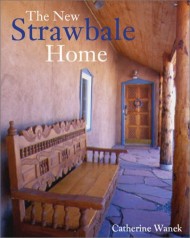
The New Strawbale Home
by Catherine Wanek, 2003. Although strawbale construction is beginning to enter the mainstream, many people continue to wonder what a straw bale house looks like. The New Strawbale Home answers definitively, "Anything you want!" Innovative architects and builders are reinventing this century-old technology to create thick-walled modern houses of unsurpassed natural beauty. The New Strawbale Home compiles floor plans and images from forty cutting-edge homes across North America, from California to Quebec, New Mexico to New England, showcasing a spectrum of regional styles and personal aesthetic choices. This practical guide discusses varying climate considerations and essential design details for problem-free construction and low maintenance, and also points out the ecologically friendly, energy-saving aspects of straw bale construction. The New Strawbale Home beautifully illustrates how building with straw bales allows for maximum personal creativity-whether the finished product is an urban home, a country hideaway, or anything in between. Author and photographer Catherine Wanek organized the building of a straw bale greenhouse in 1992 and has been an advocate for straw bale construction every since. She produced and directed the Building with Straw video series, and spent nearly five years publishing and editing The Last Straw Journal. Her first book The Art of Natural Building, was published in 2002. Wanek lives in Kingston, New Mexico.


Click on image to buy from Amazon.com
 

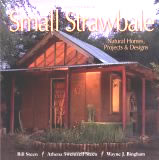
Small Strawbale: Natural Homes, Projects & Designs by Athena Steen, Bill Steen, Wayne Bingham, 2005. This practical guide is filled with rich photos of homes, greenhouses, studios, sheds, open-air structures and more, each pulsating with unique yet subtle creativity. Both a pragmatic construction manual and a philosophical, artistic guidebook, Small Strawbale is an inspirational starting point for a strawbale dreamer, and a great source of information for those who are ready to get bailing. 1. INTRODUCTION 2. GARDEN WALLS & FENCES 3. OPEN-AIR STRUCTURES 4. GREENHOUSES 5. CANELO PROJECT OUTBUILDINGS 6. TINY STUDIOS & MEDITATION SPACES 7. THE SHED ROOF 8. THE GABLE ROOF 9. SMALL HOUSES 10. CLUSTERED COMPOUND


Click on image to buy from Amazon.com
 

Straw Bale Details: A Manual for Designers and Builders by Chris Magwood, Chris Walker, 2003. Straw Bale Details is the perfect companion for those who are serious about building with straw. It focuses entirely on the specific design theories and practices that result in well-built, long-lasting bale structures. It extends the range of books like Straw Bale Building through large, easy-to-read architectural drawings rendered for a wide variety of building options, including load-bearing and post-and-beam designs. A range of foundation, wall, door and window, and roof-plate scenarios is presented, along with notes and possible modifications. Also included are the most recent testing data to help base designer and builder decisions on sound science. Chris Magwood is coauthor of Straw Bale Building and editor of The Last Straw Journal. Chris Walker is a Toronto architect specializing in sustainable design.


Click on image to buy from Amazon.com
 
The Good House Book : A Common-Sense Guide to Alternative Homebuilding  by Clarke Snell, 2004. With this exquisitely illustrated guide, packed with 400 photos and illustrations, anyone can put environmentally friendly ideas into beautiful practice. Here’s an intelligent look at how a home is supposed to function and a variety of different building approaches. What’s important is finding the right solution to fit your individual needs, local climate, and natural resources. The broad range of topics covered include choosing a site; selecting materials; building with straw bale, cob, adobe, or rammed earth; and plugging into alternative home power systems. Interviews with six homeowners, and photos of the dream homes they built, provide invaluable insight. Clarke Snell is a builder with experience using a wide variety of materials and techniques, both conventional and alternative. The construction project closest to his heart is his own partially bermed, passive solar house, which he built in the mountains of western North Carolina. 


Click on image to buy from Amazon.com
 

Strawbale Construction Curriculum (Facilitator Guide) by Chris McClellan, Owen Geiger, 2006. This book was created by the crew at "Builders without Borders" as a guide for facilitators of workshops on strawbale construction. There is a lot of good information imbedded within the text, but the focus is really on the techniques and processes of instruction in this particular field.


Click on image to buy from Amazon.com
 

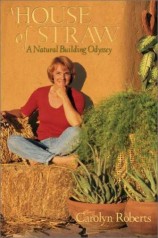
A House of Straw: A Natural Building Odyssey by Carolyn Roberts, 2002. The author tells about her building a straw bale house on the outskirts of Tucson, Arizona. In building her house she had to confront fears and a lack of construction skills. Her personal growth through the construction process is as much a focus of this work as the house itself. This is a great book of building dreams and manifesting your own destiny. Carolyn Roberts is truly a warrior of life and creates a reality we can all live with. Keeping life simple allows one to focus on realizing one's dreams. And Carolyn's dream is one of giving. Giving back to Mother Earth and giving us a good example of how simple, healthy, loving life can be. If you are interested in building a house, especially one of straw, this is a must read. It prepares you for the pitfalls and the joys of accomplishing challenges you never thought you could.


Straw Bale House made by Single Mom for $50,000.


Click on image to buy from Amazon.com
 

Strawbale Homebuilding by Alan T. Gray, 2000.


Click on image to buy from Amazon.com
 

Building Green : A Complete How-To Guide to Alternative Building Methods by Clarke Snell , Tim Callahan, 2006. This absolutely groundbreaking manual doesn't just talk about eco-friendly building techniques, but actually shows every step! More than 1,200 close-up photographs, along with in-depth descriptions, follow the real construction of an alternative house from site selection to the addition of final-touch interior details. Co-authors Clarke Snell and Timothy Callahan (a professional builder and contractor) provide thorough discussions of the fundamental concepts of construction, substitutes for conventional approaches, and planning a home that's not only comfortable and beautiful, but environmentally responsible. Then, they roll up their sleeves and get to work assembling a guest house that incorporates four different alternative building methods: straw bale, cob, cordwood, and modified stick frame. The images show every move: how the site is cleared, the basic structure put together, the cob wall sculpted, the bales and cordwood stacked, a living roof created, and more. Most important, the manual conveys real-world challenges and processes, and offers dozens of sidebars with invaluable advice. It's head and shoulders above all others in the field.


Click on image to buy from Amazon.com
 

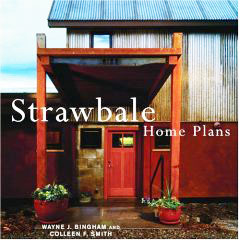
Strawbale Home Plans by Wayne Bingham, Colleen Smith, 2007. Strawbale homes and buildings are beautiful and personal works of art constructed by hand. The idea of building with strawbale is appealing to many because of its energy efficiency, insulative qualities, and organic nature. But the nitty-gritty of how to build with this alternative material often deters would-be strawbale aficionados. Practical information to guide you on a journey to constructing simply and naturally is hard to come by. Strawbale Home Plans is an inspiring and diverse collection of strawbale buildings. It features everything from single-level country homes, to cottages and studios, to community buildings. Thirty-one completed projects are highlighted. You will find helpful lessons in the homeowners' descriptions of their experiences with strawbale building as well as in the authors' explorations of the special features of each strawbale structure. Each project includes a plan drawing that provides inspiration for those who want to take their strawbale idea from conception to completion.


The Straw Bale House
by Athena Steen, et al, 1994


Click on image to buy from Amazon.com


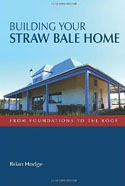
Building Your Straw Bale Home
by Brian Hodge, 2006


Click on image to buy from Amazon.com


Build It With Bales: A Step-By-Step Guide to Straw-Bale Construction
by S.O. MacDonald and Matts Myhrman, 1998


Click on image to buy from Amazon.com


Building With Straw Bales: A Practical Guide for the Uk and Ireland
by Barbara Jones, 2002


Click on image to buy from Amazon.com


TirolessaUSA Stucco Sprayer (available from Amazon.com).   This stucco sprayer is a great tool to speed up your building process and save labor! Use with a minimum 7 cfm at 90 psi compressor (not included). For the larger jets, use at least a 12 cfm at 90 psi or larger compressor. This stucco spraying tool can be used to spray mortar, plaster, stucco, small scale shotcrete, papercrete, earthen mixes and more. It can be used for traditional plastering and many alternative building methods. It can apply plaster on strawbale, earthbags, insulated panels and thin shell ferrocement, shotcrete, and structural concrete insulated panels. This stucco sprayer is for heavy applications of 1/4" to 1" thickness. Typically it is used for brown coat, scratch coat, base coat, and slip coat applications.

PLANS

Chonburi
Owen Geiger, Designer

This sustainable home design is named after one of the most productive agricultural regions in the world - Chonburi, Thailand. Rich with old world charm and character, it has a tiled hip roof, covered entry with columns, arched doorways, large country-style kitchen, and all bedrooms upstairs for privacy. Master bedroom has private bath and love seat. Designed for hot climates, this plan can easily be modified for cold climates. Back doors on east and west sides make it easy to expand later. Optional cathedral ceiling in master bedroom. 624 sq. ft. interior main floor, 624 sq. ft. upper floor, total 1,248 sq. ft. interior, 3 bedroom, 3 bath; footprint: 27' x 29'


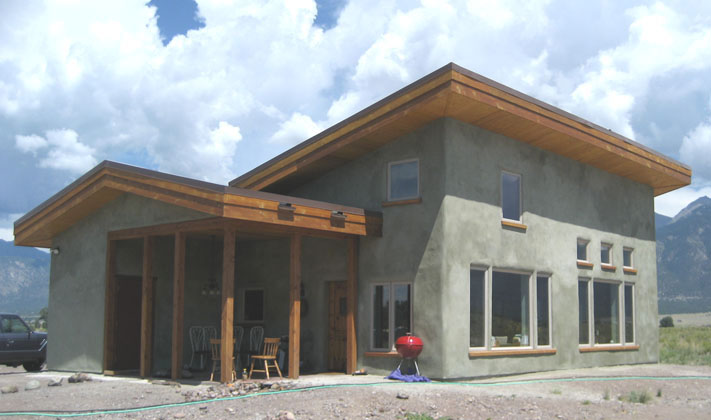
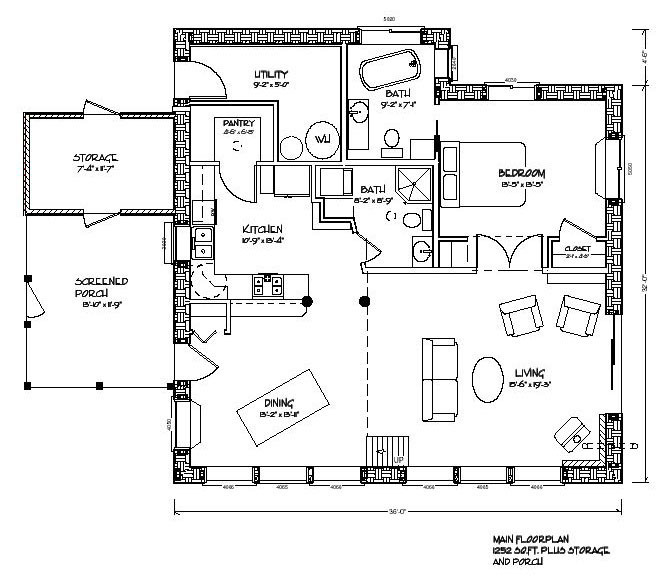
Strawbale Cottage
Touson Saryon, Designer

This efficient yet spacious floorplan has 2 cozy bedrooms upstairs and an open living area downstairs including a large kitchen, all within 1412 sq.ft.  Exposed post and beam work inside and on the covered porch add a special country touch. 


For more information about these plans, and many others, visit our sister site www.dreamgreenhomes.com, where you will find a wide range of plans for sustainable homes, greenhouses, small buildings, garages, and food storage space for sale. Dream Green Homes is a consortium of outstanding architects and designers, who have pooled their talent and expertise for your benefit.

Straw BaleTraining and Certification Programs
offered by The Geiger Research Institute of Sustainable Building
Dr. Owen Geiger is Founder and Director of the Geiger Research Institute of Sustainable Building (www.grisb.org). He has a Ph.D. in Social and Economic Development, and is the former Director of Builders Without Borders and current member of the BWB Steering Committee. He is an author, engineer and licensed contractor specializing in strawbale construction and other types of sustainable building. He co-authored the Builders Without Borders Straw-Bale Construction Guides and contributed to Building Without Borders: Sustainable Construction for the Global Village. Dr. Geiger has consulted on numerous international housing projects, worked closely with Habitat for Humanity for seven years and mentored housing officials with the United Nations Institute of Training and Research. He is also a correspondent for The Last Straw Journal.
Straw Bale Training

Building with bales is growing by leaps and bounds because of its broad appeal to owner-builders and its extraordinary energy-efficiency. In just a few weeks you will learn the basic principles needed to build your own strawbale house. With this course you get a combination of theoretical book knowledge and applied hands-on learning – which is a great way to learn. In addition, an Advisor at the Geiger Research Institute will provide individual guidance and critical analysis throughout the training process via email.

You will be using the best resource materials throughout the course. More Straw Bale Building, by Chris Magwood, Peter Mack and Tina Therrien, is perhaps the best book ever written on straw-bale construction. The Last Straw Journal CD-Rom puts 40 issues at your finger tips, enabling you to search through all the best ideas. And, selected Internet links to the best online resources are an integral part of the course. Online training offers tremendous flexibility. You can start the course at any time and proceed at your own pace. There is no need to travel to some distant school or workshop. And again, when you need help your Advisor will be available to answer your questions.

Course outline: Foreword, Purpose of this Course, How to Use This Study Guide, Straw Bale and Natural Building Home Tour, Advantages of Straw-Bale Construction, Basic Design Considerations, Straw Bale Building Types, Ideal Building Bales, Protecting the Bales, Site Selection and Preparation, Building Layout and Foundations, Mechanical Systems, Stacking the Bale Walls, Making Custom-Sized Bales, Making Angled Bales, Attaching Things on Straw Bale Walls, Pinning the Walls, Filling the Gaps, Installing Doors and Windows, Interior Walls, Building the Roof, Ceiling Insulation, Plastering, Floor Basics, Built-in Furniture, Art and Decoration, Straw Bale Shelter Project, Regulatory Issues, List of Materials, List of Tools, Annotated Straw Bale Bibliography, Answers to Quizzes

Course fee: $250

To sign up for this this Straw Bale Training Program, visit www.grisb.org.

The Global Straw Bale Construction Certification Program provides the highest quality strawbale training available anywhere in the world. This unique program combines hands-on experiences with research and assignments using the leading books, videos, journals, and selected Internet and other electronic resources.

The Global Straw-Bale Construction Certification Program is a distance learning program for those within reach of the Internet and with an adequate knowledge of English. Students can begin the program at any time and work at their own pace through independent guided study. Advisors at the Geiger Research Institute provide guidance and critical analysis throughout the training process.

The Global certification program takes approximately one year to complete, although students with construction or architecture backgrounds may be able to complete the training more rapidly. The program consists of 14 modules that cover each major step of construction, as well as other relevant topics that form the essential knowledge for practitioners in the field. Students can select one of two tracks:

Track 1. International Straw Bale Housing: This option prepares builders for work on low-tech, low-cost strawbale projects. The emphasis is on providing affordable housing in developing regions.

Track 2. Building Code-approved Straw Bale Housing: This option is designed for professional builders and architects seeking a more technical option. All lessons revolve around meeting current US and international building codes.

Lessons incorporate hands-on learning, extensive reading assignments, videos, short answer assignments, short reports and other assignments. In addition, students in either track must complete two main projects:

Project #1: Straw Bale Emergency Shelter
Straw-bale construction basics are learned by building a simple straw bale emergency shelter.

Project #2: Capstone Project
This is the main project of the program that demonstrates mastery of essential skills. Students design and build a functional straw bale structure of approximately 150 – 300 sq. ft. interior space, such as a guesthouse, studio, office, homeless shelter or other similar structure. The Capstone Project consists of three phases, where a portion of the necessary project documents (drawings, cost estimates, etc.) are developed in each phase. By the end of the third phase, the structure will be completed.

Pricing information for the Global Straw-Bale Construction Certification Program:

Track 1: International Straw Bale Housing:
$1,600 (four payments of $400, one payment per quarter)
$1,200 (reduced rate for advance payment paid in full)

Track 2: Building Code-approved Straw Bale Housing:
$2,500 (four payments of $625, one payment per quarter)
$2,000 (reduced rate for advance payment paid in full)

To sign up for this this Global Straw Bale Construction Certification Program, visit www.grisb.org.

For more information about all of these training and certification courses visit grisb.org
Geiger Research Institute of Sustainable Building
Crestone, Colorado 81131
Email: strawhousesATyahoo.com

LINKS

greenhouse.gov.au an excellent on-line introduction to strawbale building.

naturalhomes.org lists workshops from around the world related to strawbale building.

strawbalecentral.com lots of information about natural building, especially straw bale.

thelaststraw.org home of The Last Straw Journal.

tls.buildearth.org is the official blog of The Last Straw Journal, featuring recent news and articles about strawbale and related building.

sbregistry.greenbuilder.com is a registry of strawbale homes across the U.S., orgainzed by state, with an indication of whether the owners are open to visitors or not.

California Straw Building Association FAQ's and technical information.

caneloproject.com Bill and Athena Steen's lovely site devoted to their work with strawbale building and the use of natural plasters; books, videos, articles and workshops are available.

eesi.org/briefings described briefings made to the US Congress about the viability of strabale building in June, 2008; includes actual presentations and audio.

grisb.org The Geiger Research Institue of Sustainable Building features workshops, a strawbale certification program, articles and publications on many aspects of sustainable building, house plans (including a free emergency shelter plan), and links to much more information.

youtube.com Last I checked there were 77 videos listed at Youtube about strawbale building!

daycreek.com page of photos and information about strawbale building.

lamaisonenpaille.com extensive site devoted to straw bale projects in Europe and India.

Surfin' Strawbale Links List

strawbale-building mostly links to other SB sites, but does have a database of SB houses in the UK.

strawbalebuildingassociation SB building association for Wales, Ireland, Scotland and England features lists of designers, teachers, builders, etc.

skillful means Informative FAQ's about strawbale construction.

imagegypsy sponsors workshops and provides information about women building with strawbales.

epsea.org El Paso energy Association description of strawbale building, with links.

earthnstraw.com features news, workshop listings, and a forum on strawbale building.

greeninventor.org/strawjet describes an innovative way of creating load-bearing beams using long straw and papercrete.

quietwater.net some good, detailed information about a particular non-load-bearing strawbale project.

ferrocement.net sells a very clever and well made plaster sprayer that will handle a wide range of plaster types, from earthen to ferrocement.

strawbale.com provides some detailed articles on various aspects of strawbale building. To find out about the how-to DVDs that they sell go to the top of this page.

deboerarchitects.com Some thoughts and illustrations about strawbale building by architect Darrel DeBoer.

armofthespiral.com shows some of the process of building a lovely strawbale home, and has available a DVD about it.

dcat.net lists Strawbale Codes specifically for Texas, California, Colorado, and Arizona.
EcoNest.com features light straw/clay construction.

humnew.com a nice photo gallery of building Hummingbird, an adobe studio and strawbale home in Oregon.

greenplanethomes.ca is a Canadian company that manufactrures SIPs with actual bales of straw being compressed, wood ladders added to the top and bottom, and then two coats of stucco applied to both sides. They ship these panels and also construct buildings with them.

Here's a  page about straw bale house construction on Squidoo, made by my wife.


This strawbale burn test occurred during the Saturday night show at the "European Strawbale Gathering 07".
It shows:
1) That a normal straw bale will burn!
2) That a 'French dip' straw bale can not burn (bale dipped 5-10 cm in clayslip and dried)
3) That fire tests can be made entertaining and at extreme low cost, though slightly unhealty for the test staff.

Max Vittrup Jensen


Disclaimer Of Liability And Warranty
I specifically disclaim any warranty, either expressed or implied, concerning the information on these pages. Neither I nor any of the advisor/consultants associated with this site will have liability for loss, damage, or injury, resulting from the use of any information found on this, or any other page at this site. Kelly Hart, Hartworks, Inc.


Home       Site Map        STORE

For Email contact go to About Us
Established in 2001, GreenHomeBuilding.com is primarily a labor of love. We do receive a small commission when you click through through and purchase books and other products listed on the site. Kelly, and the GreenHomeBuilding team of experts, have answered thousands of questions for readers over the years, and we continue to publish up-to-date information about increasingly important sustainable architecture. If you feel moved to assist us in this work, your kind donation would be much appreciated; this can be easily done through our PayPal account:
Google
 
Web www.greenhomebuilding.com
VISIT OUR OTHER WEBSITES:

[Natural Building Bookstore]       [Earthbag Building]     [Dream Green Homes]     [Solar Car]