![]() |
|
|
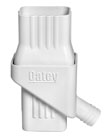
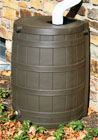
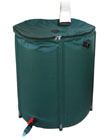
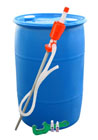
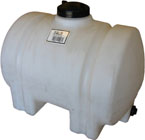
Conserve Water The average person in the U. S. uses between 100 and 250 gallons of water a day. I know it is possible to get by just fine on one tenth that amount. The use of low water capacity toilets, flow restrictors at shower heads and faucet aerators are fairly common now. More radical conservation approaches include diverting gray water from bathing, clothes washing and bathroom sinks to watering plants; catching rain water from roofs and paved areas for domestic use and switching to composting toilets. These can be very effective and safe means of water conservation if done carefully to avoid bacterial infestation; be sure to comply with all local laws that regulate these strategies. Landscaping with drought tolerant, indigenous plants can also save an enormous amount of water.
|
RESOURCES ARTICLE: EXPERT
ADVISE |
The Permaculture Garden by Graham Bell, 2005. Working entirely in harmony with nature, The Permaculture Garden shows you how to turn a bare plot into a beautiful and productive garden. Learn how to plan your garden for easy access and minimum labor; save time and effort digging and weeding; recycle materials to save money; plan crop successions for year-round harvests; save energy and harvest water; and garden without chemicals by building up your soil and planting in beneficial communities. Full of practical ideas, this perennial classic, first published in 1995, is guaranteed to inspire, inform, and entertain.
The Permaculture Way: Practical Steps To Create A Self-Sustaining World by Graham Bell , 2005. The Permaculture Way shows us how to consciously design a lifestyle which is low in environmental impact and highly productive. It demonstrates how to meet our needs, make the most of resources by minimizing waste and maximizing potential, and still leave the Earth richer than we found it. Graham Bell is the former editor of Permaculture News. He worked for the Prince's Trust and is now a freelance environmental consultant.
Permaculture: Principles and Pathways Beyond Sustainability by David Holmgren, 2002. David Holmgren brings into sharper focus the powerful and still evolving Permaculture concept he pioneered with Bill Mollison in the 1970s. It draws together and integrates 25 years of thinking and teaching to reveal a whole new way of understanding and action behind a simple set of design principles. The 12 design principles are each represented by a positive action statement, an icon and a traditional proverb or two that captures the essence of each principle. Holmgren draws a correlation between every aspect of how we organize our lives, communities and landscapes and our ability to creatively adapt to the ecological realities that shape human destiny. For students and teachers of Permaculture this book provides something more fundamental and distilled than Mollison's encyclopedic Designers Manual. For the general reader it provides refreshing perspectives on a range of environmental issues and shows how permaculture is much more than just a system of gardening. For anyone seriously interested in understanding the foundations of sustainable design and culture, this book is essential reading. Although a book of ideas, the big picture is repeatedly grounded by reference to Holmgren's own place, Melliodora, and other practical examples.
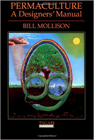
Permaculture: A Designers' Manual by B.C. Mollison, 1997. An encyclopedic treatment of permaculture, this book is essential for students, landowners, public-policy makers, and others interested in revolutionizing modern farming and land use. Highly detailed chapters cover everything one might ever need to know about the permaculture philosophy and its application to land-use design, systems analysis, climatic factors (including tailored strategies for drylands, aquaculture, and other special circumstances), and much, much more.
Life's Matrix : A Biography of Water by Philip Ball, 2000. Author Philip Ball, science writer and consulting editor for Nature, covers the very interesting chemistry and physics of the substance and our species' long relationship with it without losing the reader--after all, each of us is mostly made of the wet stuff. From the ancients' conception of water as an element, recognizing its importance and primacy among terrestrial matter, to our current understanding of the intricate dance of hydrogen bonds that give water its unique, life-giving properties, Ball always finds the right angle to keep the story compelling.
Water : A Natural History by Alice Outwater, 1997. What happens when you flush your toilet? Environmental engineer and writer Alice Outwater knows, and she guides the reader through the technical ins and outs of such delicate matters as water treatment and sewage handling--subjects she writes about with considerable charm. Here you will learn how "raw sludge brew" is separated, how methane from sewage is converted to a source of power, and how aqueducts past and present really work. Outwater also describes in lay terms the complex ecology of rivers, making a strong case for the preservation of free-flowing streams in the place of dammed waterways. Her book is somewhat more narrowly focused than the title suggests, but it is highly interesting and instructive nonetheless.
Water Wars: Privatization, Pollution, and Profit by Vandana Shiva, 2002. While draught and desertification are intensifying around the world, corporations are aggressively converting free-flowing water into bottled profits. The water wars of the twenty-first century may match-or even surpass-the oil wars of the twentieth. Vandana Shiva shines a light on activists who are fighting corporate maneuvers to convert this life-sustaining resource into more gold for the elites. Shiva uses her remarkable knowledge of science and society to outline the emergence of corporate culture and the historical erosion of communal water rights. Using the international water trade and industrial activities such as damming, mining, and aquafarming as her lens, she exposes the destruction of the earth and the disenfranchisement of the world's poor as they are stripped of rights to a precious common good. In her passionate, feminist style, Shiva celebrates the spiritual and traditional role water has played in communities throughout history, and warns that water privatization threatens cultures and livelihoods worldwide. Shiva calls for a movement to preserve water access for all, and offers a blueprint for global resistance based on examples of successful campaigns.
Last Oasis : Facing Water Scarcity by Sandra Postel, 1997. As we approach the twenty-first century, we are entering a new era-an era of water scarcity. We have taken for granted seemingly endless supplies of water flowing from reservoirs wells, and diversion projects; access to water has been key to food security, industrialization, and the growth of cities. In this book from the Worldwatch Institute, Sandra Postel explains that decades of profligacy and mismanagement of the world's water resources have produced signs of shortages and environmental destruction. She writes with authority and clarity of the limits-ecological, economic, and political-of this vital natural resource.
Water: How to Use and Conserve our most Precious Resource by Susan McClure, 2000. In The Hands-On Gardener: Water, Susan McClure, author of Smith & Hawken Seeds and Propagation, clears up one of the most common yet mystifying problems gardeners face--the right way to deliver the right amount of water to the right plant at the right time. Rooted in the belief that good gardening is water-conscious gardening, Water shows how to have your garden and water, too, and covers when and how much to water; soil types; improving drainage; minimizing stress; the importance of mulch; watering systems--from the old-fashioned watering can to sophisticated drip and trickle irrigation; and ends with an encyclopedia that lists over 100 water-conserving plants.
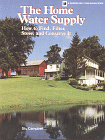
The Home Water Supply : How to Find, Filter, Store and Conserve It by Stu Campbell, 1983. Campbell had coped with water problems in both the East and the West, from the many-state shortages of the West to a cantankerous pump in Vermont. And he's probed the minds of experts -- dowsers, well diggers, plumbers, electricians, and those who know about the flow of water deep underground. In a friendly, knowledgeable manner, Campbell discusses your difficulties. He provides concrete and money-saving answers to questions that range from locating water to digging a pond to hooking up the plumbing in your home. You'll know when to try something yourself, when to call a plumber or other expert. You'll learn-- How to find water.-- How to move it.-- How to purify it.-- And how to store and distribute it in your home.
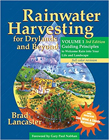
Rainwater Harvesting for Drylands: Guiding Principles to Welcome Rain into Your Life And Landscape by Brad Lancaster, 2006. Rainwater Harvesting for Drylands: Guiding Principles to Welcome Rain into Your Life and Landscape is the first volume of three-volume guide on how to conceptualize, design, and implement sustainable water-harvesting systems for your home, landscape, and community. This book enables you to assess your on-site resources, gives you a diverse array of strategies to maximize their potential, and empowers you with guiding principles to create an integrated, multi-functional water-harvesting plan specific to your site and needs. Volume 1 helps bring your site to life, reduce your cost of living, endow you with skills of self-reliance, and create living air conditioners of vegetation growing beauty, food, and wildlife habitat. Stories of people who are successfully welcoming rain into their life and landscape will invite you to do the same!
Design for Water: Rainwater Harvesting, Stormwater Catchment, and Alternate Water Reuse by Heather Kinkade-Levario, 2007. Design for Water is an accessible and clearly written guide to alternate water collection, with a focus on rainwater harvesting in the urban environment. The book outlines the process of water collection from multiple sources -- landscape, residential, commercial, industrial, school, park and municipal systems; provides numerous case studies; details the assembly and actual application of equipment; includes specific details, schematics and references. All aspects of rainwater harvesting are outlined, including passive and active system set-up, storage, stormwater reuse, distribution, purification, analysis and filtration.
Water From The Sky by Michael Reynolds, 2005. This book takes its readers from problem to solution. It addresses the water shortage in New Mexico, the United States, and around the world. Step by step the book outlines how to solve the problem of water shortage through catching, storing, using, reusing and treating rainwater.
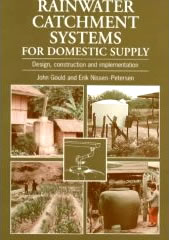
Rainwater Catchment Systems for Domestic Supply: Design, Construction and Inplementation by Erik Nissen Petersen, John Gould, 2000. This book reviews the art of roof and ground catchment systems for rainwater. The water collected can be used for household or other purposes. The designs are aimed for individuals with limited access to electricity and/or civic water utilities. The text includes drawings, photographs and step-by-step instructions. Erik Nissen-Petersen has over 20 years' experience in the design and construction of rainwater harvesting systems. He is currently Managing Director of ASAL Consultants. John Gould is the Project Coordinator, Engineering Projects for Developing Countries, Lincoln University, Cantebury, New Zealand.
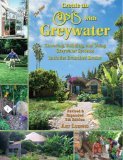
The New Create an Oasis With Greywater: Choosing, Building and Using Greywater Systms - Includes Branched Drains by Art Ludwig, 2006. This book describes how to choose, build, and use twenty different types of greywater systems. Topics include: Why to use or not use greywater, health guidelines, greywater sources, irrigation requirements, biocompatible cleaners, greywater plumbing principles and components, maintenance and troubleshooting, freezing, rain, preserving soil quality , storing rainwater, suppliers, and references.
|
|||||||||||||||||||||||||||||||||||||||||||||||||||||||||||||||||||||||||||||||||||||||||||||
Branched Drain Greywater Systems by Art Ludwig (2000) describes how to design, build and use a branched drain greywater system in just about any context. A decade of experience with dozens of residential greywater systems led ecological designer Art Ludwig to question everything about conventional greywater system design. He stripped away every possible bit of complexity until the essence of a greywater system remained: a pipe network for distributing water from the house to a number of trees around the yard. Branched drains provide economical, reliable, sanitary, low maintenance distribution of household greywater to downhill plants without filtration, pumping, or surge tanks. Requires Create an Oasis with Grey Water (book).
Builder's Greywater Guide: The Guide to Professional Installation of Greywater Systems, 1998. This is an essential supplement to Create an Oasis with Greywater for those serious about designing or building a greywater system. It describes how to work within and around building codes to install greywater systems in new construction and remodeling projects. It contains new construction details and tips that will help you include a greywater system in your project, even if you have little experience with greywater. Building Professionals Greywater Guide includes reasons that builders should or should not install greywater systems, working with inspectors, legality checklist, latest construction details and tips, maintenance suggestions, estimating irrigation demand and the complete text of the California greywater law with insightful annotations. This book builds on the information presented in Create an Oasis with Greywater and is not complete in itself. |
|||||||||||||||||||||||||||||||||||||||||||||||||||||||||||||||||||||||||||||||||||||||||||||
|
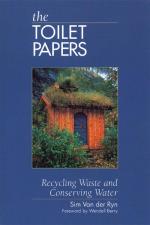
The Toilet Papers: Recycling Waste and Conserving Water by Sim Van Der Ryn, 2000. With a forward by Wendell Berry, this classic book from the 1970s is back in print! The history of how humans have dealt with their own waste is handled with intelligence (and wit), and the book provides up-to-date plans for the do-it-yourselfer on water-saving systems, composting privies, and practical greywater systems. One of the photos shows the first compost toilet that I (Kelly Hart) made, based on the Clivus Multrum concept.
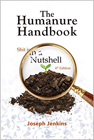
The Humanure Handbook: A Guide to Composting Human Manure, Third Edition by Joe Jenkins, 2005. This describes a very practical solution to waste management and a very simple safe way to handle daily human 'waste' and even how to process it for safe garden compost. Joe's family has used this simple 'bucket' system for 15 years. This book answers every question anyone could have about managing a compost toilet and compost pile. 255 pages, indexed illustrated, color photos, funny, fulll of cartoons. Prevent illness, and plan to handle waste safely. |
|||||||||||||||||||||||||||||||||||||||||||||||||||||||||||||||||||||||||||||||||||||||||||||
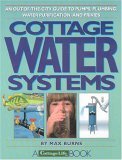
Cottage Water Systems: An Out-of-the-City Guide to Pumps, Plumbing, Water Purification, and Privies by Max Burns, 1999. The subtitle for this attractive paperback is "An Out-of- the-City Guide to Pumps, Plumbing, Water Purification, and Privies," and it deftly fulfils its promise. Mr. Burns uses humor interspersed with excellent illustrations to convey technical information in layman's terms. He provides a comprehensive overview of all possibilities... the pros and cons of each alternative are thoroughly examined.
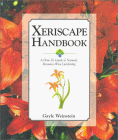
Xeriscaping Handbook: A How-To Guide to Natural, Resource-Wise Gardening by Gayle Weinstein, 1999. As water bills skyrocket and concern for conserving potable water increases, homeowners, gardeners, and landscapers are looking for alternatives. Xeriscape plant materials are water-conserving, beautiful and thrive in specific environments. The Xeriscape Handbook provides hands-on advice in creating your own Xeriscape garden, no matter where you live. For the first time, environmental gardening factors, the seven principles of Xeriscape, and good gardening techniques come together in a book that shows the exciting possibilities that await a water-wise gardener.
Xeriscaping: The Wayside Gardens Collection by Mark Rumay, 2001. Youll find detailed descriptions, illustrations, and invaluable knowledge for figuring out which plants are suited to your low-water gardens....Excellent design tips...help gardeners create gardens that look beautiful.The Nursery. A wonderful variety of plants...water-wise gardening, as well as the steps involved in creating a successful dry garden.Gardening Life. |
|||||||||||||||||||||||||||||||||||||||||||||||||||||||||||||||||||||||||||||||||||||||||||||
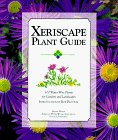
Xeriscape Plant Guide: 100 Water-Wise Plants for Gardens and Landscapes
|
The Xeriscape Flower Gardener: A Waterwise Guide for the Rocky Mountain Region
|
Growing Clean Water : Nature's Solution to Water Pollution
|
Safe to Drink?
|
||||||||||||||||||||||||||||||||||||||||||||||||||||||||||||||||||||||||||||||||||||||||||
|
Water: The Fate of Our Most Precious Resource by Marq De Villiers, 2000
|
Water, Culture, and Power: Local Struggle in a Global Context
|
|
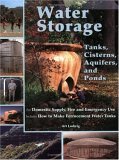
Water Storage: Tanks, Cisterns, Aquifers, and Ponds for Domestic Supply, Fire and Emergency Use--Includes How to Make Ferrocement Water Tanks
|
||||||||||||||||||||||||||||||||||||||||||||||||||||||||||||||||||||||||||||||||||||||||||
|
Sewage
Solutions
|
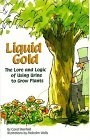
Liquid Gold: The Lore and Logic of Using Urine to Grow Plants
|
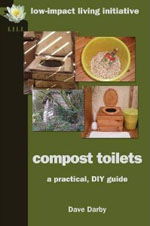
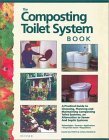
Composting Toilet System Book: A Practical Guide to Choosing, Planning and Maintaining Composting Toilet Systems
|
|||||||||||||||||||||||||||||||||||||||||||||||||||||||||||||||||||||||||||||||||||||||||||
|
Rain Gardens: Managing Water Sustainably in the Garden and Designed Landscape
|
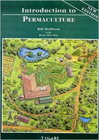
Smart Permaculture Design
|
Earth User's Guide to Permaculture 2nd Edition
|
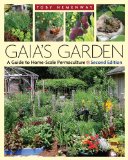
Gaia's Garden: A Guide to Home-Scale Permaculture by Toby Hemenway, 2001
|
||||||||||||||||||||||||||||||||||||||||||||||||||||||||||||||||||||||||||||||||||||||||||
|
Getting Started In Permaculture: 50 Practical Projects to Build and Design Productive Gardens
|
The Basics Of Permaculture Design
|
|
||||||||||||||||||||||||||||||||||||||||||||||||||||||||||||||||||||||||||||||||||||||||||
|
For more information about this plan, and many others, visit our sister site www.dreamgreenhomes.com, where you will find a wide range of plans for sustainable homes, greenhouses, small buildings, garages, and food storage space for sale. Dream Green Homes is a consortium of outstanding architects and designers, who have pooled their talent and expertise for your benefit. |
|
greenhouse.gov.au this on-line manual outlines many water conservation measures, including rain water catchment, waste water reuse, and waterless toilets. oasisdesign.net information about rainwater harvesting, gray water use and composting toilets. harvesth2o.com is dedicated to the advancement of sustainable water management practices and has this informative on-line journal. rainwaterclub.org this site from India offers a wealth of information related to rainwater collection. permaculture.org.au a truly inspiring short on-line video about how it is possible to green the desert by Geoff Lawton, permaculture expert. Or check out the website: permaculture.org.au naturalhomes.org list workshops from around the world related to water conservation and permaculture. The Permaculture Activist magazine lists many resources for those interested in permaculture. ecoforums.com
a group of forums related to ecological living, including one on water
conservation.. lowimpact.org
the Low-Impact Linging Initiative in England provides information and
courses related to water conservation. csu.org Colorado State University's informative site on xeriscaping. rdrop.com/users/krishna/rainwatr A very nice description, with images, of how to set up a water catchment system. lenntech.com/water-ecology Frequently asked questions about water ecology, in English and other languages. composttoilets Some information about compost toilets. rainbarrelguide.com lots of solid information about rainwater catchment and the sales of small barrels for this purpose. toolbase.org disussion of the merits of using permeable pavement for driveways and landscaping. ecowaters.org promotes workshops, sells plans, and provides information about graywater reuse, rainwater havesting, and compost toilets. arcsa-usa.org the American Rainwater Catchment Systems Association provides news and sponors conferences. rain-barrel.net This blog-style collection of articles has a lot of good information about cisterns and barrels for water catchment systems. permaculturenow.com The Wilder Institute was created to promote and support permaculture education and design around the world. solartoilet.com The Solar Composting Advanced Toilet is designed to recycle human excrement and urine into a relatively dry and deodorized compost which can be safely and easily applied to the immediately surrounding landscape. greengardendesign is a blog featuring information about sustainable landscape options. earthflow.com provides training, consulting, design and workshop listings related to permaculture. nzdl.sadl.uleth.ca Rainwater Reservoirs and above Ground Structures for Roof Catchment Manual |
|
Disclaimer
Of Liability And Warranty
For Email contact go to About UsEstablished in 2001, GreenHomeBuilding.com is primarily a labor of love. Kelly, and the GreenHomeBuilding team of experts, have answered thousands of questions for readers over the years, and we continue to publish up-to-date information about increasingly important sustainable architecture. If you feel moved to assist us in this work, your kind donation would be much appreciated; this can be easily done through our PayPal account:VISIT
OUR OTHER WEBSITES:
|