Owner/
Builder

Renewable Energy Questions and Answers
ASK THE EXPERT ADVICE
Links to the Ask the Experts page

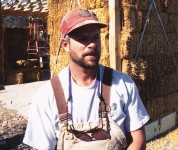
Johnny Weiss is Cofounder and Executive Director of Solar Energy International (SEI). Johnny is a solar educator, consultant, credentialed Industrial Trainer and solar building professional. He has over twenty years experience teaching the practical applications of the renewable energy (RE) technologies of solar, wind and water power. As an Associate Professor for ten years at the Colorado Mountain College, he helped develop and teach a hands-on vocational training program in solar thermal, photovoltaics, energy efficiency and construction skills. Johnny has extensive practical experience as a natural house builder and licensed general contractor. He is knowledgeable in the environmental building technologies of earth and straw bale construction. Johnny regularly works with Native Americans RE training programs. Johnny works in international sustainable development programs and projects helping transfer renewable energy technologies to the developing world.

Photovoltaics
Geothermal
Hydro-Electric
Wood Heat
Methane
Financial Matters
Education
Miscellaneous
Photovoltaics

Q: I am a student writing an article about the use of solar power or PhotoVoltaic cells to create electricity. It has struck me recently after reading “Creating Sustainable Cities” by Herbert Girardet that we have the capacity & means, technologically and practically, to use PV on a more widespread scale, I was wondering if you could take a few minutes to answer a few queries I have. 1. How reliable are PV cells and other solar power alternatives given recent advances in technology and capability?

A: PV cells have no moving parts. They are very reliable. Commercial PV modules are now often manufacture warranted for 20-25 years!

2. How realistically feasible is it to use them in this country? (I live in the UK but please comment where applicable to your country/region of residence). Would it be possible to have “back-up batteries” to store excess energy created?

A: The sun shines everywhere. In cloudier climates, more sq ft area is needed than in sunny places. For utility independence, batteries are an integral system component.

3. Why aren’t new construction developments & buildings making more use of this technology and why isn’t the technology being implemented into more designs? (For example, I have seen self-powering parking meters, would it be possible to create self-powering streetlamps using energy saving bulbs? Or traffic lights etc)

A: It's all about $$$. Conventional energy has historically been very inexpensive....making any alternative pricey. Good ideas....but too late!....Both are already available.

4. Should architects & planners try make more provisions for using this technology in designs?

A: Of course. Check out the brave new world of BIPV - Building Integrated Photovoltaics.....The Germans and Japanese are leading the way.

5. Should local councils or governments put forward legislation to ensure that a certain amount of new buildings or structures incorporate PV technology?

A: It is beginning to happen. Look into what's called Renewable Energy Portfolio Standards....feds, states, towns....etc. It's my professional belief, that PV is a mature, reliable and environmentally good partial solution to our worldwide energy problems. It's not the whole solution (PV is not a good energy solution for transportation energy for example). We have great solar electric technology currently available. What we need is the social and political will to get PV (and the other REs like wind power) implemented on a huge scale!

Q: When you use solar energy in your home, what does that imply? What modifications must be put to practice as far as house appliances go (refrigerator, washing/drying machines, stove, television, air conditioning, computers, etc...)?

A: (Kelly) Basically, the answer is that most of the AC appliances that you are accustomed to using can be run on solar energy through either an inverter connected to a bank of batteries or by being directly intertied to the grid without the use of batteries. With a battery-based system you are forced to conserve energy use to the point that the incoming power from your solar panels is not exceeded by the demands from your appliances. This usually means carefully choosing energy-efficient appliances and/or finding other solutions to those that use a lot of electricity, such as clothes dryers, electric stoves or heaters, and air conditioners.

Q: I live in southeast Michigan and my question has to do with solar energy. How much sun, on average, do you need to have solar energy? We have many, many days where we do not see the sun, especially in the winter time.

A (Kelly): In general, you do not need constant sunlight to effectively use solar energy. If you have a passively solar heated home, any sunlight that you do get will help heat your home, so it will be a net gain. If you are using solar electric energy, then it depends on how much of that energy you actually need and how big your system is whether it will be effective or not. You will need to carefully analyze these factors to know for sure.

Q: I just bought a solar kit--3 panels 15 watts each, a regulator, and two 12 volt batteries. I want to run 12 volt lights how do I hook up my batteries in series to do this?

A (Kelly): For 12 volt loads, such as your lights, you will want to connect your batteries in parallel, not series (which would add the voltage to a total of 24 volts). So you just connect the two positive terminals together and the two negative terminals together to maintain the 12 volts.

Q: Could you somehow increase the energy output efficiency of a solar panel?

A (Kelly): The only way I know of increasing the energy output of a solar panel is to maximize its orientation to the sun; this means keeping it angled exactly toward the sun with some sort of movable rack. Such racks (called trackers) are commercially available.

Q: Well I was thinking more along the lines of adding mirrors...would that have any effect?

A (Kelly): I haven't heard of people adding mirrors this way, but it seems like it might help a little, but not much. The mirrors would obviously have to be off to the side so that they didn't shade the panel, and then tilted to direct the sunlight onto the panel. Unfortunately, the angle of incidence would be rather oblique, so that much of the extra light would probably be reflected by the glass on the panel rather than be absorbed by it. I suggest conducting an experiment to see what affect the mirrors might have.

Q: I would like to ask you some questions I have about using some solar panels I have seen on Ebay and would like to know if they should generate enough power for what I am planning to use them for. I am planning to use power for: radio, lights, a cooling device for food, possibly an air conditioning device, etc. The area I am considering is very remote...some 10-12 miles to gas and supplies. If you have any other suggestions that would work I will appreciate that as well. I am not trying to live with tons of power constantly running, just simple things when its needed.

A: (Kelly) The first link is for a 110 Watt system. Think of a 100 light bulb; this is about as much power as this unit would put out during the time it is faced full-on to a bright sun. That means that it might collect 800 watts worth of energy during one day. You can figure out how much power you might need by calculating the power used by the various appliances you want to use and calculating how long you might be using them. From my experience, I would say that this system could provide enough power for a light or two, a radio, but not much else...forget the refrigerator and especially the air conditioner. The other system mentioned is only 45 watts...so it would do even less! I had a 600 watt system, and it could provide enough electricity for an efficient fridge, several lights, and a radio.

Q: We currently have a 3 bedroom ranch and are just starting to research ways to make our home more energy efficient in a way we can afford and be earth friendly. We are interested in adding a mud room with straw and using solar energy for power for washer and dryer. We live in WV. Do you know of any one in the area of the eastern panhandle of WV we can speak with?

A: (Kelly) Adding a mud room with strawbales should be fairly easy. Using solar electric panels to run a washer is quite possible (I have done this), but also running an electric clothes dryer would take an enormous (and expensive) system...a better choice for the dryer is the old fashioned clothesline or a gas appliance. You might check this directory for professionals in your area: http://directory.greenbuilder.com/search.gbpro

Q: What are some trendy materials in green home design today?

A: (Kelly) I like the idea of using roofing materials that are actually collectors of solar electricity, so that your home can power itself.

Q: I am planning to build a green house and want to have a roof with Solar Panels for electricity generation. What is the slanted roof area I need to get say 3KW solar electricity generated. I am from northern India where temperature ranges from 0 - 45 degree C.

A: (Kelly) I calculate that you will need about 30 square meters of roof area for your PV panels...plus a lot of money!

Geothermal

Q: We are looking into geo-thermal heating and cooling. What are your thoughts on this. We would like to install it ourselves, if possible.

A: I suggest that you contact the Delta-Montrose Electric Association (DMEA). They are expert in the design and installation of ground source hydronic heat-pumps....and are generally most helpful. Perhaps www.dmea.com will help you get started. The Western GeoExchange Association is a newly formed organization that would be a great resource for you. The President and Founder is a gentleman by the name of Laszlo I. Varga (contact info below.) They have a ton of educational material and also a list of installing members. Laszlo Varga, 6237 S. Josephine Way, Centennial, CO 80121, Phone: 303-794-0972, Fax: 303-730-8366, email: lvargaATWesternGeo.org

Hydro-Electric

Q: I am planning on building a green home on land that has a designated fish creek that runs through it. I have the right to damn the creek in my deed. I would like to power the house with a small micro-hydro system. Even though I have the right to damn the creek I would just like to pipe some water down to the low point of my land to create enough power for the house. My question is do I need to contact the DEC before this undertaking?

A: We recommend diligent investigation and research regarding your 'water rights issues'. Water is often a complicated situation that deserves a comprehensive approach. Politically, water rights are often a highly charged and sensitive issue. Why not inform, educate, and get the support of your neighbors before proceeding with system design and site development? Get professional legal advice. Plan and budget for establishing your water rights. Ultimately, it may protect your water and your micro-hydro investment.

Environmentally, while micro-hydro is a 'non-consumptive' use... it can still have serious eco-impacts. The percentage of flow you divert (at low water season) needs to be carefully considered. With proper estimates of 'head' and 'flow', preliminary calculations can estimate power and system viability without major design or engineering expense. Even small scale micro-hydro often requires considerable civil works (infrastructure) and expense. It pays to have 'your ducks in a row'!

Wood Heat

Q: I just bought a 1000 square foot, older bi-level house that was never used for a winter home here in MI, therefore it has no insulation and only a wall heater, and fireplace for a heat source. I want to move toward an alternative heat/cooling source and insulation that I can afford. The fireplace needs the firebox repaired so what would you suggest in regards to converting to a wood stove, or are there good inserts that are affordable?

A: (Kelly) I saw an article in Mother Earth News comparing the efficiency of  inserts vs. fireplaces that may answer your question: motherearthnews.com .

Q: I have a plastic hot tub with wood trim on the outside. The tub is round, 6'4" across and 3-4 feet deep. Can this plastic "Tiger River Spa" tub be adapted to power it with wood? Currently powered by electricity $$$$.

A: (Kelly) You might be able to make the snorkel wood fired heater to work. See this page for more information. Also I recently turned a plastic stock tank into a solar heated tub, by placing the hydronic tubing form a glycol-filled solar panel system in a fairly tight coil at the base of the tank, and then attaching it to wire mesh, and then pouring concrete over this, and tiling the concrete. It worked phenomenally well!

Q: We have a concrete/foam block house on 6" concrete slab with in-floor heat (propane heater provides hydronic heat to floor). We need a backup heat source, since the power often fails when there is ice or snow. So, we are considering putting in either a wood stove (most efficient model we can find/advice?) or an adobe fireplace. Which route would you recommend we go?

A (Kelly): Even though an adobe fireplace can be a beautiful thing, I would choose an efficient wood stove as a backup heat source because it will give you more heat sooner.

Methane

Q: From what I've read methane from sewage, etc. is an excellent resource as fuel for heat or for running a generator or for automobile or tractor fuel. I'd appreciate your feedback.

A(Kelly): You are right that methane is an excellent source of fuel, especially when you have an abundance of material that can be used to generate it, such as cow manure or such. Small scale methane production is fairly rare I think, but this doesn't mean that it is impractical...it will just take some research and ingenuity.

C: They use methane big time in the Scandinavian countries and also Great Britain.  They even run their city buses on it.  Farmers use it in their machines.  I don't have the how-to's but I'm sure they can be had.  It's a deep dark secret over here in N.A.  (Gee, I wonder why?)  Once set up, it's free.  What I've always wondered and never found an answer to in the stuff I've read is: What do they do with it once they've extracted the methane or the holding tank gets full?  I would think the ideal thing to do would be to have some way of moving the old stuff to the back or out and then degrading it into humus.  This is hot stuff what with our energy fiasco squeezing the daylights out of the poor folk.

R (Kelly): You raise some good questions about the storage of methane. I have heard that his can be an issue, and you certainly don't want to just release any extra, since it is a greenhouse gas, and therefore a pollutant. I would have do some research on the storage issue. Let me know if you find out more.

Financial Matters

Q: I am building a home on the outskirts of Ridgway, Co. The site is south facing. I am going to have solar in-floor hot water heating as well as solar domestic hot water. Also I will have solar electric which will go back to the electric company if I don't use what I produce. I also will have a water containment tank for saving runoff from the roof. I have been told by my solar installer that I should receive $2,000 on each of these systems. Also I have been informed that there is now a Colorado bill which would credit 30-35% of the cost of my system. Can you tell me anything else about solar credits and how I go about collecting on it?

A: Check out COSeia.org for rebates and other pertinent info....

Q: I am doing a project for college about environmental home renovation as a business. I was wondering if you know much about the costs of green improvement supplies, and the improvements pay back over time?

A: (Kelly) I am afraid that your question cannot be answered in generalizations; there are just too many variables. Solar water heaters, for instance, might cost a few hundred dollars to install and pay for themselves within a few years. A complex photovoltaic system to generate your own electricity might cost several thousand dollars and would perhaps never pay for itself since the batteries would need to be renewed periodically.

Education

Q: Hi, I currently live in the city and would like to power my house without the electric and gas companies. Or at least knock my monthly bills down to a minimum with alternative fuel cells/power cells ect. Is there a good book to learn about getting off the grid? Or a person or website that has effectively lived in the city and started to make the changes necessary to cut down on using the power companies?

A: You sound like you would really appreciate Home Power magazine. They have good up-to-date non-commercial articles about your specific questions. Check them out at www.homepower.com . If you are interested in hands-on practical workshops (or Online Courses) on PV and other renewable technologies, please visit our website www.solarenergy.org Also, check out the publications page for some good books to help get you started.

Q: I am a Catholic priest in southern Haiti. Have been working with street kids and orphans for the last seven years and have been blessed with about seventy-five acres of fertile land where we are presently building a small village for the kids. We want it to be as sustainable and ecological as possible but have all kinds of challenges. Please see www.theoswork.org (needs to be updated!). We have built several structures with earth blocks and they seem to be doing the job. I appreciate all the info and encouragement your web site offers. We need help in energy related stuff. Any suggestions?

A: SEI appreciates the important work that you and others are doing in Haiti. As a small non-profit educational organization, we have a limited number of tuition only scholarships that we can offer to participants involved in development work. Perhaps, our Renewable Energy for the Developing World workshop would be most appropriate. Please review our website (link below) for details. We welcome your participation, that of an associate or community member. We encourage you to find an in-country partner that has solar electric (photovoltaic) design and installation experience.... Perhaps an NGO working in the community could help assess your energy situation. Regrettably, SEI does not provide direct funding and solar industry equipment donations are difficult to procure. Additionally, SEI's INVEST program might be able to arrange for a trained volunteer to assist you in developing a solar strategy. SEI would also be delighted to provide in-country solar training if you could organize and find the needed funding. Clearly, there is a need for teaching about practical solar applications. Perhaps by working with other similar community based development organizations, such a solar training session could be coordinated.

Miscellaneous

Q: I live in an area that I think would be perfect for solar power on an island that is near the equator and year-round sun. Unfortunately, I think the reason it has not been taken advantage of is we are also located within the pacific "ring of fire" and are subject to typhoons and often hit several times a year. My question is are there any systems that are currently available that could be easily secured during typhoons and then easily reinstalled afterwards?

A: Photovoltaic (PV) solar arrays are assembled by wiring together (now available with plug and play connectors) several individual PV modules. Once quickly electrically disconnected, they can be mechanically disassembled relatively quickly. Small arrays of only 2 to 6 modules can unbolted and removed from ground mounted and from top- of-pole mounts and moved intact by two people. Commercially available top-of-pole and pre-engineered ground-mount array support structures are rated to withstand 100mph winds. Visit http://www.directpower.com 800.260.3792

Residential wind systems are currently available with Tilt-up (and tilt-down) tower assemblies. These facilitate the required routine maintenance and can be used to avoid extreme weather. These guided tower assemblies can be lowered and the turbine disconnected and stowed in less than a few hours. For details check out... http://www.windandsun.com/ 920.743.0456

I believe that the above mentioned approaches can make home-sized solar and wind systems as sustainable in typhoon conditions as grid-power or stand-alone diesel generators. I suspect that the lack of up to date RE information, the lack of local suppliers, and the high initial costs of systems....are largely responsible for the scarcity of RE systems in the 'ring of fire'.

Q: What types of "smart" home ideas can help create a green home? (For example, controlling lights so they only come on when the room is occupied.)

A: (Kelly) The use of energy-efficient appliances and light bulbs, isolating "phantom loads" that consume electricity when they are not being used and putting them on a switch so they can be turned off completely, are simple ways to save a lot of energy.

Q: Been surfing all the info you've gathered re washer/driers. I have partially solved my drier use by hanging the heaviest clothing to dry till they're damp dry. Then, instead of an hour or more in the drier, they are done in 10 or 15 minutes. Right now I just hang them on the shower bar and the towel hangers and hooks at back of bathroom door. The bathroom looks a bit like a bazaar for the duration but hey! it sure saves on electricity and also wear and tear on the clothing. One could use a line in the basement or out on the patio. It's a great improvement on electricity usage but not very pretty. Although I never minded the sight of all the colored laundry flapping in the wind a long time ago. One could always tell which way the wind was blowing.

A: (Kelly) We routinely hang our clothes out to dry in the sun where we live, and it usually only takes a few hours until they completely dry and very fresh smelling. We don't even own a dryer at this point.

Q: My wife is consistently jeopardizing our residential deep well electric water pump/pressure tank system to water 2 small fields approx. 40 sq.yrds ea.with a garden sprinkler on for 6-7 hrs. at a time and often overnight. She doesn't understand the untimely repair cost we would be subject to for burning out the submersible well pump or any other well parts, the possibility of the family having to live in the house with out running water for bathing, flushing, washing clothes, etc. is unbearable. The horses have loads of hay to eat so why gamble with damaging the household water pumping system (that we really cant afford to replace) by the misuse of irrigating two horse pastures? HELP!!!

A: (Kelly) Without knowing more specifically about the nature of your water system, I would say that in general a more conservative use of your pumping potential will certainly lengthen the likely period of use before the pump, or other components of the system, will need service. I agree with you that the household, domestic use of the water system should take priority over irrigating those pastures, as long as the horses have other nutritious feed available.

Q: Some of these homes already have solar energy built in. How difficult would it be to tie-in wind energy?

A: (Kelly) Virtually any house could also incorporate wind energy if there is enough adjacent land and sufficient prevailing winds in the area. Many areas do not have enough consistent wind to be worth the trouble. It is usually advisable to have a wind tower separate from the building.

Q: What do I do with a CFL when it burns out? What is the proper disposal of a CFL bulb?

A: Follow these guidelines to dispose your CFL properly:
* Like paint, batteries, thermostats, and other hazardous household items, CFLs should be disposed of properly. Do not throw CFLs away in your household garbage if better disposal options exist. To find out what to do first check www.earth911.org (where you can find disposal options by using your zip code) or call 1-877-EARTH911 for local disposal options. Another option is to check directly with your local waste management agency for recycling options and disposal guidelines in your community. Additional information is available at www.lamprecycle.org . Finally, IKEA stores take back used CFLs, and other retailers are currently exploring take back programs.
* If your local waste management agency offers no other disposal options except your household garbage, place the CFL in a plastic bag and seal it before putting it in the trash. If your waste agency incinerates its garbage, you should search a wider geographic area for proper disposal options. Never send a CFL or other mercury containing product to an incinerator.


Disclaimer Of Liability And Warranty
I specifically disclaim any warranty, either expressed or implied, concerning the information on these pages. Neither I nor any of the advisor/consultants associated with this site will have liability for loss, damage, or injury, resulting from the use of any information found on this, or any other page at this site. Kelly Hart, Hartworks, Inc.


Home       Site Map        STORE

For Email contact go to About Us
We are interested in exchanging links with other
informative sites on closely related topics
Google
 
Web www.greenhomebuilding.com
VISIT OUR OTHER WEBSITES:

  [Solar Car]      [Which Hobbit Lives Here?]     [Dream Green Homes]