Insulation for Natural Buildings
 Dan Chiras has been involved in natural and alternative building since 1994 and lives in an off-grid passive solar/solar electric home in the foothills of the Rockies. His house is built from straw bales, rammed earth tires, and numerous green building materials and is powered entirely by wind and solar energy. Dan is author of The Natural House: A Complete Guide to Healthy, Energy-Efficient, Environmental Homes, published by Chelsea Green; and numerous articles on natural building and sustainable design, which have appeared in Mother Earth News, Natural Home, and The Last Straw. Dan embraces a comprehensive systems approach to building that offers a wide range of benefits to people, the planet, and our economy. He will field general questions on natural building and offers consultation on project design and construction, as well as lectures and workshops on various aspects of natural and sustainable design and construction.
Questions and Answers
Q: I am in the beginning stages of renovating a brownstone in New York City. I want to know about safe and effective ways to insulate ceiling/floors, primarily for sound purposes, and without the toxic elements of most commercial insulations.
A: There are a lot of options for floor and ceiling insulation, and many are nontoxic and fairly environmentally friendly. Here are some of the most environmentally and people friendly options, listed in approximate order of desirability:
1. Recycled cellulose insulation made from newsprint and treated with boric acid as a flame retardant and insect repellent
2. Wool insulation
3. Cotton insulation, made from recycled blue jeans (I don't know if they add any toxic binders).
4. Fiberglass Insulation. You may also be able to purchase fiberglass insulation without formaldehyde. Here you have two choices: Miraflex (a type of fiberglass insulation that sticks together without binders) or just plain fiberglass with an acrylic binder. You might want to look for high recycled glass content in this product.
For a local source of environmentally friendly insulation, you may want to contact Environmental Construction Outfitters at 503-238-5008; they're located in NYC. Good luck and let us know if we can answer any more of your questions.
Q: We would like to build a house in the Toronto, Canada area. Sometimes the temperatures reach -40 F. I have really enjoyed reading your site....which of the methods you listed would be appropriate for cold weather conditions?
A: (Kelly) Where we live in the mountains of Colorado it sometimes gets that cold. In these extreme temperatures you need lots of insulation to keep comfortable, so building with an insulating material makes sense. The natural materials that suit this especially well would be strawbale, cordwood, or earthbags filled with a pumice-like material. If you wanted to make a double wall, with insulation in the middle, then some of the other methods, such as cob, adobe, and rock should be fine. Rammed earth is sometimes arranged with an outside layers of rigid insulation, which works out pretty well.
Q: I am an American living and working in Great Britain. Because of my interest in home building and do-it-yourself, I have come across a natural home insulation product (batt insulation) manufactured here in the UK from sheep's wool. I am interested in determining if there is a market for this product in the United States. I would, therefore, greatly appreciate any insight or assistance you could provide me in my research.
A: Sheep's wool insulation (from New Zealand, I believe) is already marketed in the United States, and has been for a number of years -- although this product, good as it is, is not very commonly used, popular, or widely available. I believe the reason for this is that the insulation market is dominated by other forms of insulation, notably fiberglass and cellulose. They're widely used and fairly inexpensive, and cellulose has many environmental benefits that make it an excellent choice. Even fiberglass has dramatically improved over the past ten years. Manufacturers have gotten rid of the formaldehyde resin, hiked up the recycled content, and addressed the issue of errant fibers that pose a threat to installers.)
Q: Hi I'm looking for suggestions on a natural material that could be used as perimeter foundation insulation. I've been pointed toward pumice and scoria, and was told by one builder that you can purchase or build, pumice board for easy installation in and around your foundation. Any suggestions?
A: I know that some Earthship builders have been experimenting with a three foot layer of pumice around the perimeter of their Earthship foundations as a form of insulation. I am not sure, however, whether it is really working. I just haven't heard one way or another. I have some concerns that the pumice might deteriorate when exposed to water. So, if you went this route, you might want to apply some plastic over the top of the pumice so that you could keep it from getting wet. Of course, plastic isn't natural. I have never heard about making pumice board...so you're on your own there.
There is a Canadian manufacturer that is making a foundation insulation made from rock wool. It is called Roxul, if memory serves me correctly. Rock wool, of course, is made from rock. I hear that it is quite water resistant and provides good insulation. It requires no CFCs, formaldehyde or HCFCs in its production.
C: (Kelly) My experience with pumice (actually scoria in my case) is that it is quite stable if wet, but that it would serve better as insulation if kept dry.
Q: I live in Central Asia, where we have a wide variation in temperature. (-40 F in the winter, 100 F in the summer.) I am looking for different types of local materials that can be used for insulation for both my home, and a project for making low cost housing for released prisoners, and orphans here in Kazakhstan. I have read about strawbale construction, but we have no baler machines here in Kazakhstan. I have read about light-clay and was wondering whether we could incorporate the strawbale concept and Compressed Earth concept with the light clay, and make a Cinva type machine for making large light-clay blocks for construction purposes? How would that compare, for example to papercrete, which you state is an R-Factor of 2.5?
A: Your idea of compressing light straw-clay into blocks with a Cinva Ram type of press to make insulated building material would probably be disappointing. The light straw-clay can be fairly good as an insulating material only because it is NOT compressed and made dense. It is all that trapped air that provides the insulation. I think you would be better off making the wall with the straw-clay lightly tamped into forms as is typically done, and then plastering this on the outside with some stable material like soil-cement. I'm not sure what the comparison of this with papercrete would be...perhaps similar values.
Q: We are building a solar envelope home and have a limited time frame to complete our project. We are looking for alternatives to blueboard to insulate the slab in a radiant heating system in the walk out basement which is 28'x43'. Do you have any suggestions for cost effective efficient earth and people friendly insulation? one of the applications would be for under the radiant heat tubing on the second floor?
A: You're in luck. There are a couple rigid foam products for insulating underground that are a lot friendlier to the environment than blueboard. One is R-Tech by Insulfoam. It's still a polystyrene product but is made without CFCs or HCFCs. It contains no formaldehyde, either. Another is a product made by a Canadian company. It's a rigid foam made from rock wool and, I believe, it is called Roxul. You'll probably have a bit of a difficult time finding it in the U.S., whereas R-Tech is widely available, and it is rated for underground use. There's also a new rigid foam product for insulating under the floor joists called Green Polyiso. It is not rated for burial, as far as I know, but you should check this out. I haven't actually seen the product, so I'm a bit unclear as to its applications.
Q: I am remodeling a wood built home. I am trying to decide what to do for insulation. I heard that wool insulation is treated with Boron to be moth resistant, but have no idea what Boron is.
A: Sodium borate is a pretty benign flame retardant and insect repellent. It is commonly used in environmentally friendly insulation products such as cellulose and wool. It's basically the same chemical as in 20 Mule Team Borax, a laundry whitening/cleaning agent. That said, you might be interested to know that boron in sodium borate is toxic to plants, though. In other words, water from washing machines containing Borax should not be used to water plants, as in a gray water system.You might want to take a look at my book, The Solar House, to learn more about insulation products.
Q: Do you have a recommendation for the most natural insulation for a wood built house that is just being gutted and renovated (another words, I don't think hay bales are an option)?
A: I really like wet-blown cellulose insulation. It's made from 100% recycled newsprint and sodium borate preservative, has a good R-value, and performs very well if kept dry. It's fairly widely available and well priced. Be sure a vapor barrier is installed and that outlets and switches are sealed so moisture won't enter. The vapor barrier should be on the inside wall, over the framing members, in cooler climates. If you are living in a very warm, humid climate, the vapor barrier is typically installed on the framing members just beneath the exterior sheathing (not siding, sheathing).
Q: I'm trying to find information about using sand, cement and sawdust as infill for walls between load bearing post and beam.
A: I have never heard of using sand, cement, and sawdust as an infill material for post and beam construction. However, I have heard of packing walls with wood chips coated with clay slip. I insulated a roof cavity in a shed this way once. Woodchip/clay slip walls are gaining in popularity in Germany. The material is used to fill forms between framing members. The forms are removed once the woodchip/clay slip mix has begun to dry. Apparently, this material is commercially available in Germany for use in home building. Could this be what you are referring to?
Q: My husband and I are in the process of building a timberframe home in Northern Vermont. We are going to do blown in cellulose insulation. After we put our windows in how can we seal the cracks without using spray foam. Is there a way that "green builders" seal these cracks?
A: Natural builders use a mix of straw and clay to pack around windows to seal cracks but that's when we're building our walls with materials such as straw bales or cob or straw clay. In a more conventionally built home, builders can use water-blown polyurethane made by Resin Technology Company in Ontario, Canada. Foam Tech of North Thetford, VT produces SuperGreen, a polyurethane foam that uses a hydrofluorocarbon blowing agent. These compounds do not deplete the ozone layer.
Q: How effective is mud as a building material for cold climates?which other natural materials can be used?
A: (Kelly) Mud, as in adobe, cob, rammed earth, etc., is basically a thermal mass material and therefore provides little insulation to keep a house warm in a cold climate. For this reason it is a good idea to use earthen materials on the inside as much as possible, where they can help maintain comfort by storing heat. If mud is used to make the shell of a house, then adding some sort of insulation material on the outside is possible. Natural insulating materials include strawbales, volcanic rock, rice hulls, wool and cotton, some of which can be put into earthbags for construction. Another approach to insulating walls built of thermal mass materials is to build a double wall, with an open gap in between them, which can be filled with insulation or even left void.
Q and A (Kelly): What are your thoughts on the formation of moisture inside straw bales at the condensation point?
This is usually not an issue as long as the walls remain breathable. As soon a you install a moisture barrier, you invite condensation to form.
I am living in central British Columbia and am considering my option on building materials. I also Have clay in my soil and am considering cob. Any comments on cob in cold climates that are moderately moist as well.
I would opt for strawbale construction in a cold climate, because it is so well insulating. Cob is a thermal mass material that will conduct cold and heat from outside into the house.
Q: This question is about real-world insulative properties of strawbale, though it may be applicable to general construction materials as well...In an attempt to understand energy efficient building designs and materials (being new to design and construction), I read that strawbale construction can have up to an R-49 rating (bales stacked on edge). I've also read that strawbale construction makes for a very breathable home, providing upwards of 3 air exchanges per hour (this with proper construction). Both of these statistics are cited in the book "The Straw Bale House." What I'd like to know is this: how can a building that has upwards of 3 air exchanges per hour (with no mechanical assistance/technology) be energy efficient? What difference does it make what insulative values that a home has if it has a high rate of air exchanges per hour?
A: Strawbale walls do indeed offer a high R-value, which is important for a couple of reasons. First, it holds heat in during the winter; second, it holds heat out in the summer. Well, you knew that, didn't you? The high R-value is important year round and worth pursuing along with other energy-efficiency measures, as lots of heat can escape through windows and ceilings and floors. So, just having a high R-value isn't enough.
As for the breathability of strawbale walls, I think there's quite a lot of misinformation on this matter. It's been assumed that air passes right through walls. I've had builders tell me this. Knowing what I know about walls and air movement, I suspect this is a myth. Air moves through cracks in walls, around light switches, around electrical outlets, around windows, at the junction of the wall and foundation and the wall and ceiling. Air doesn't move en mass through strawbale walls unless they've been poorly design built. So, forget that notion that straw bale walls are breathable. They're not. Now, do you want fresh air to enter a home? Yes. Indeed, especially if you have created an airtight design.
So, how do you prevent heat loss in the winter and heat gain in the summer in a well ventilated home? You install a heat recovery ventilation. It draws cool air in during the winter and exhausts warm, moist interior air, but does so through a heat exchanger. It reduces energy loss.
Q: We have a Victorian timber framed house which is very drafty and are looking for ways to drastically cut our heating bills. One of the sources of draft is from under the floor. The foundations are brick walls to support the timber frame with a large cavity between the brick supports. There are several large ventilation grates which are required to prevent the foundations becoming damp. The only thing separating this from the rest of the house are the old (and beautiful) Victorian pine floor boards. Since we are all asthmatic we would prefer not to have carpets as we have found it makes a big difference to the quality of our health. Is there a suitable form of insulation we can use? Even better is there a possibility of generating some heat in the space, say by heat exchange?
A: I deal with houses similar to yours quite frequently in my home state of Colorado. I teach at a local college and we frequently run energy analyses on homes and retrofit them to reduce heat loss and increase comfort. My students and I carefully locate all of the leaks in the building envelope -- the walls and foundations and then seal them with caulk and foam to reduce air infiltration. That's something you should consider. If you have an home energy efficiency expert in your area, you might want to hire that individual to do an energy analysis and make recommendations. Many also perform the work for you. You can and probably should also insulate under the floor. I'd recommend a nontoxic form of insulation. You probably don't want any insulation that contains formaldehyde resins. You might, however, consider fiberglass batts made with an acrylic binder. You may also want to consider batts made from cotton. Your best bet is to contact a local home energy expert and ask that person to look at your home and provide some recommendations.
Q: I plan a move to Kanab, Utah this summer, and want to build a natural house. I have studied straw bale, and like the idea. My builder (from Quebec) has built straw bale, having learned at Arch Bio. He says they're now recommending using forms for an adobe mixture, containing hemp, says that it insulates well, and is easier to build (or at least easier to finish) because it is done in forms. My house design is about 1500 square feet with a hip roof. I've calculated about 2000 sq feet of wall surface (there are two ramadas). To me, the bale idea seems easier (there are stucco and plaster folks in Kanab who have done straw bales), and much better insulated for that climate. I would be interested in your opinion.
A: A solid adobe wall, even with straw or some other fibrous material, doesn't offer much insulation in cold weather. I don't know what the climate is like in Kanab, but would note that adobe homes tend to get really cold come February and March, so my recommendation would be to go with a passive solar straw bale home.
Q: We have a 1920 small house with rather thick walls. Soon we will remove siding and roofing to replace them. Do you have recommendations for non-toxic insulation that is thin and well suited for use under siding and roofing with max R value? Also, what friendly materials/products do you suggest for roofing and siding?
A: I am not sure what you are asking. Are you planning on removing the siding and the roofing then just putting down a layer of rigid foam insulation? I assume there's a sheathing material under the siding? Will you leave that in place? Will you be applying some insulation in the wall cavities or are they already insulated? If all you want is a thin rigid foam board, you have several options. The most environmentally sound are green polyiso (not sure how thin the sheets are) and Insulfoam's R-Tech expanded polystyrene rigid foam (I think it comes in half-inch thickness). Be sure to apply a housewrap over the external sheathing and tape the seams between the sheets of foam you attach to the wall.
Q: I am designing an adobe house. What kind of thermal insulation would you suggest for an adobe wall, as its a bad insulator (if I am not wrong)?
A: You are correct. Adobe is not a good insulator. Some form of insulation is required in cold climates. One way to insulate is to build a double adobe wall. That is, you build two walls made of adobe blocks on a foundation but separate them by an air space of about 2 inches. Air will provide insulation. The space could also be filled with insulation such as cellulose (ground up newspapers). In hot dry climates (deserts), adobe walls do not need to be insulated, but the walls need to be very thick. You may want to get a copy of my book, The Natural House, and read the chapter on adobe construction.
Q: I am researching unconventional natural materials for a technology class in my Interior Design Studies. How would I find out the R values of natural materials?
A: I am not aware of any single source that lists the R-values of natural building materials. If I were you, I would contact the managing editor of The Last Straw. You may be frustrated to find that there isn't much good data on this. Older data on R-values, in my view, was exaggerated. There's newer information floating around that seems a bit more realistic. If you do assemble this information, you might consider writing a short piece in The Last Straw with your results. That would be a great asset to the natural building community.
Q: I am trying to get advise on which type of insulation to install in the attic (cellulose or reflective radiant barrier technology.) I am being told by the company that provides reflective radiant barrier that having insulation in the wall will not significantly affect the comfort level in the home. Is this true? Which technology is best for California where there are not really extreme temperatures.
Q: Are you planning on installing insulation in an existing home, that is, retrofitting an existing home, or are you building a new home?
A: I am retrofitting the walls to increase energy efficiency.
A: This is a difficult question to answer. I'm not even sure where you live in California. I'm kind of an insulation fanatic and would tend to install cellulose insulation in the ceiling, between the joists, and then, if it gets fairly hot in the summer, apply a radiant barrier along the rafters. The combination of the two will help keep you comfortable throughout the year.
Q: I am considering using cellulose as insulator material for our new construction due to its good technical characteristics. However, some forums indicate that cellulose may have negative effects on your health due to the chemical treatment (boric acid). What do you know about this?
A: I used cellulose to insulate the walls and ceilings of my house and recommend it to all of my clients. I would not worry about the sodium borate used to insect- and fire-proof this product. You won't be breathing it, nor will you be in contact with it.
Q: What is your opinion on soy foam insulation? I believe foam insulation may crack and harden over time and not work as well; they also have new soy foam block insulation. Does the stuff work well and have good R-value? And is it really good for the environment or is the soy just a gimmick? I was thinking it would be good for breathability?
A: I like soy foam insulation, but have no experience with it. None of my clients have ever used it, so I can't render an opinion on its performance. I don't think it is a gimmick. It is a renewable resource, not a petroleum based insulation product like other liquid foam insulation. I don't think it will be breathable, as you suggested. My guess is that it creates a pretty tight air seal in walls and ceilings, which will prevent air and moisture from moving through them.
Q: My partner and I are soon to build a house and we would like to know if we should build out of brick or adobe. We live in southern mexico, high altitude where it is cold and there is a six month rainy season every year. We will be building in a pine forest.
A: I really can't answer questions about building in specific areas with so little information about temperature and climate. By and large, though, brick and adobe will perform pretty much the same. If winters are cold, you'll want to be sure that you insulate well. That house could be very cold in the rainy season...
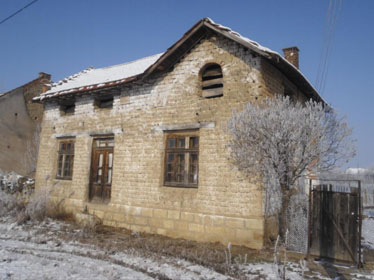
Q: I live in Bugaria - temp range +45 to -30. My house is mainly brick with cob or clay internal plaster. I want to insulate the outside - currently rendered in cement. There isn't enough space to expand out and use straw bales. I have plenty of clay and loads of hemp. What do you suggest?
A: I would think that you could make a very hemp-rich cob and apply it to the exterior to provide additional insulation.
Q: Would a clay-slipped straw or sawdust last as a roof insulation with dual 6-mil and earth over the top? Or a concrete slipped sawdust, like papercrete?
A: (Kelly) I would think that clay-slip straw or sawdust could be used effective as insulation and have heard of both of these in various applications. The trick is to keep either of them absolutely dry, or you would lose the insulation value and risk mold. In the old days when sawdust was used for insulation it was often mixed with lime to deter insects or mold.
Q: The roof of my straw bale house is insulated with loose straw with clay slip between the 12 inch rafters. This probably gives me R 12-36? In my climate R-60 is recommended for the roof. I would like to add wool insulation below the tongue and groove ceiling. Should I build a 2x4 frame to hold another ceiling to lay the wool on top of? Can I use the loose wool product or should I get batts?
A: (Kelly) Wool insulation is rated at about R-4/inch, so a 2X4 depth (3.5 inches) would only add R-14, which would not increase the total to the recommended R-60. You might want to place sub-rafters to create a deeper cavity. I would think that the batts would be easier to install than loose wool, as it could be fixed in place before the new ceiling were installed.